
Walking Meditation for Grounding in Recovery: Benefits, Practice, and Integration at BetterChoice Treatment Center
Walking meditation is a movement-based mindfulness tool that uses each step, breath, and sensory detail to bring attention back to the present. It can help people feel grounded during addiction recovery. This guide explains what mindful walking is, how somatic grounding and earthing support nervous-system regulation, and why the practice can lower cravings and steady emotions. You’ll find a clear how-to, evidence-backed benefits, practical somatic exercises, and examples of how we use walking meditation across levels of care. We also outline how it fits into clinical pathways—detox, inpatient, outpatient, and counseling—so patients and families know what to expect. Keywords like walking meditation, mindful walking, somatic grounding, and walking meditation for cravings are included to keep the guidance practical and discoverable. After the basics, you’ll see program-level examples and simple next steps for finding support in Nevada.
What Is Walking Meditation and How Does It Support Grounding in Recovery?
Walking meditation is a form of mindful movement where attention rests on posture, the feeling of each footfall, and the breath to reduce dissociation and stabilize emotion. The core mechanism is sensory anchoring: by focusing on bodily sensations, the brain shifts away from rumination and hyperarousal toward present-moment regulation, which can lower the intensity of acute cravings. In practice, walking meditation builds distress tolerance and produces short-term physiological downregulation that’s useful in early recovery.
The practice is adaptable for different stages of recovery—used briefly between therapy sessions or as structured outdoor sessions later on. Core elements like paced breathing, sensory scanning, and intentional posture support vagal regulation and attention control, both of which are important for relapse prevention. Knowing how these pieces work makes it easier to use the practice during cravings or anxiety spikes; the section below outlines the key principles that make mindful walking effective.
What Are the Key Principles of Mindful Walking and Movement Meditation?
Mindful walking rests on simple, repeatable principles that help steady attention and bring focus to the present. First, attention to steps and breath anchors the mind in immediate sensory input and reduces mental drifting. Second, posture and pace—an upright spine, relaxed shoulders, and a deliberate cadence—reduce physical tension. Third, sensory anchoring uses sight, sound, and touch to orient awareness outward and limit internal escalation of cravings.
Practice cues include matching breaths to steps, noticing one sensory detail per step, and returning gently from distraction without judgment. These cues teach non-reactivity and early recognition of triggers, which improves self-monitoring during recovery. The next subsection describes how these principles create measurable emotional-regulation benefits.
How Does Walking Meditation Promote Emotional Regulation and Stress Relief?
Walking meditation supports emotional regulation by engaging parasympathetic pathways through gentle movement and slow diaphragmatic breathing, which can lower heart rate and reduce cortisol reactivity. Shifting attention from thought to sensation interrupts cycles of anxiety and craving, offering immediate relief in high-intensity moments. With repeated practice, these shifts build neural habits that increase distress tolerance and reduce reactivity over time.
Clinically, this means fewer impulsive responses to triggers and a greater ability to tolerate urges without acting on them. The somatic, embodied feedback from walking counters dissociation and helps people feel safer in their bodies—an important element in trauma-informed recovery work. These regulatory effects connect to documented benefits for anxiety and relapse prevention, summarized next.
What Are the Science-Backed Benefits of Walking Meditation for Anxiety and Addiction Recovery?
Walking meditation combines movement, breath regulation, and sensory focus to reduce physiological arousal and improve cognitive control. Research on mindfulness-based interventions shows reductions in anxiety, better sleep, and lower craving intensity; mindful walking applies those mechanisms in a movement-based format that may be easier for some people. The main recovery result is improved emotion regulation and a lower relapse risk through greater self-awareness and urge management.
Below is a concise comparison showing how specific benefits map to mechanisms and recovery outcomes.
This table shows how walking meditation supports relapse prevention by addressing both subjective urges and the physiological drivers of substance use. The next subsection explains how these mechanisms specifically reduce cravings.
How Does Walking Meditation Reduce Cravings and Support Sobriety?
Walking meditation helps reduce cravings through urge‑surfing: noticing an urge, tracking its intensity, and observing how sensations rise and fall without acting on them. Greater interoceptive awareness—catching bodily signals early—gives people time to choose coping responses rather than react automatically. With practice, attentional control improves, making it easier to shift focus from craving-related thoughts to neutral sensory details during high-risk moments.
Clinicians often pair short walking meditations with cognitive‑behavioral strategies to strengthen coping plans. Practicing these skills in supervised settings builds confidence that carries over to independent use in the community, which strengthens relapse‑prevention efforts.
What Are the Mental Health Benefits of Somatic Walking Meditation for Stress and Anxiety?
Somatic walking meditation lowers hyperarousal and improves autonomic balance through sustained sensory engagement and breath awareness. Movement-based mindfulness practices have been shown to reduce symptoms of generalized anxiety and PTSD when they include grounding and body-focused attention. For people with co-occurring substance use and mood disorders, these practices can lower symptom severity and improve engagement in therapy.
Improvements in vagal tone and reduced sympathetic activation can lead to a calmer baseline physiology and better sleep—both important for recovery momentum. Because somatic approaches are experiential, they can be easier for clients who struggle with seated meditation and integrate well with therapies like yoga and somatic experiencing.
This systematic review examines whether meditative and mindful walking can positively affect mental and cardiovascular health—an area less explored than practices like qigong, tai chi, and yoga.
Meditative and Mindful Walking: Effects on Mental and Cardiovascular Health
Meditative and mindful exercise refers to physical activity during which people intentionally notice each present moment without judgment. The literature focuses on qigong, tai chi, and yoga—forms of mindful exercise linked to mental and cardiovascular benefits. Whether meditative and mindful walking has similar effects has not been thoroughly reviewed. This systematic review (without meta-analysis) aims to synthesize existing studies on meditative and mindful walking to determine their effects on mental and cardiovascular health.
A systematic review of the effects of meditative and mindful walking on mental and cardiovascular health, DW Davis, 2022
How Do You Practice Walking Meditation for Grounding? A Step-by-Step Guide
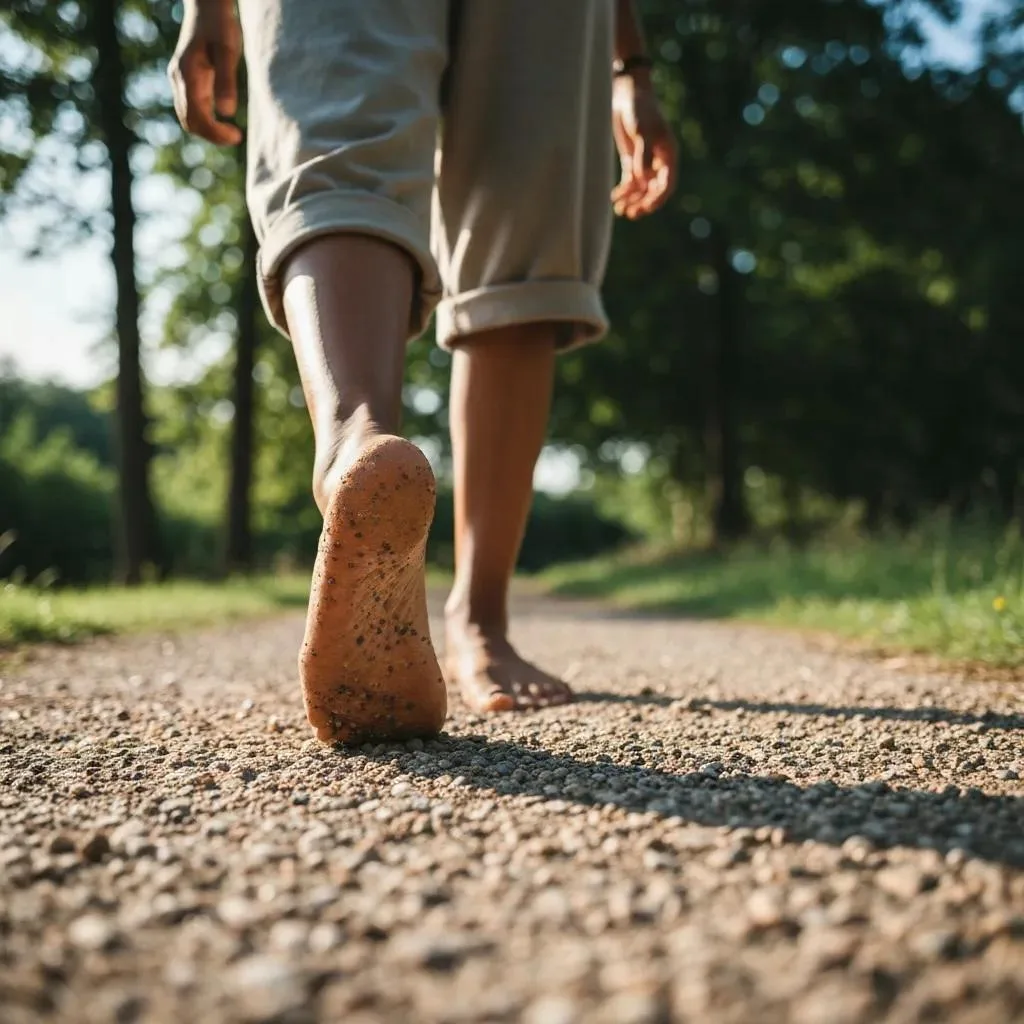
Walking meditation is easy to start and can be scaled for quick crisis work or longer daily practice. The basic idea is to move with intention, linking each step to breath and a single sensory anchor. Below is a practical sequence you can use during cravings, anxiety spikes, or as a daily resilience practice.
These clear steps help beginners begin safely and build consistency.
- Prepare the space: Pick a safe, quiet route with few obstacles and set a short intention.
- Set posture and breath: Stand tall, relax your shoulders, and take three slow diaphragmatic breaths to settle your nervous system.
- Begin mindful steps: Walk slowly, matching one step to one breath or a single sensory cue, noticing the contact of your foot with the ground.
- Use sensory anchors: Name a sound, a visual detail, or the weight shift in each step to hold attention.
- Close with reflection: After 5–15 minutes, stop, place your hands on your heart or belly, and notice any change in cravings or mood.
These steps are flexible: sessions as short as two minutes can interrupt an acute urge, while 10–20 minute daily walks build resilience. The next subsection condenses the essentials into a quick checklist you can use right away.
What Are the Essential Steps for Mindful Walking Meditation?
Here’s a compact checklist you can use during cravings or stress.
- Choose a safe path and set a one-sentence intention, for example: “I will notice my breath.”
- Align posture and take three grounding breaths to reduce sympathetic arousal.
- Walk slowly, coordinate breath and steps, and pick one sensory anchor to keep attention outward.
Expect the first sessions to feel unfamiliar—this skill is about gently returning attention without judgment. Repeating the practice builds automatic use when cravings arise, making it a practical, portable tool for recovery.
What Tips Help Beginners Overcome Common Challenges in Walking Meditation?
Common challenges include distraction, impatience, or physical discomfort. The following adaptations help keep practice safe and sustainable.
- Short, frequent sessions (2–5 minutes) reduce friction and help build habit without overloading attention.
- If standing or walking is painful, try seated mindful movement or slow foot tapping to keep a sensory anchor.
- Normalize wandering attention and use guided audio or clinician-led sessions when available to support learning.
These adaptations improve accessibility and can be introduced during supervised care to ensure trauma-informed, safe implementation.
How Is Walking Meditation Integrated into BetterChoice Treatment Center’s Recovery Programs?
At clinical programs, walking meditation is one evidence-informed somatic tool within an individualized treatment plan that also includes medical detox, inpatient rehabilitation, outpatient services, and counseling. At BetterChoice Treatment Center, we combine holistic therapies—like yoga, sound baths, and acupuncture—with clinical care to support nervous-system regulation and skill building. Integration focuses on safety, supervision, and staged use based on clinical stability so practices fit each level of care.
The table below outlines how walking meditation is typically used across program types, with session formats and frequency.
This table shows a staged progression—from short, safety-focused sessions during detox to skill-building in outpatient care. The next subsection gives concrete examples of how practices adapt across these levels.
How Does Walking Meditation Complement Detox, Inpatient, and Outpatient Care?
During medical detox, walking meditation offers brief, clinician‑supervised grounding to help manage acute anxiety and distress without heavy cognitive demands. In inpatient rehab, group walks build community, teach coping skills, and let clients practice relapse‑prevention strategies in a controlled setting. Outpatient care focuses on transferring those skills into daily life—scheduling mindful walks and using short practices when cravings appear.
Clinician roles change by setting: nurses or medical staff oversee safety in detox, therapists lead group practice in inpatient units, and counselors support homework and individualized plans for outpatient clients. Each stage emphasizes trauma‑informed pacing, privacy, and adaptations for mobility or sensory sensitivity.
What Holistic Therapies at BetterChoice Enhance Grounding and Emotional Wellness?
Complementary therapies at BetterChoice work alongside walking meditation to create multisensory regulation pathways and build resilience. Yoga reinforces breath‑posture integration and gentle movement that maps directly onto mindful walking. Sound baths and acupuncture offer multisensory relaxation that can deepen parasympathetic engagement and make somatic practice more effective.
These therapies are scheduled with counseling and medical care to ensure coordination and safety. Clinicians tailor combinations to each person’s needs so practices reinforce one another across modalities.
What Are Somatic Grounding Techniques and How Does Connecting with Nature Enhance Recovery?
Somatic grounding uses simple body-focused exercises and sensory attention to interrupt high-arousal states and restore a sense of safety. Nature-based elements—walking on grass, feeling a breeze, or earthing—add sensory immersion and may speed physiological calming by offering steady, non-threatening stimuli. Together, these approaches reduce dissociation and improve body awareness, which supports relapse prevention and emotional stability.
The quick-reference table below lists practical somatic exercises with steps and typical use cases to support moments of distress.
This table offers actionable options clinicians can teach quickly and patients can use independently. The following subsection explains how outdoor elements like earthing support nervous-system regulation.
How Does Outdoor Walking Meditation Facilitate Earthing and Nervous System Regulation?
Outdoor walking meditation uses natural sensory variety—ground texture, wind, birdsong—to capture attention and reduce internal rumination. Earthing, or skin contact with natural surfaces, adds tactile input that some studies link to reduced inflammation and improved sleep; clinically, the priority is sensory immersion and perceived safety rather than specific biomedical claims. Walking barefoot on safe surfaces or noticing ground contact through shoes gives immediate sensory feedback that helps anchor attention.
Safety, privacy, and trauma‑informed consent are essential for outdoor practice; clinicians assess settings and patient readiness before recommending unassisted outdoor sessions. When used appropriately, nature-based practice can speed the calming effects of walking meditation and support longer-term regulation.
What Simple Somatic Exercises Can Support Emotional Grounding in Recovery?
A short set of repeatable somatic exercises provides fast, portable grounding for cravings and anxiety. First, the 5-4-3-2-1 sensory method quickly reorients attention. Second, paced diaphragmatic breathing shifts autonomic balance toward the parasympathetic system. Third, progressive muscle or contact exercises restore embodiment and reduce dissociative reactions. Each exercise takes under five minutes and can be taught in clinical sessions.
Regular practice builds a toolkit you can use before counseling, after triggers, or during community exposure. These exercises pair well with walking meditation. The next section answers common safety and applicability questions from families and patients.
What Are the Most Common Questions About Walking Meditation for Grounding in Recovery?
Common questions focus on safety, what the practice involves, and how it helps with PTSD or severe anxiety. In short: walking meditation is a low‑risk, adaptable somatic practice that grounds attention in the body and environment, but it should be introduced in a trauma‑informed way for people with PTSD. Safety measures include early clinician supervision, short practice windows, and seated or tactile alternatives when movement triggers distress.
Families often ask how they can help. Simple supports include offering to join short walks, encouraging regular practice, and checking in after sessions to reinforce positive coping. The next two subsections provide plain-language definitions and trauma-informed guidance.
What Is Walking Meditation for Grounding?
Walking meditation for grounding is a mindful movement practice that uses deliberate steps, breath, and sensory focus to steady attention and reduce emotional reactivity. The main mechanism is sensory anchoring: attention moves from ruminative thoughts to immediate body and environmental sensations. This produces quick calming and better self-regulation, helping people in recovery manage cravings and stress in the moment.
This clear definition helps families and patients recognize a practical tool they can use safely with clinician guidance. The following subsection covers special considerations for anxiety and PTSD.
How Does Walking Meditation Help Manage Anxiety and PTSD in Recovery?
For anxiety and PTSD, walking meditation reduces hypervigilance by offering predictable sensory input and paced movement that recalibrates autonomic balance. Trauma‑informed practice emphasizes choice, pacing, and optionality—clients are encouraged to pause or switch to a seated alternative if sensations become overwhelming. Clinician supervision is recommended early on for people with PTSD to ensure safety and to link grounding work with therapeutic processing.
When used carefully, walking meditation complements psychotherapy and medication management and gives clients practical skills for handling triggers outside of sessions.
For local clinical support, BetterChoice Treatment Center provides evidence‑based, compassionate care in Nevada, including medical detox, inpatient and outpatient rehabilitation, and complementary holistic therapies. We offer coordinated intake, insurance verification help, and individualized treatment plans so families can understand timelines and next steps. To discuss options, call the center directly at (725) 299-4777 to ask about program pathways, available holistic offerings, and what to expect during intake.
For families and patients looking for in-person programs near Las Vegas, calling is a no‑obligation way to clarify eligibility, timelines, and safety measures. That call moves people from confusion to clarity while keeping the focus on the right clinical pathway.
- Choose a safe next step: Call the number above for program-level questions and intake guidance.
- Prepare key information: Be ready to share current symptoms, recent use, and any co‑occurring conditions.
- Ask about coordination: Find out how walking meditation and other holistic therapies are scheduled with medical care.
- Walking meditation is a practical, evidence‑informed tool that supports grounding and relapse prevention in recovery.
- Somatic grounding and nature‑based practices complement clinical care by improving nervous‑system regulation and distress tolerance.
- BetterChoice Treatment Center integrates these practices across staged clinical pathways—detox, inpatient, outpatient, and counseling—to promote safety and effectiveness.
Frequently Asked Questions
1. Can walking meditation be practiced indoors, or is it only for outdoor settings?
Walking meditation works both indoors and outdoors. Outdoor settings add natural sensory input—fresh air, varied textures—that can deepen the experience, but a quiet indoor space free from distractions is also effective. Indoor practice is useful in bad weather or when outdoor access is limited.
2. How long should a walking meditation session last for beginners?
Beginners can start with 5–10 minute sessions. Short practices help people get comfortable without feeling overwhelmed. As confidence grows, sessions can increase to 15–20 minutes. Quality matters more than length—even a few mindful minutes can provide grounding during cravings or anxiety.
3. Are there specific times when walking meditation is most effective?
Walking meditation is especially helpful during high stress, anxiety, or cravings. It can be useful before or after therapy sessions, during breaks, or as part of a daily routine. Its flexibility makes it a practical tool whenever you need a calming, centering break.
4. Can walking meditation be combined with other mindfulness practices?
Yes. Walking meditation pairs well with seated meditation, yoga, or breathwork. For example, you might begin with a short seated practice to center yourself, then transition to mindful walking, or use breathwork to deepen the walk. Combining practices offers a fuller approach to grounding and stress relief.
5. What should I do if I feel overwhelmed during walking meditation?
If you feel overwhelmed, pause the practice and take a few deep breaths. Move to a seated position or try a different grounding technique like the 5‑4‑3‑2‑1 method. The practice is meant to support you—prioritize comfort and safety, and return when you feel ready.
6. How can I encourage a loved one to try walking meditation?
Encourage gently. Share your experience and invite them to join a short walk so it feels less intimidating. Emphasize the practice’s flexibility and suggest guided audio or easy resources. Small, supportive steps help people try something new with less pressure.
7. Is there any research supporting the effectiveness of walking meditation in recovery?
Yes. Growing research on mindfulness-based interventions—including walking meditation—shows benefits for anxiety, emotional regulation, and craving reduction. These practices help build self-awareness and coping skills that are important for maintaining sobriety and managing stress. Incorporating walking meditation into treatment is increasingly recognized as a useful, evidence-informed approach.
Conclusion
Walking meditation is a practical, evidence‑informed tool for grounding and emotional regulation in addiction recovery. By combining sensory awareness with mindful movement, people can better manage cravings and support overall well‑being. BetterChoice Treatment Center offers individualized programs that include walking meditation alongside comprehensive clinical care. To learn more about how these practices can support your recovery, reach out to us today.