
Volunteering: Finding Purpose and Giving Back to Support Lasting Sobriety
Volunteering in recovery means using your time, experience, and energy to help others while you rebuild a life that supports sobriety. It complements clinical care by offering purpose, reliable structure, and real social connection. This guide shows how community involvement and intentional volunteer roles strengthen mental health, lower relapse risk, and help rebuild identity after substance misuse. You’ll find practical steps to discover meaningful activities, a plain-language look at the “helper’s high,” and volunteer options that fit different stages of recovery. We also explain how community engagement forms steady support networks and how clinical readiness maps to safe volunteering. Finally, you’ll see how BetterChoice Treatment Center prepares people for purposeful, supervised community service through intake, stabilization, and aftercare planning. Throughout, we use recovery-centered language and evidence-informed guidance to help you reintegrate, find meaning after substance use, and adopt long-term habits that support sobriety.
Why Volunteering Matters in Recovery
Volunteering offers focused, meaningful activity that helps protect sobriety by restoring a sense of agency, adding predictable routine, and expanding supportive relationships. When someone takes on reliable service, idle time shrinks, social bonds form, and confidence grows — all of which lower common relapse triggers. Volunteering also works as practice for real-world responsibilities: it reinforces punctuality, teamwork, and follow-through, skills that support job readiness and daily life after treatment. Recent research consistently links meaningful social roles to lower substance use, which is why community service is often included in continuing-care plans. With those benefits in mind, it’s helpful to look more closely at how volunteering improves mental health and reduces relapse risk in concrete ways.
Volunteering delivers several direct recovery benefits:
- Rebuilding purpose and identity: repeated service helps replace an addiction-based identity with one defined by contribution.
- Social connection and accountability: regular volunteer roles create relationships that support sober choices.
- Routine and structure: scheduled activities reduce unstructured time that can become risky.
- Skill development and employability: volunteer tasks teach practical, transferable skills for work and daily life.
These benefits provide the foundation for practical guidance on the right timing and types of volunteer work to support mental health and prevent relapse.
How Volunteering Helps Mental Health and Prevents Relapse

Volunteering supports mental health by creating predictable engagement that eases loneliness, reduces depressive symptoms, and strengthens stress-coping through purposeful action. The psychosocial drivers include social reinforcement, role-based self-esteem, and behavioral activation; these work alongside biological improvements like better mood regulation after positive social interaction. In early recovery, supervised, low-commitment roles offer therapeutic exposure without overwhelming stress, while more autonomous service can fit people with longer-term stability. Clinically, building volunteer planning into aftercare — with attention to safety and supervision — helps translate therapy gains into community participation. The next section outlines the most important benefits of giving back and how they combine to protect sobriety and rebuild identity.
What Are the Key Benefits of Giving Back in Sobriety?
Giving back provides measurable benefits that support long-term recovery: increased self-worth, expanded social capital, and reinforced accountability that discourages substance use. Practically, volunteering creates daily rhythms and visible accomplishments that fill the void once occupied by substance use, building resilience through achievement and social feedback. Activities like mentoring someone in recovery, volunteering at a community kitchen, or working in a neighborhood garden show how skill-building and belonging overlap to deliver therapeutic value. Each benefit reinforces the next: skills open employment options, social bonds offer oversight and encouragement, and purpose sustains motivation. Discovering personal purpose amplifies these effects and lowers relapse risk over time.
How Finding Purpose Strengthens Your Sobriety Journey
Finding purpose after treatment means identifying activities that reflect your values and give direction to daily choices and long-term goals. Purpose acts as a stabilizer: it creates a future-focused narrative that shapes moment-to-moment decisions and gives you cognitive resources to resist urges. It also boosts resilience by supplying meaning during setbacks, making adaptive coping more likely than returning to substance use. A simple roadmap — clarifying values, testing short experiments, and trying community roles — speeds the process and reduces overwhelm. Below are practical steps to help you identify and test meaningful roles that match your recovery stage.
When you begin exploring purpose, try these practical steps:
- Values assessment: list the things that matter most to you and look for activities that reflect them.
- Small experiments: try short, low-risk volunteer shifts to see what fits.
- Strengths inventory: match your skills and interests to local needs.
- Goal setting: choose one- and three-month goals that are clear and measurable.
Use these steps to evaluate fit and increase your involvement gradually so you protect recovery stability while deepening meaning.
Practical Steps to Find Personal Purpose After Treatment
Start with a values inventory and brief journaling to name what matters — family, service, creativity, advocacy — and use that language to narrow possible volunteer roles. Combine reflection with action: short shifts or time-limited projects let you test whether an activity feels meaningful without a long-term commitment. Track results — jot mood before and after shifts, note cravings or stress, and share observations with a counselor or peer sponsor to gauge readiness. Over several weeks, turn positive signals into specific short-term goals (for example, two volunteer shifts per month) and longer aims (such as mentoring after a year of stability). These steps move you from introspection to steady, purpose-driven engagement and prepare you for roles that reinforce recovery.
How Purpose Lowers Relapse Risk and Builds Resilience
Purpose lowers relapse risk by shifting motivation toward approach-oriented goals: rather than using substances to escape discomfort, a clear purpose pushes you to act toward meaningful objectives. Research shows goal-directed behavior improves persistence during hardship — in recovery, that means choosing healthy coping when cravings arise. Purpose also reallocates time toward prosocial activities that offer immediate rewards — social approval, competence, and belonging — making substance-driven rewards less appealing. Setting progressive purpose milestones gives you measurable signs of progress to celebrate and reinforce, which further strengthens resilience and supports long-term recovery.
How to Give Back and Grow Empathy During Recovery
Effective volunteer work matches your recovery stage to an activity’s demands, supervision level, and practical accessibility so outcomes stay positive and safe. Early recovery often benefits from structured, supervised roles — coordinated peer-support shifts, community kitchen shifts with onsite training, or animal-shelter tasks overseen by staff — because these roles set clear expectations and support. As stability grows, people can move into mentorship, advocacy, or leadership roles that offer greater responsibility and meaning. The table below helps you compare volunteer types by commitment, early-recovery accessibility, therapeutic benefit, and supervision needs to guide your choices.
Different volunteer roles vary in commitment, accessibility for early recovery, therapeutic benefit, and supervision requirements.
This guide helps you choose roles that match your recovery stage and therapeutic goals so engagement stays safe and meaningful.
Here are practical volunteer activities that commonly build empathy and gratitude in recovery:
- Peer mentoring in structured programs — mutual support and accountability.
- Community kitchens or food banks — visible impact and immediate feedback.
- Animal care at shelters — steady routine and nonjudgmental companionship.
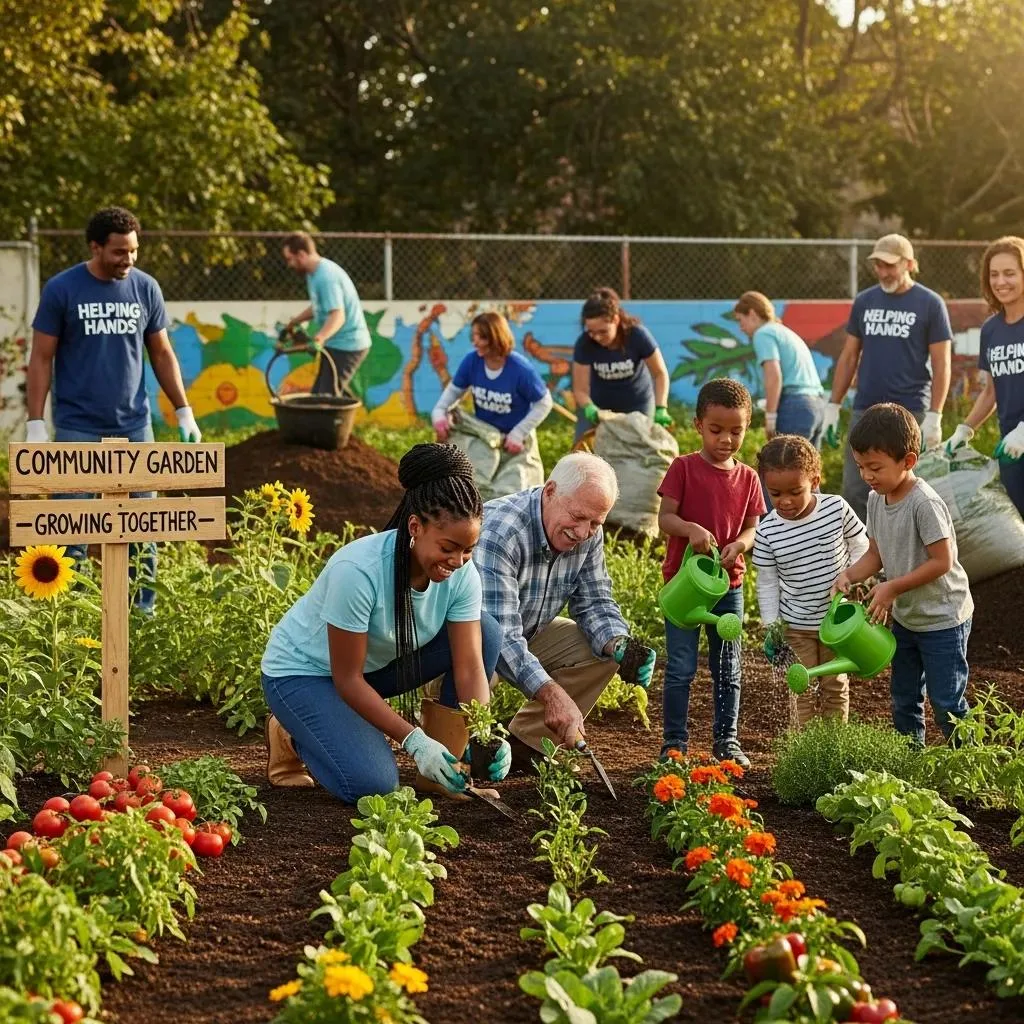
- Environmental projects like community gardens — teamwork and stewardship.
These activities can be adapted to your energy level and supervision needs and often serve as gateways to deeper service.
Which Volunteer Activities Tend to Build Empathy and Gratitude?
Certain activities reliably trigger empathy and gratitude because they put volunteers in direct contact with need and recovery stories, offering perspective and reciprocal care. Peer mentoring teaches listening and modeling recovery behavior, building empathy through shared experience and appreciation for progress. Community kitchens create visible outcomes — feeding people and seeing relief — that deepen compassion and purpose. Animal work reduces isolation and offers tactile comfort, lowering stress and increasing daily satisfaction. Choosing roles with clear, observable results amplifies the emotional rewards that keep people engaged long term.
How Giving Back Shifts Focus from Self to Others
Giving back redirects attention outward by creating roles that require you to respond to others’ needs, which interrupts rumination and reduces the mental space for cravings. This shift works like cognitive behavioral practice: focusing on tasks, social cues, and problem-solving for others builds alternative neural pathways that reward prosocial behavior rather than substance use. Simple experiments — note mood changes after a volunteer shift and journal the differences — help you track the change and reinforce the pattern. Over time, outward-focused routines become habits that support sobriety through increased responsibility and less self-preoccupation.
What Science Explains the ‘Helper’s High’ in Recovery?
The “helper’s high” describes the uplift, stress relief, and improved well-being people report after prosocial acts. It reflects neurochemical and psychosocial processes that counteract substance-driven reward cycles. Prosocial behavior engages brain reward pathways — including dopamine — while oxytocin supports trust and bonding and serotonin helps stabilize mood. Those biological effects, combined with stronger social support and a sense of purpose, create a layered benefit for recovery. In practice, volunteer activities that include social interaction and visible results are most likely to produce sustained helper’s high effects. Below we summarize how specific neurotransmitters respond to volunteering and how those responses differ from substance-driven rewards.
Quick primer: the table below pairs neurochemical processes with common behavioral outcomes and notes the nature of supporting evidence without naming individual studies.
This mapping connects biological responses to observable improvements in mood and social functioning, suggesting volunteering can help retrain reward preferences toward prosocial reinforcement.
How Volunteering Stimulates Dopamine and Serotonin
Prosocial acts trigger dopamine in socially meaningful ways that are steadier than the intense spikes caused by substances; this supports sustainable reward learning rather than volatile highs and lows. Activities that provide immediate positive feedback — helping someone directly, hearing thanks, or completing a task — activate dopamine pathways that encourage repeating healthy behaviors. Repeated positive social experiences help serotonin support mood balance and reduce impulsivity. Over time, these patterns make social rewards more attractive and substance use less appealing, which helps explain volunteering’s role in relapse prevention.
What Recent Research Supports Volunteering’s Role in Sustaining Sobriety?
Recent literature shows growing evidence — from correlational and longitudinal studies — that community engagement links to better mental health and lower relapse rates. Work in the early-to-mid 2020s highlights social support and role identity as key mechanisms. Studies consistently find that structured, supervised volunteering provides the strongest benefits for people transitioning out of formal treatment because supervision lowers stress and increases safety. The practical takeaway: prioritize roles with organizational support and measurable outcomes when adding volunteering to aftercare. Clinicians and program planners should continue tracking outcomes and tailoring placements to each person’s recovery profile.
How Community Involvement Builds Support Networks for Long-Term Recovery
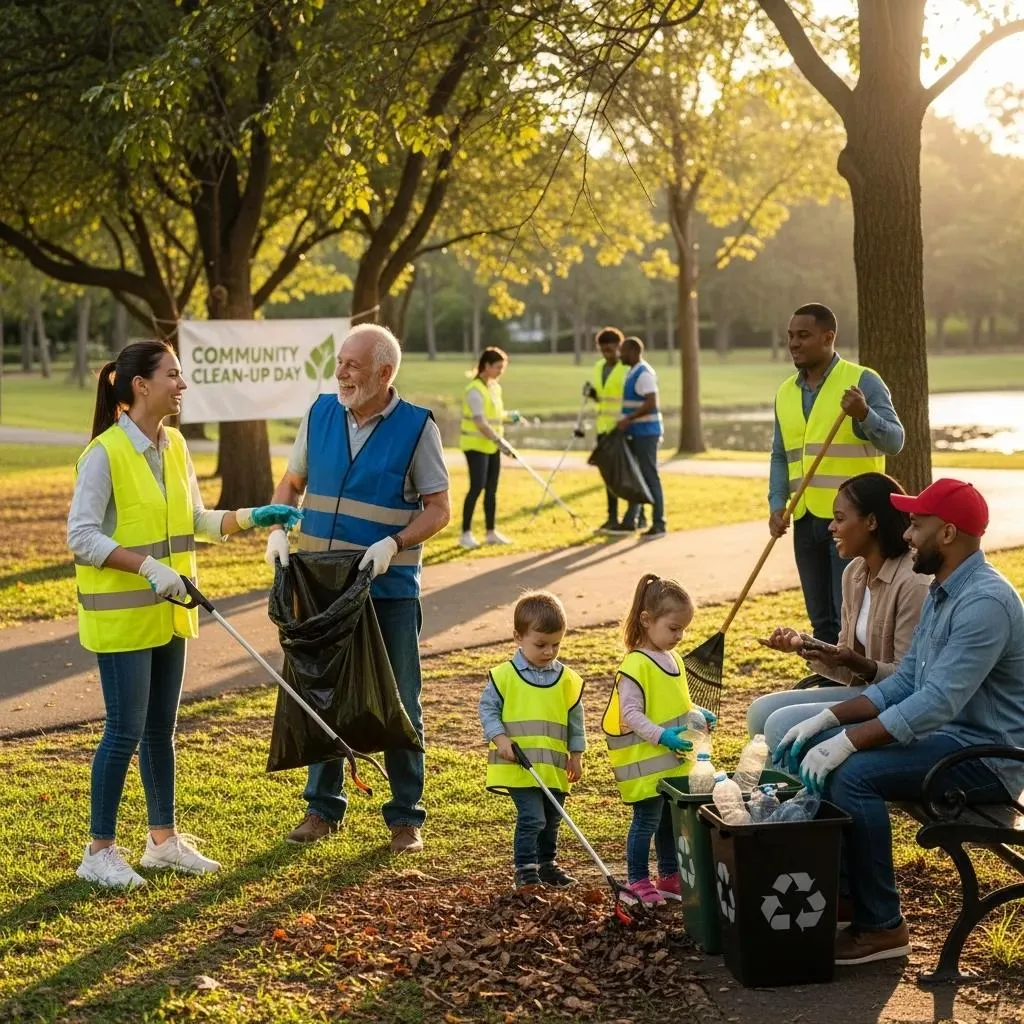
Community involvement expands support by placing people in environments where social reinforcement, role expectations, and reciprocal help stabilize daily behavior over time. Volunteering connects you to peers, coordinators, and community members who can offer practical help, mentorship, and accountability — all of which reduce isolation and replace old substance-using networks with pro-recovery norms. Participating in civic projects or mutual-aid groups also opens doors to employment and leadership roles that further anchor a sober identity. Below we list common engagement types and the recovery-stage readiness each typically requires.
Common community engagement types and suggested recovery-stage suitability:
- Mutual-aid and peer-support groups — usually best after initial stabilization.
- Civic and community volunteering (parks, libraries) — often suitable with moderate readiness and flexible commitment.
- Employment-related volunteering or skill-building roles — fit for mid- to long-term recovery as responsibility increases.
What Kinds of Community Engagement Strengthen Sobriety?
Different engagement types serve different recovery purposes: mutual-aid groups reinforce pro-recovery norms and shared experience, civic volunteering builds practical skills and public contribution, and employment-oriented volunteering supports the pathway back to paid work. Mutual-aid roles are often low-cost, high-support options that expand social networks quickly and provide immediate accountability. Civic volunteering creates visible community impact and pride, while vocational-style roles mirror workplace duties and directly aid reintegration and economic stability. Sequencing these activities across recovery phases helps maximize benefit.
How Social Connection Lowers Isolation and Increases Accountability
Social connection reduces isolation by creating predictable, reciprocal relationships that replace solitary patterns tied to substance use. Accountability grows naturally within these relationships through expectations, check-ins, and shared responsibilities. Organizational structures — volunteer coordinators, mentors, and set schedules — provide external scaffolding that supports internal motivation for sobriety. Personal-level social reinforcement gives timely feedback, praise, and course correction when needed, which helps sustain behavior change. Tools like volunteer logs, mentor check-ins, or peer accountability systems further formalize progress monitoring and promote ongoing engagement.
How BetterChoice Treatment Center Supports Your Move Toward Purposeful Living
BetterChoice Treatment Center offers a clinical pathway designed to stabilize medical and psychiatric needs, teach coping and life skills, and prepare people for safe, supervised community engagement as part of aftercare. Core services include medical detox to manage withdrawal safely, inpatient rehab that combines evidence-based therapies with daily structure, and holistic modalities — such as yoga and acupuncture — that support emotional regulation and readiness for social roles. These clinical stages build the foundation for volunteering: stabilization and skill-building reduce risk and increase capacity for steady contribution. By integrating volunteer planning into discharge and aftercare, people can translate treatment gains into purposeful community involvement that supports lasting sobriety.
How Medical Detox and Inpatient Rehab Prepare You for Volunteering
Medical detox and inpatient rehab create the physiological and behavioral stability needed for safe volunteer participation by addressing withdrawal, co-occurring mental health concerns, and daily-routine skills. Detox focuses on medical safety and stabilization before community exposure, while inpatient care develops coping tools, relapse-prevention strategies, and restores sleep and nutrition — all prerequisites for reliable volunteering. Practical readiness markers include sustained abstinence, psychiatric clearance when required, and active participation in treatment groups that emphasize responsibility and teamwork. Transitioning into community roles is staged: begin with supervised, low-demand activities and progress as clinicians confirm stability and coping capacity.
Which Holistic Therapies Support Readiness for Community Service?
Holistic therapies like yoga, mindfulness, acupuncture, and structured peer groups strengthen emotional regulation, stress tolerance, and interpersonal skills that support volunteer readiness. Yoga and mindfulness reduce reactivity and improve focus so people can stay present during service activities. Acupuncture may help with stress relief and sleep for some individuals. Peer groups and experiential therapies provide practice in communication, empathy, and boundary-setting — core skills for dependable volunteer roles. Combining these therapies with skills training and supervised community trials helps turn therapeutic gains into steady, contribution-focused behavior that supports long-term recovery.
- Yoga and mindfulness: build emotional regulation and stress resilience.
- Acupuncture and body-based therapies: support sleep and physical comfort in early recovery.
- Peer groups and experiential therapy: develop communication and empathy skills useful in volunteer roles.
Together, these supports link clinical stabilization with practical social training to create a durable platform for purposeful civic engagement.
Frequently Asked Questions
1. What volunteer activities work best for people in early recovery?
In early recovery, choose structured, supervised roles that set clear expectations. Options like coordinated peer-support shifts, short community-kitchen shifts, and animal-shelter tasks with staff oversight are often a good fit because they reduce stress and set predictable boundaries. These roles usually allow a gradual return to responsibility without overwhelming commitment.
2. How can volunteering help rebuild identity after addiction?
Volunteering helps rebuild identity by giving you meaningful roles that reflect your values and strengths. As you contribute, the story you tell about yourself shifts from one centered on substance use to one defined by service and growth. That new narrative builds self-worth, reinforces purpose, and supports ongoing commitment to sobriety.
3. What role does social connection play in volunteering’s effectiveness for recovery?
Social connection is central: it creates relationships that offer support, encouragement, and natural accountability. Volunteering puts you around peers and community members who share goals and values, which reduces isolation and provides ongoing reinforcement for sober choices.
4. How can someone assess readiness to start volunteering in recovery?
Assess readiness by evaluating emotional stability, coping skills, and stress tolerance. Consider your current supports and comfort with social settings. Discuss options with a counselor or recovery coach to match volunteer roles to your recovery goals and capabilities.
5. What common barriers stop people in recovery from volunteering?
Common barriers include social anxiety, low confidence, and worry about managing triggers or schedules. People may also fear judgment or doubt their ability to commit. Addressing these barriers usually means starting small, building confidence through short wins, and finding supportive, flexible volunteer environments.
6. How does volunteering support long-term sobriety?
Volunteering supports long-term sobriety by providing purpose, routine, and community — all protective factors in recovery. Meaningful activities shift focus away from cravings, while the accountability and social reinforcement from fellow volunteers help sustain healthy choices. The skills and confidence you gain can also improve employability and life satisfaction, reducing relapse risk.
7. What should someone consider when choosing a volunteer role in recovery?
When choosing a role, consider your interests, strengths, and current level of stability. Look for opportunities that offer the right level of supervision and emotional demand for your stage of recovery. Starting with low-commitment roles lets you build confidence and adjust as you gain stability.
Conclusion
Volunteering during recovery can be a powerful tool for rebuilding purpose, strengthening social ties, and practicing the skills that support daily life. By choosing roles that match your recovery stage and values, you can replace an addiction-based identity with one centered on contribution and accountability. That transformation supports mental health, reduces relapse risk, and makes long-term sobriety more attainable. Explore local opportunities and our resources to find the right first step toward meaningful engagement.