

Virtual Reality Therapy in Addiction Treatment: Benefits, How It Works, and Recovery Support
Virtual Reality Therapy (VRT) uses immersive digital environments to recreate the sights, sounds, and situations that can trigger substance cravings so clinicians can safely guide exposure and practice coping skills. This page breaks down how VRT works, the underlying mechanisms (like cue exposure and habituation), and the real-world benefits—safer skill rehearsal, trackable progress, and tailored relapse-prevention planning. You’ll find which substance use disorders have the strongest evidence for VR-assisted care, how VRT fits alongside medical detox and inpatient programs, what recent research says, and practical ways families can support someone using VR as part of treatment. Throughout, we emphasize clinical safeguards—consent, graded intensity, and clinician oversight—and compare VR modules to traditional exposure methods so readers can see advantages and limits. BetterChoice Treatment Center, serving Nevadans from Las Vegas, is noted as a local provider that blends evidence-based, trauma-informed care with new tools like VRT when appropriate.
What Is Virtual Reality Therapy for Addiction Treatment?
Virtual Reality Therapy (VRT) is a clinician-guided approach that uses immersive audiovisual scenarios to expose people to substance-related cues and high-risk contexts while they practice coping strategies. The core idea is controlled cue exposure: repeated, supervised encounters with triggers reduce conditioned craving and let patients rehearse behavioral and cognitive tools in realistic settings. Typical elements include VR hardware (headset and controllers), scenario-based software, clinician assessment and real-time monitoring, plus safety protocols for scaling intensity and debriefing after sessions. Unlike imaginal or uncontrolled in‑vivo exposure, VRT delivers repeatable, adjustable, and recordable simulations that can be personalized to a person’s triggers and treatment goals. Knowing how immersion is created helps explain why clinicians can safely increase challenges and use objective session data to measure progress.
How Does Virtual Reality Create Immersive Environments for Recovery?

Immersion comes from high‑quality visuals, directional sound, interactive elements, and scripted scenarios that mirror real places where cravings occur. The headset and controllers create presence while software recreates locations—bars, parties, or familiar neighborhoods—and clinicians tune sensory intensity, timing, and context to meet therapeutic goals. During a session, therapists monitor physiological or behavioral signals through dashboards so they can intervene or reduce intensity if a patient becomes distressed. For example, someone working on alcohol cravings might move through a virtual social gathering while practicing urge‑surfing and cognitive reframing, then debrief with the clinician to connect what happened in VR to real‑life plans. Those technical and clinical pieces form a controlled rehearsal space that helps skills transfer to everyday life.
Which Substance Use Disorders Can VR Therapy Address?
VR therapy has growing applications across several substance use disorders. The strongest evidence exists for alcohol and nicotine; there’s early, promising work for stimulants and opioid-related cue exposure. With alcohol use disorder, VR can simulate bars or parties to practice refusal skills; for nicotine dependence, it can recreate common smoking situations like driving or social gatherings to practice delay and substitution techniques. Stimulant and opioid applications are more experimental but follow the same principle: recreate specific triggers—people, paraphernalia, or places—and rehearse coping strategies while clinicians monitor response. Because evidence varies by substance, clinicians match VR intensity and progression to the substance-specific risk and to the patient’s medical stability. Careful clinical judgment is essential when using VR for populations with active withdrawal or medical instability.
How Does VR Exposure Therapy Reduce Addiction Cravings and Triggers?
VR exposure therapy weakens cue-driven cravings by presenting triggers in a supervised, graded way that supports habituation and extinction while teaching coping skills. The core mechanism is repeated, controlled cue exposure: over time, conditioned responses decrease and the patient’s practiced strategies—breathing, cognitive reframing, behavioral plans—become easier to use in context. VR also offers objective measures of exposure intensity and reaction, helping clinicians titrate difficulty and document progress for relapse‑prevention planning. Because clinicians control timing, intensity, and safety cues, VR is safer than uncontrolled real‑world exposure; therapists can pause or step back a scenario if a patient becomes overwhelmed. Combined, these features reduce the chance that environmental cues will automatically trigger substance use and expand a patient’s adaptive response options.
What Role Does Exposure Therapy Play in Managing Substance Cravings?
Exposure therapy is built on a simple behavioral idea: conditioned cravings triggered by cues can lessen when those cues are repeatedly presented without the substance, allowing extinction learning and reduced automatic reactivity. In practice, clinicians start with low‑intensity triggers, allow habituation or processing, and then increase complexity so skills generalize to harder situations. A session might begin with visual-only cues, add social interactions, and then introduce mild stressors while the patient practices urge management under therapist guidance. This supervised approach contrasts with avoidance: it teaches new responses, reduces the avoidance behaviors that can keep relapse risk high, and builds confidence for real-world high‑risk moments. Post‑session debriefs help connect in‑session learning to homework and everyday behavior.
How Does VR Simulate Real-Life Triggers Safely?
Safety depends on informed consent, a readiness assessment, graded intensity, real‑time monitoring, and structured debriefing. Before using VR, clinicians evaluate withdrawal status, psychiatric stability, and trauma history to confirm readiness and explain what to expect. During sessions, therapists control scene complexity and follow clear protocols to pause or stop exposure if distress rises; physiological measures or self‑ratings inform those decisions. After each scenario, clinicians normalize reactions, reinforce practiced coping techniques, and assign graded homework to help transfer gains outside the clinic. These layered safeguards lower the risk of retraumatization and support safe, meaningful progress.
What Are the Key Benefits of Virtual Reality Addiction Treatment?
Virtual reality addiction treatment brings together safety, personalization, engagement, and measurability to strengthen exposure‑based work and relapse prevention. VRT gives patients a realistic but controlled space to face triggers, lets clinicians tailor scenarios to an individual’s cue profile, increases engagement through immersive practice, and produces session data clinicians can use to track progress and refine care. Paired with in‑the‑moment coaching, VR accelerates learning and helps move coping strategies into daily life. Objective metrics—session length, physiological reactions, and observable behaviors—support clinical decisions while privacy, consent, and qualified clinicians remain essential to minimize harm.
Practical advantages of virtual reality treatment include:
- Safe Skills Rehearsal: Practice coping strategies in realistic but controlled situations without immediate real‑world risk.
- Personalization: Scenarios are customized to individual triggers and trauma histories for greater relevance and impact.
- Objective Measurement: Session metrics help clinicians quantify reactivity and improvement over time to guide treatment adjustments.
Together, these benefits speed relapse‑prevention planning and let clinicians fold experiential learning into broader therapeutic plans. The table below shows how key benefit areas map to clinical mechanisms and typical outcomes.
Different therapeutic benefits map to mechanisms and observable outcomes in clinical practice.
This comparison makes it easier for providers to pick modules that match treatment goals and expected outcomes.
How Does VR Therapy Enhance Coping Skills and Relapse Prevention?
VR strengthens coping skills by putting practice into the situations where those skills are needed. During sessions patients do urge‑surfing, cognitive restructuring, role‑plays, and contingency planning inside realistic scenarios while clinicians give corrective feedback. Therapists assign homework that bridges in‑session learning to real life, and spaced repetition helps retention. Session data guide the intensity and timing of follow‑up in outpatient or aftercare settings. Over time, contextualized practice reduces relapse risk by building automatic, adaptive responses and by boosting a person’s confidence using those skills outside treatment.
Why Is Personalization and Safety Important in VR Rehab Programs?
Personalization and safety matter because each person’s triggers, trauma history, and medical stability shape both therapeutic benefit and risk. Personalization covers trigger types (social versus situational), sensory intensity, session length, and pacing—choices that increase relevance and limit needless distress. Safety elements—clear consent, clinician qualifications, emergency protocols, and thoughtful debriefs—protect patients and keep treatment effective. Programs that pair careful personalization with strong safety oversight tend to see better engagement, fewer dropouts, and stronger carryover from sessions to daily life.
How Is Virtual Reality Therapy Integrated with Traditional Addiction Treatment?
Bringing VR into standard addiction care means matching VR modules to treatment stages—medical detox, inpatient stabilization, outpatient therapy, and aftercare—so exposure and skills practice occur when patients are ready to benefit. Early in recovery, VR use is conservative and coordinated with medical teams to avoid exposure during acute withdrawal or instability. Once stabilized, modules focus on craving management, psychoeducation, and rehearsal of coping plans. In inpatient settings, VR complements group work and individual CBT by offering hands‑on practice; in outpatient and aftercare it supports boosters and remote maintenance. Operational planning includes staff training, scheduling around other therapies, and careful documentation for payers when relevant. Typical patient flow looks like assessment, clinician orientation to VR, graded exposure sessions, and progress reviews that inform step‑down or intensification decisions.
The table below maps VR modules to common treatment stages and typical clinical uses.
This map helps clinicians and patients see where VR adds value without replacing medical oversight or core psychosocial therapies.
How Does VR Complement Medical Detox and Inpatient Rehab?
In medical detox and inpatient rehab, VR can support stabilization with brief anxiety‑reduction protocols, early education about triggers, and supervised exposures once withdrawal is under control. VR is usually introduced only after medical clearance so exposure doesn’t coincide with acute physiological distress. Typical early tasks include short relaxation‑focused exposures to lower cue‑related arousal and brief scenario walk‑throughs that prepare patients for real‑world triggers they’ll face after discharge. When coordinated with nursing and medical staff, VR can speed up skill acquisition that is reinforced in group work and continued in outpatient care.
What Is the Role of Cognitive Behavioral Therapy in VR Addiction Treatment?
Cognitive Behavioral Therapy (CBT) often forms the clinical backbone of VR modules. CBT skills—cognitive restructuring, behavioral experiments, and skills rehearsal—are embedded in scenarios so patients can test and modify automatic responses while immersed. Clinicians track progress (adaptive responses, craving ratings, homework adherence) to inform case conceptualization and treatment planning. Embedding CBT into VR keeps the treatment evidence‑based while using immersive practice to speed behavioral change.
What Does the Scientific Research Say About VR Therapy for Addiction?
Through mid‑2024 the research is promising but mixed. Several randomized and controlled studies report reductions in cue‑provoked craving and improvements in coping when VR is added to standard care—especially for alcohol and nicotine—yet many trials are small and protocols vary. Systematic reviews show moderate effects for craving reduction when VRT includes CBT components, but they call for larger, standardized trials with longer follow‑up and diverse substance populations. In practical terms, evidence supports VRT as a helpful adjunct to conventional care rather than a stand‑alone cure; clinicians should weigh study quality and individual patient factors when deciding on use. Below is a concise summary of representative recent studies and their outcomes.
The following table summarizes selected recent studies (2023–2024) with populations, substances, and key findings for quick clinical reference.
Which Recent Studies Support VR’s Effectiveness in Craving Reduction?
Several recent trials show meaningful short‑term drops in cue‑provoked craving when VR exposure is paired with clinician‑led CBT, particularly for alcohol and tobacco. Randomized comparisons often find larger immediate reductions after VR than after imaginal exposure, and some report improved short‑term abstinence or reduced use at follow‑up. Pilot work on stimulants and opioids shows feasibility and early signals but is limited by small samples and inconsistent outcomes. Overall, VR looks like a useful adjunct for craving management; more replication and standardization will help define best practices and long‑term impact.
How Is VR Therapy Shaping the Future of Addiction Recovery?
VR is shaping the future by offering scalable, data‑rich experiential treatments that combine immersive exposure with smarter personalization, remote boosters, and integrated outcome measurement. New directions include automated scenario adjustments based on real‑time metrics, telehealth‑linked sessions for remote maintenance, and interoperable data systems to inform clinical decisions. Those advances promise wider access and finer tailoring of relapse‑prevention work, but they need rigorous validation, strong privacy safeguards, and clinician training to be safe and effective. As research and technology mature, VR is likely to become a regular adjunct in comprehensive addiction care—alongside medical detox, evidence‑based therapy, and peer support—while preserving clinician oversight.
How Can Families Support Loved Ones Using Virtual Reality Therapy?
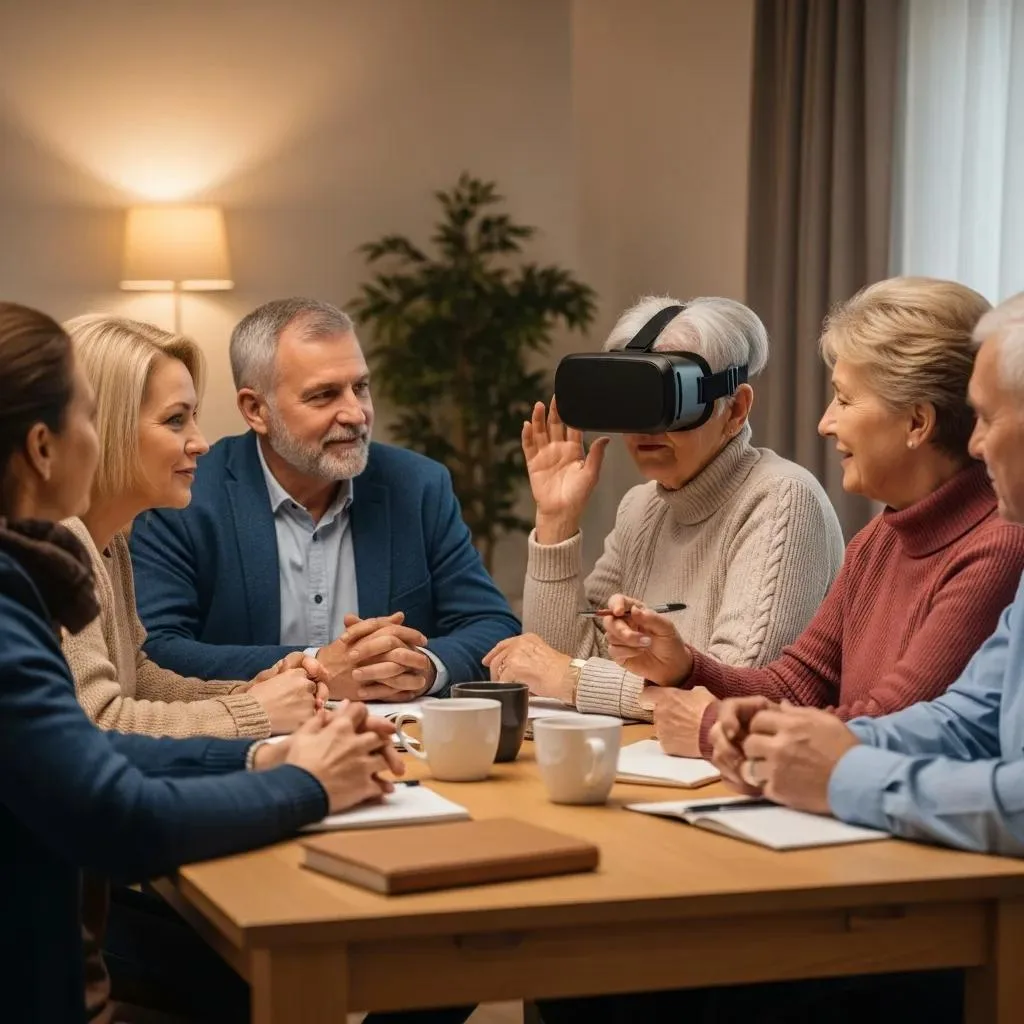
Families can be a strong asset by understanding what VR is for, encouraging attendance at supervised sessions, and reinforcing the coping strategies practiced in VR at home. Helpful roles include framing sessions as skill practice (not punishment), avoiding minimization of difficult reactions, and rehearsing agreed coping plans together. Families should respect therapeutic privacy—the content of VR sessions can be sensitive—and coordinate with the treatment team about appropriate involvement in debriefs or family education. If you want to explore local options, reach out to providers such as BetterChoice Treatment Center in Las Vegas to discuss how VR might fit into a trauma‑informed care plan.
Simple steps families can take to stay engaged and supportive:
- Educate Themselves: Learn the goals of VR sessions and how they fit into overall treatment.
- Practice Skills Together: Help reinforce coping strategies at home that the patient rehearses in VR sessions.
- Communicate Supportively: Use nonjudgmental language and acknowledge effort and progress.
What Should Families Know About VR Therapy’s Role in Recovery?
Families should know that VR is an adjunctive tool—designed to improve exposure‑based learning and measurable skills practice—not a standalone cure. It helps people rehearse coping strategies in controlled settings and gives clinicians objective session data to tailor care, but recovery also depends on medical stabilization, ongoing therapy, and social supports. Families can partner in recovery by attending clinician‑led education, supporting homework, and keeping a recovery‑friendly home environment. Clear boundaries and respect for the patient’s privacy help maintain trust and encourage sustained engagement in treatment.
How Does VR Therapy Facilitate Communication and Support?
VR creates shared reference points clinicians can use during debriefs—reviewing recorded moments or documented challenges with the patient and, with consent, involving family in structured psychoeducation. Those clinician‑guided conversations turn in‑session learning into concrete home strategies and help families recognize triggers, warning signs, and helpful responses. Communication tips include focusing on observed behavior rather than judgments, setting regular check‑ins about progress, and asking clinicians for specific homework families can support. That collaborative, bounded approach strengthens support while keeping clinical safety intact.
Frequently Asked Questions
What are the potential risks associated with Virtual Reality Therapy in addiction treatment?
VRT offers clear benefits but also carries risks clinicians manage carefully. Sessions can trigger strong emotional reactions or cravings, which—if not properly supervised—could increase distress. Some people with certain psychiatric conditions may be more vulnerable to symptom worsening. To reduce risk, programs perform thorough pre‑treatment assessments, obtain informed consent, and monitor patients closely during sessions with clear protocols to pause or adjust exposure when needed.
How long does a typical Virtual Reality Therapy session last?
Typical VR sessions range from about 30 to 90 minutes, depending on therapeutic goals and patient tolerance. Sessions usually include a short orientation and assessment, the immersive exposure work, and a debrief where clinicians help process the experience and plan follow‑up. Duration is flexible and adjusted to keep the session therapeutic and safe.
Can Virtual Reality Therapy be used alongside other treatment modalities?
Yes—VRT is most effective as part of a comprehensive treatment plan. It pairs well with Cognitive Behavioral Therapy (CBT), group therapy, medical detox, and other psychosocial supports. Clinicians coordinate timing and content so VR complements, rather than replaces, core treatments, enhancing overall effectiveness.
What is the role of clinician feedback during VR therapy sessions?
Clinician feedback is central. As patients navigate scenarios, clinicians observe reactions and give in‑the‑moment guidance on coping techniques, reinforcing helpful responses and correcting unhelpful ones. After each session, debriefs link in‑session learning to real‑world practice and clarify homework—this feedback loop is what turns exposure into lasting skill change.
How can patients prepare for their first Virtual Reality Therapy session?
To prepare, ask your clinician about what to expect and share any concerns beforehand. Familiarity with the technology helps, and simple relaxation techniques can ease initial nerves. Go in ready to participate and practice skills—active engagement makes the session more useful.
What types of technology are used in Virtual Reality Therapy?
VRT combines hardware and software: headsets and motion controllers deliver immersive visual and auditory stimuli, and specialized software modules recreate scenarios tied to substance‑use triggers. Together, these tools let clinicians deliver controlled, repeatable exposure therapy in a safe, engaging format.
Conclusion
Virtual Reality Therapy adds a practical, measurable layer to addiction care by offering safe, personalized exposure to triggers and focused skill practice. When used alongside medical stabilization and evidence‑based therapy, VR can deepen engagement, speed skill acquisition, and give clinicians useful data to tailor treatment. If you or a loved one are exploring recovery options, ask providers how VR might fit into a trauma‑informed plan—it can be a helpful part of a broader, sustained pathway to long‑term recovery.