

Understanding the Rehab Admissions Process: A Step‑by‑Step Guide to Getting into Treatment
Pre‑admissions is the private process that happens between your first call and formal entry into a treatment program. It exists to reduce uncertainty, check safety, and speed access to the right care. This guide walks you through what usually happens from initial contact through insurance checks, what to pack for admission day, how clinical assessments shape a personalized plan, and practical ways families can help. Many people put off getting help because intake feels confusing — a clear roadmap removes barriers by listing required information, likely timelines, and next steps. You’ll see the steps most programs use to triage medical risk, verify benefits, and schedule the proper level of care, plus tips for talking with insurers and planning logistics. We also explain how multidisciplinary teams match medical needs (like detox) with therapy, and we offer checklists and sample scripts families can use. Plain language and current best practices are used throughout to help Nevada residents and their supporters move from uncertainty to action.
What Are the First Steps in the Rehab Intake Procedure?
The first steps move someone from deciding to get help to being scheduled for the right care: contact, a confidential pre‑assessment, insurance verification, and clinical triage. Admissions teams use this order to confirm medical and psychiatric safety, understand substance use and withdrawal risk, and check practical details like coverage and transport. A clear early pathway speeds access to medical detox when needed and avoids delays for people suited to outpatient care. Below we break the process into clear, actionable steps and give a short timeline so you know what to expect after the first call.
When you contact an admissions line you’ll be asked basic questions to gauge immediate safety and urgency; most centers triage for medical instability and suicidal thoughts first. That triage decides whether emergency services are needed, whether same‑day medical detox is appropriate, or whether to schedule inpatient or outpatient care. Admissions specialists will also ask for identifying details and a brief substance history to prioritize placement. This pre‑screen focuses on safety and fit — not judgment — and your personal health information is protected.
- Contact the program by phone, web form, or walk‑in to say you want help.
- Complete a confidential pre‑assessment covering substances used, last use, withdrawal history, and safety concerns.
- Verify insurance coverage and learn if prior authorization is needed for detox or inpatient care.
- An admissions specialist completes clinical triage, recommends a level of care, and schedules admission.
That sequence sets clear expectations and helps you gather documents and arrange transport, topics we cover later.
How Do You Make Initial Contact with BetterChoice Treatment Center?

Initial contact usually means calling the admissions line or sending an online inquiry and getting a confidential response that begins with safety questions and basic intake details. When you reach out to BetterChoice Treatment Center, our staff will aim to respond quickly and ask for basic ID, a short substance‑use history, and any urgent medical or mental‑health concerns to determine next steps. Having a government ID and any medication or provider notes ready speeds verification and lets staff make timely clinical recommendations. If the person is medically unstable or expressing suicidal thoughts, admissions staff will tell you to call local emergency services right away and will help coordinate urgent care if needed.
The tone of first contact is calm and focused on safety; our admissions specialists ask clear, compassionate questions to assess immediate needs and treatment fit. Expect staff to explain confidentiality and what happens next, including whether same‑day admission is possible or if you’ll be scheduled. That first conversation sets the stage for insurance verification and the clinical assessment that follows.
What Information Is Needed During the Confidential Pre-Assessment?
A confidential pre‑assessment collects targeted details so clinicians can spot immediate risks and recommend the safest level of care. Typical questions cover the substances used, time of last use, pattern of use, prior withdrawal experiences, medical conditions, current medications, and mental‑health status. Admissions teams also ask about allergies, chronic illnesses, pregnancy, and recent hospitalizations because these affect whether medical detox or inpatient supervision is needed. Employment, legal status, and housing may be noted to plan supports and discharge. Honest answers improve safety and help the team build a plan that balances medical needs with therapy.
Information from the pre‑assessment is handled as protected health information; staff will explain who will see the data and request consent for any necessary releases. Clear communication here speeds the process and reduces last‑minute admission delays.
How Does the Rehab Insurance Verification Process Work?
Insurance verification confirms what an insurer will pay for, whether prior authorization is required, and what your out‑of‑pocket costs may be. Fast verification shortens time‑to‑admission and prevents surprise bills. The process involves collecting subscriber and policy details, contacting the insurer to confirm SUD benefits and coverage for inpatient or detox services, and documenting any prior‑authorization steps and timeframes. Our admissions team can call insurers and help with appeals or clarifying benefits, which reduces the burden on families and speeds placement when care is urgent. The table below lists common providers and typical coverage notes to help you prepare for verification.
Before the table: This comparison shows common insurers, the types of services they often cover, and notes about prior authorization. Use it to guide your call to an insurer.
Summary: Most major insurers offer some SUD benefits, but plan details and prior‑authorization rules vary—always confirm your specific plan before admission. Admissions teams can help request authorizations and explain benefits to reduce delays.
Which Insurance Providers Does BetterChoice Accept?
BetterChoice Treatment Center accepts many major insurers used in our region, which makes it easier for families to confirm coverage before admission. We accept Magellan Health, TRICARE, Aetna, Anthem, Blue Cross Blue Shield, Beacon Health Options, Cigna, and EmblemHealth. Details like in‑network status, copays, deductibles, and prior‑authorization rules depend on your specific plan, so plan‑level verification is still necessary.
If you’d like help checking benefits, our admissions staff can verify coverage for you once you provide subscriber details and an insurance card; that support often clears up confusion and speeds scheduling.
How Can You Verify Your Insurance Coverage for Rehab?
To verify coverage yourself, gather your insurance card and subscriber information, call the customer‑service number on the card, and ask direct questions about substance‑use‑disorder (SUD) benefits, inpatient detox coverage, prior authorization, and expected patient costs. Use a short script so you don’t miss key details, and ask for a reference number or confirmation email when possible. If coverage is denied or unclear, ask about internal appeals, request to speak with a case manager, or ask the admissions team to submit medical‑necessity documentation to support an authorization.
Sample script to use with insurers: “Is treatment for substance use disorder covered under my plan? If so, does that include medical detox and inpatient rehab? Are prior authorization or medical‑necessity reviews required? What are my expected copays or daily limits?” If you hit a denial, admissions staff can help with appeals and alternative payment options to avoid treatment delays.
What to Expect Before Rehab: Preparing for Your Admission Day
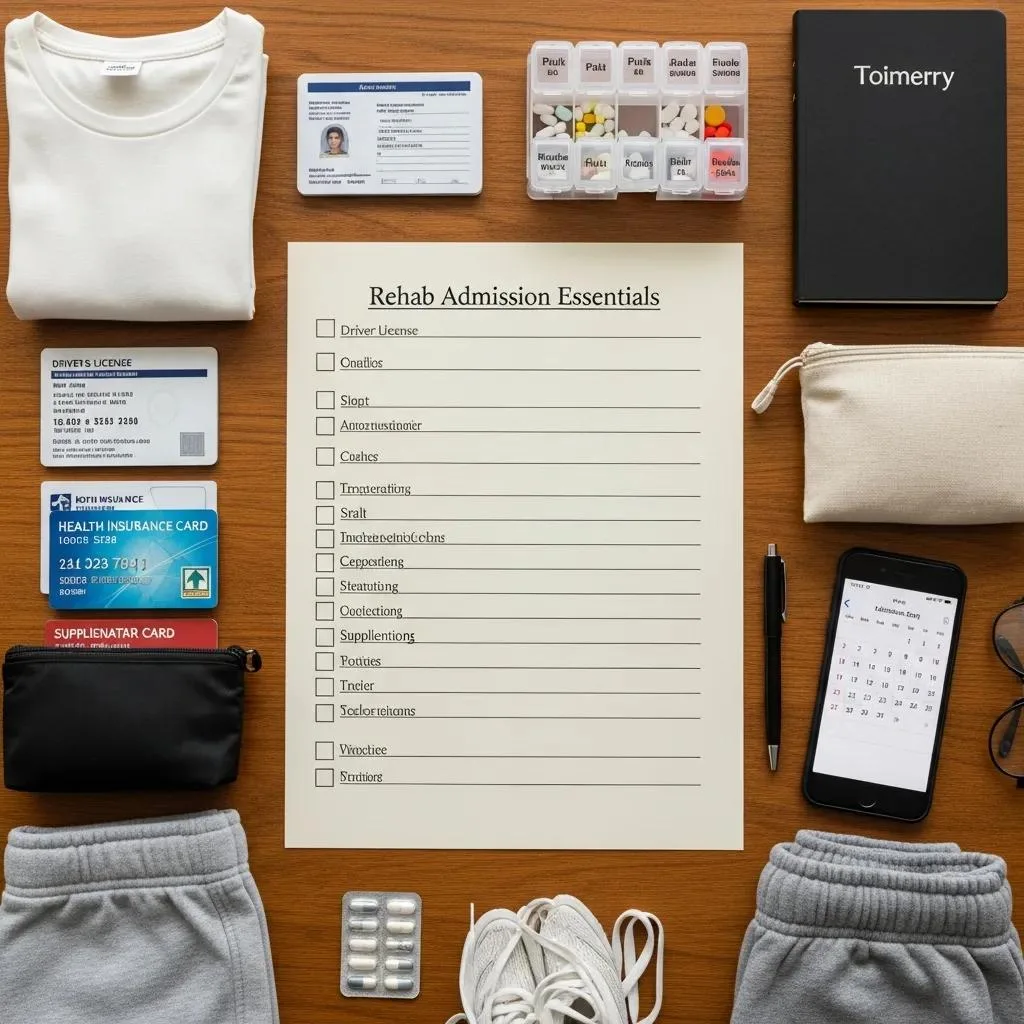
Preparing for admission day covers logistics and emotional readiness so the person arrives with the documents, safe transport, and realistic expectations for the first 24–72 hours. Many programs require paperwork, need to review medications, and perform a medical intake on arrival to assess withdrawal risk and begin safe care. Planning ahead reduces stress, shortens intake time, and lets clinical staff focus on care instead of paperwork. The checklist below and the following sections provide concrete items and recommended timing to help you prepare.
Intro to table: The checklist highlights common items and tasks to complete before arrival so admissions and clinical staff can start treatment without avoidable delays.
Summary: Completing these tasks before arrival simplifies intake and keeps you safer by giving clinicians the information they need to manage withdrawal, medications, and discharge planning.
What Should You Pack and Bring on Admission Day?
Packing should focus on essential documents, current medications, and a few personal items that support comfort without creating safety risks. Bring government ID, your insurance card, any medical records you have, and prescription bottles with clear labels so staff can reconcile medications. Pack a small set of clothing, basic toiletries, and things that help you sleep and stay comfortable; electronic‑device rules vary, so check program policies about phones and chargers in advance. Prohibited items typically include alcohol, illegal drugs, and weapons; staff will secure any restricted items on arrival so care isn’t interrupted.
Having documents and medications ready reduces time spent on admin tasks and lets clinical staff begin medical assessments and therapy scheduling sooner. That preparation also eases anxiety for the person entering care and their family.
How Can You Emotionally Prepare for Rehab Admission?
Emotional preparation means setting realistic expectations for an adjustment period and practicing simple grounding tools to manage anxiety on arrival. It’s normal to feel fear, shame, or uncertainty — plan small, achievable goals for day one, like completing intake steps, attending the first group, or talking privately with a counselor. Try deep breathing or brief grounding exercises before you arrive, and write down one or two intentions for treatment to share during intake. Family members can help by offering calm, practical support while respecting program privacy and the person’s autonomy.
Recognizing emotions and having a couple of coping strategies ready makes the first 72 hours easier and supports a smoother clinical transition into care.
How Is Your Personalized Treatment Plan Developed During Admissions?
A personalized treatment plan comes from a set of assessments that identify medical, psychiatric, and social needs. Clinicians use those findings to match the person to the right level of care and therapeutic mix so stabilization and recovery are safe and effective. Intake typically includes a medical exam, withdrawal assessments, psychiatric screening, and a social‑history interview. Together, those pieces shape a coordinated plan that balances detox, counseling, and continuity of care. The table below compares common levels of care, typical lengths, and the medical and therapeutic supports each provides.
Intro to table: Compare levels of care to see how assessment results drive placement decisions and expected services.
Summary: Assessments determine whether short detox, a structured inpatient stay, or outpatient services are best. This table helps families compare supports and expected timeframes.
What Assessments Inform Your Individualized Rehab Plan?
Key intake assessments include a full medical exam, standardized withdrawal scales (for example, CIWA‑Ar for alcohol), psychiatric screening for co‑occurring conditions, and a psychosocial history covering work, family, and legal factors. Medical exams uncover immediate health risks and guide decisions about medication‑assisted treatment or inpatient supervision. Withdrawal scales measure severity and shape symptom management plans. Psychiatric screens identify mood, anxiety, or other disorders that need concurrent treatment. Social‑history interviews help clinicians design discharge plans and link you to community supports. Our multidisciplinary team — medical director, clinical director, and certified addiction counselors — work together to interpret these findings and create a coordinated, individualized pathway.
These combined assessments ensure recommendations treat the whole person, not only symptoms, which improves safety and long‑term outcomes.
What Levels of Care Are Available at BetterChoice Treatment Center?
BetterChoice Treatment Center offers the full range of commonly used levels of care: medical detox and inpatient rehab, followed by step‑down outpatient services and counseling to support ongoing recovery. Medical detox gives intensive monitoring and medication management to safely manage withdrawal. Inpatient rehab delivers a structured daily schedule of therapy, education, and skills work. Outpatient programs provide continuing support after discharge, focusing on relapse prevention, community reintegration, and long‑term recovery planning. Transitions between levels are coordinated by the clinical team to preserve continuity, reduce readmission risk, and adjust care as progress is made.
This tiered approach — detox to inpatient to outpatient — helps clinicians match service intensity to clinical need and plan measurable steps toward recovery.
How Does BetterChoice Support Families During the Rehab Admissions Process?
Family support during admissions helps loved ones understand the process, provide helpful background information, and take part in planning while respecting privacy and consent. Families often help by collecting medical histories, insurance details, and arranging transportation. Programs also offer education about the treatment timeline and how to support recovery after admission. BetterChoice provides family education resources and referrals to counseling so families can learn about boundaries, communication, and how to contribute to aftercare. The sections below list specific resources and practical ways families can be involved throughout the admission timeline.
Giving families clear steps and realistic ways to help reduces stress and makes transitions smoother; informed, supported families play a vital role in long‑term recovery.
What Resources Are Available for Families Seeking Help?
Families can access educational materials about addiction, referrals to family counseling, and recommendations for community support groups and national helplines. Trusted external resources — such as national substance‑use hotlines and SAMHSA guidance — provide evidence‑based information on treatment and local referrals. Local programs often offer family sessions that explain program rules and confidentiality limits. BetterChoice can point families to these external supports and arrange internal family‑education sessions or referrals to licensed counselors when requested. Reaching out early helps families prepare emotionally and practically for admission and recovery.
Connecting families to practical and educational resources empowers them to support recovery while keeping appropriate boundaries and protecting the patient’s privacy.
How Can Families Participate in the Admissions Journey?
Families can help by gathering medical and insurance information, arranging safe transport, and offering emotional support without taking over clinical decisions. Often that practical coordination happens before arrival. With the patient’s consent, family members may attend orientation, share collateral history during intake to improve clinical understanding, and join family therapy if the program offers it. Because of confidentiality, clinicians will explain participation limits and request releases before sharing protected health information; families should be ready to ask for involvement explicitly and in writing if appropriate. After admission, families can stay engaged through scheduled meetings and by supporting aftercare plans, which strengthens continuity and relapse prevention.
Simple actions in the days around admission — organizing documents and communicating expectations — make the process smoother and support sustained recovery.
198 Ebb Tide Cir, Las Vegas, NV 89123
This address is provided for location context; if you need to reach admissions or request help with verification, give this address when arranging transport or paperwork.
Frequently Asked Questions
What should I expect during the first 24 hours of rehab admission?
In the first 24 hours you’ll have a full medical intake that reviews your health history, current medications, and any withdrawal symptoms. Staff will monitor vital signs and may start detox protocols if needed. You’ll also go through orientation to learn the facility layout, daily schedule, and rules. This initial period is about safety, stabilization, and beginning your personalized treatment plan.
Can family members visit during the rehab process?
Visitation rules vary by program. Many facilities allow family visits after the person has settled in, often with scheduled times and prior approval. Family involvement can be helpful but may be limited at first to protect the patient’s adjustment. Check with the treatment center for their specific visitation policy and any required arrangements.
How long does the rehab admissions process typically take?
Timing varies by facility, individual needs, and insurance checks. Initial contact and pre‑assessment can often be completed in a few hours; insurance verification may take a day or two. Once everything is in order, admission often happens within 24–72 hours. Being ready with documents speeds the process.
What happens if my insurance does not cover rehab services?
If your insurance doesn’t cover rehab, there are options. Many centers offer sliding scales, payment plans, or state‑funded programs. You can explore grants or other funding sources, and some facilities will help appeal insurance denials or identify alternative financial assistance to avoid treatment delays.
What types of therapies are typically included in rehab programs?
Rehab programs usually offer a mix of therapies tailored to the individual. Common approaches include individual counseling, group therapy, cognitive‑behavioral therapy (CBT), and family therapy. Some programs add holistic supports like art therapy, mindfulness, and physical activity. The aim is to address both the emotional and behavioral sides of addiction for a complete recovery plan.
How can I support a loved one during their rehab journey?
Support looks like being emotionally present, encouraging open communication, and respecting privacy. Help by collecting documents, arranging transport, and offering practical support. Learn about addiction and recovery so you understand the process, attend family sessions if offered, and keep a calm, non‑judgmental attitude to foster a supportive environment.
What should I do if I feel overwhelmed during the admissions process?
If you feel overwhelmed, tell admissions staff — they’re trained to help and can clarify steps. Take breaks, bring a trusted friend or family member for support, and use grounding techniques to manage stress. Feeling anxious is normal; asking for help makes the process easier and more manageable.
Conclusion
Knowing the rehab admissions process makes seeking treatment less stressful and more achievable. A clear roadmap helps you prepare for each stage, from first contact to a personalized treatment plan. Families play an important role, and using available resources strengthens support and engagement. When you’re ready, reach out to BetterChoice Treatment Center — the first step toward recovery starts with a call.