

How to Verify Your Insurance for Rehab: A Step‑by‑Step Guide to Addiction Treatment Coverage
Verifying insurance for rehab means checking what your health plan will pay for, how much you’ll likely pay yourself, and which administrative steps are required before admission. Doing this early reduces money worries, speeds access to the right level of care (medical detox, inpatient, outpatient, or medication‑assisted treatment), and helps avoid surprise bills that can interrupt recovery. This guide walks you through practical verification steps, a checklist of the policy details to gather, the questions to ask your insurer, and how verification can change treatment choices and timing. It also explains how a provider’s benefits team usually handles verifications, what terms like deductible and coinsurance mean for rehab costs, and which major insurers commonly cover addiction services in Nevada. Use this checklist to prepare for conversations with your insurer and treatment providers so you can move from assessment to admission with fewer delays.
Why Is Verifying Your Insurance for Rehab Important?
Insurance verification is the step where you confirm which services are covered, how costs are shared, whether a provider is in‑network, and if prior authorization is required. Verifying early makes it clear whether medical detox, inpatient stays, outpatient programs, MAT, and counseling are covered and what out‑of‑pocket costs—like deductibles, copays, and coinsurance—you should expect. It also uncovers prior‑authorization rules and network limits before you book intake, which can affect both admission timing and level of care. Knowing this ahead of time helps you plan financially and choose in‑network options when possible to keep costs down and access the right services faster.
What Are the Benefits of Confirming Rehab Insurance Coverage?
Confirming coverage gives you and your family clearer financial expectations and faster access to care. With verified benefits, intake teams can schedule the correct level of care—detox, inpatient, or outpatient—without guessing, lowering the risk of delays from missing approvals. When care is in‑network and prior authorization is obtained, immediate costs are usually smaller and there’s less chance of unexpected balance bills. Verification also informs clinical planning by showing whether things like dual‑diagnosis care, MAT, or extended residential stays are covered, so treatment teams can design a plan that fits both clinical needs and benefit limits.
How Does Insurance Verification Affect Your Treatment Options?
Verification helps determine which settings are realistic by revealing required authorizations, visit limits, and in‑network provider lists that affect choice and cost. If a plan needs prior authorization for inpatient care, admission may be delayed while approvals are requested; outpatient counseling often has fewer authorization barriers and lower copays, making it a faster route for many people. Network status shows whether a preferred facility or clinician is fully covered or only partially, and limits—like a cap on residential days—can change the recommended level of care. Knowing these constraints ahead of time lets you balance clinical needs with coverage realities and pursue appeals or other funding if necessary.
What Are the Essential Steps to Verify Your Insurance for Rehab?
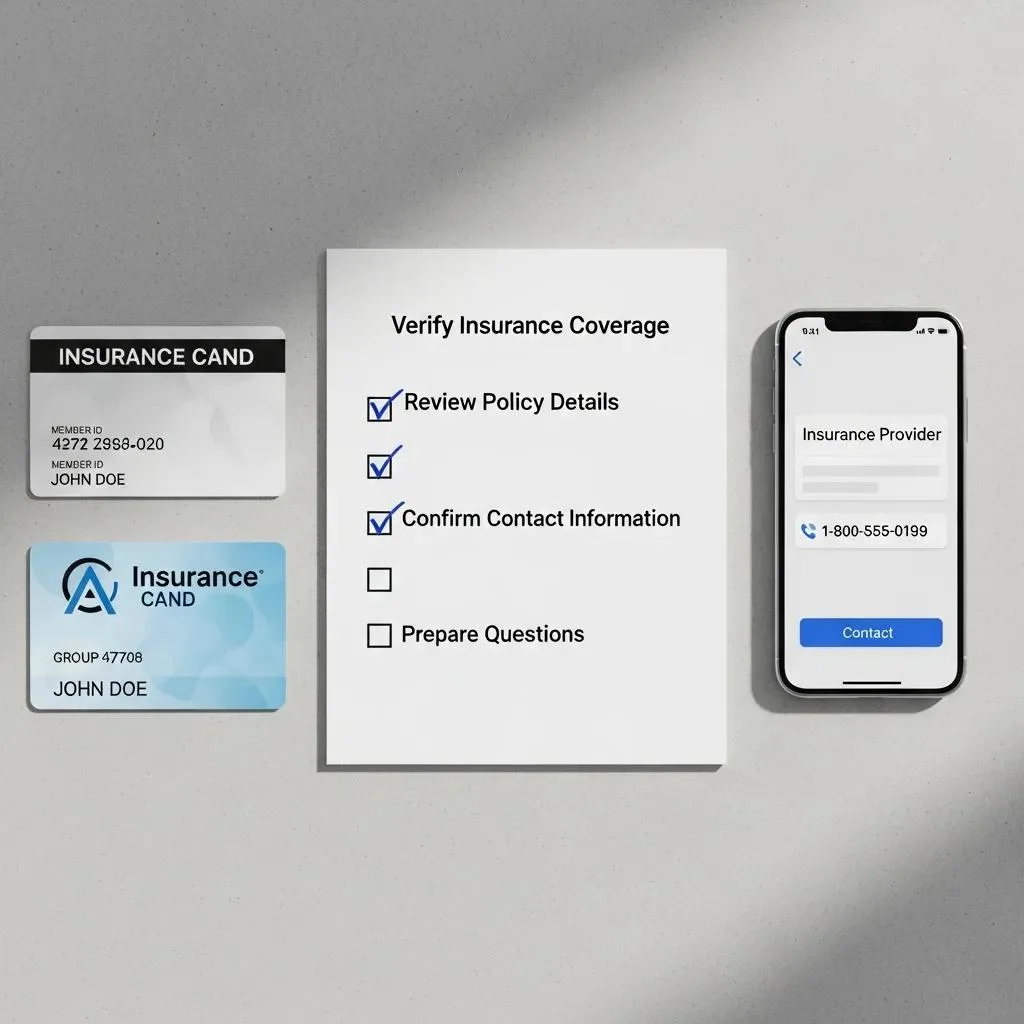
Verifying insurance for rehab follows a simple sequence: gather your policy details, contact the treatment provider or insurer, confirm covered services and any authorization needs, then plan next steps for scheduling and financial support. Start by collecting exact card details and any recent plan documents, then call your chosen facility or the insurer’s behavioral health line to request a benefits check. The verification should record whether medical detox, inpatient, outpatient, MAT, and counseling are covered, note any prior authorization or referral requirements, and estimate your cost‑sharing. Once you have that information, confirm appointment availability, request pre‑authorization if required, and arrange any supplemental funding or payment plans.
How Do You Gather the Necessary Insurance Information?
Having precise insurance details ready makes verification faster and avoids back‑and‑forth. Typical items to gather include the insurer’s name, member ID, group number, subscriber name and date of birth, the insurer’s phone number and member portal login, plus any recent Explanation of Benefits or plan summaries that mention behavioral health. Keep prior authorization numbers or policy correspondence handy if you have them—these IDs speed clerical work and reduce follow‑up. Being prepared helps both your insurer and the facility’s benefits team confirm coverage more quickly and accurately.
This checklist shortens verification calls and prevents misidentification, which in turn reduces delays when requesting authorizations.
How Can You Contact BetterChoice Treatment Center for Insurance Verification?
When you’re ready, contact BetterChoice Treatment Center by phone or use our online verification request to start a free benefits check and get clear next steps. Have your insurance card and personal identifiers ready when you call (phone: (725) 299-4777) so our intake staff can record member and plan details and begin outreach to your insurer. Our verification process is designed to be straightforward: the intake team gathers identifiers, submits a benefits inquiry to the insurer, and follows up with a written summary of covered services, prior‑authorization needs, and estimated out‑of‑pocket costs. You’ll get an initial acknowledgement quickly and a benefits summary within the verification window we communicate, so you can move forward with scheduling or financial counseling.
How Does BetterChoice Treatment Center Verify Your Insurance Benefits?
At BetterChoice, our verification process pairs intake information with direct insurer contact and a documented benefits summary that helps guide admission and financial planning. Our benefits team confirms whether services like medical detox, inpatient rehab, outpatient programs, counseling, and MAT are covered under your specific plan, checks in‑network status, and identifies any prior‑authorization or referral requirements. We translate deductible, copay, coinsurance, and any visit or day limits into a clear estimate of likely out‑of‑pocket responsibility so patients and families understand what to expect. Our goal is to communicate verification results in a way that supports scheduling and financial planning so treatment can start with minimal administrative delay.
What Happens During the Insurance Verification Process?
During verification, intake staff collect member identifiers and clinical needs, benefits coordinators contact the insurer by phone or provider portal, and all findings are recorded in the patient’s file. The benefits check focuses on covered services, in‑network vs out‑of‑network status, authorization steps and timelines, and any day or visit limits for programs like detox or residential care. Typical outcomes include full coverage approval, conditional coverage with cost‑sharing, or a requirement for pre‑authorization before admission. After documenting results, the benefits team outlines the next steps—scheduling, authorization submission, or financial counseling—and communicates those to the patient or family so momentum toward treatment continues.
How Do You Understand Your Coverage Breakdown?
Understanding coverage means translating insurance terms into real cost expectations and choices about care setting and duration. Key items to clarify include deductible (what you pay before insurance shares costs), copay (a fixed fee per visit), coinsurance (a percentage you pay after deductible), out‑of‑pocket maximum (the annual cap on your spending), and in‑network vs out‑of‑network differences. The table below connects each coverage piece to how it typically affects rehab costs and admission planning.
Knowing these elements helps you compare options—like a short inpatient stay followed by outpatient care versus a longer residential program—based on both clinical needs and coverage limits.
What Key Questions Should You Ask Your Insurance Provider About Rehab Coverage?
Asking focused questions gets the specific answers that determine what services are covered and which administrative steps are needed. Start by asking whether medical detox, inpatient rehab, outpatient programs, counseling, and MAT are included for your plan and whether those services are covered in‑network and out‑of‑network. Also confirm if prior authorization or referrals are required, what the authorization process looks like, and the usual turnaround time. Finally, ask for exact figures for deductible, copay, coinsurance, visit/day limits, and the out‑of‑pocket maximum so you can estimate likely costs and plan for appeals or supplemental funding if coverage is limited.
- Is medical detox covered under my plan for substance use disorders? Ask whether detox is covered as a separate service and if an inpatient stay requires prior authorization.
- Does my plan cover inpatient residential treatment and how many days or stays are allowed? Confirm any limits or day caps that could affect length of stay.
- Are outpatient services and counseling covered, and what are the copays or visit limits? Ask about session caps or step‑therapy rules.
- Is MAT covered, including medications and required monitoring? Clarify coverage for medications and whether specialized providers are needed.
- Do I need a referral from a primary care doctor or prior authorization to begin treatment? Identify the exact process and contacts for submitting authorizations.
Which Treatment Types Are Covered by Your Insurance?
Coverage varies by plan, but many policies include categories important to addiction care: medical detox, inpatient residential programs, outpatient therapy, counseling, MAT, and dual‑diagnosis treatment for co‑occurring mental health conditions. Medical detox is often covered when it’s clinically necessary and supervised medically, though it may require hospital‑level authorization. Inpatient residential care commonly needs prior authorization and may have day limits, while outpatient counseling and MAT usually have lower cost‑sharing but can include visit caps. Always check how your plan defines medical necessity—that definition often decides whether extended or higher‑level services are approved.
Do You Need Pre-Authorization or Referrals for Addiction Treatment?
Pre‑authorization and referral requirements are common, especially for inpatient and residential services, and getting them early avoids admission delays. To request pre‑authorization, document clinical need (assessment notes, physician recommendations), submit required forms or clinical summaries through the insurer’s provider portal or behavioral health line, and follow up to get an authorization number and an expected approval window. If denied, ask for the denial reason, request an appeal or peer‑to‑peer review with supporting clinical documentation, and consider assistance from the treatment provider’s benefits team. Keeping clear records and contact dates reduces administrative friction and supports timely appeals.
Which Insurance Plans Does BetterChoice Treatment Center Accept?
BetterChoice works with a range of major insurers and offers verification assistance to identify specific plan coverage, in‑network status, and prior‑authorization rules for each patient. Commonly accepted providers include Aetna, Blue Cross Blue Shield, and Cigna, but coverage and network status depend on the exact plan and must be confirmed with a benefits check. For patients using Nevada Medicaid or ACA marketplace plans, network participation and behavioral health carve‑outs can affect access, so early verification is especially important. Our benefits team can translate insurer policies into clear next steps for admission and financial planning.
What Coverage Details Are Available for Major Providers Like Aetna, Blue Cross Blue Shield, and Cigna?
These carrier notes offer general expectations: Aetna and many BCBS plans tend to cover medically necessary detox and inpatient care with prior authorization, while Cigna often supports MAT and outpatient counseling through structured behavioral health pathways. Employer agreements, plan tiers, and state Medicaid rules create variation, so these points are starting places—not guarantees. The most reliable step is a benefits check using your exact member ID and plan documents; that will reveal plan‑specific limits, authorization procedures, and required provider directories. BetterChoice’s verification support can handle that query for you.
How Does Nevada-Specific Insurance Affect Your Rehab Benefits?
Nevada rules, Medicaid plan setups, and state parity enforcement affect coverage for addiction treatment, so local verification matters. Nevada Medicaid policies and parity laws influence whether mental health and substance use services get coverage similar to medical care, and network adequacy around Las Vegas can determine provider availability and travel needs. Because state programs and insurer networks change, a local benefits review—ideally helped by the treatment provider—is the best way to confirm eligibility, network options, and any state funds that might supplement private insurance. That local check helps shape realistic choices about facility selection and care sequencing.
What Financial Assistance Options Are Available Beyond Insurance?

If insurance leaves a gap, other funding routes can help: state or federal grants, nonprofit programs, sliding‑scale fees, and negotiated payment plans with providers. Check eligibility for Medicaid, state behavioral health grants, and SAMHSA‑funded local resources for potential coverage or one‑time funds to support admission. Many facilities also offer payment plans, sliding scales, or charitable assistance when insurance doesn’t fully cover care, and financial counselors can map those options so treatment isn’t delayed. Exploring these resources early helps maintain continuity of care when coverage is partial or pending authorization.
- For immediate help with cost gaps, look into state and federal programs that fund behavioral health treatment.
- Ask providers about sliding‑scale fees, charitable assistance, and local nonprofit programs that help people access care.
- Request a written estimate from the facility’s financial counselor so you can compare payment‑plan options and avoid surprise bills.
What State Funding and Grants Can Help Cover Rehab Costs?
State and federal programs—like Medicaid and targeted behavioral health grants—are common sources of assistance for eligible people and often prioritize medically necessary detox and treatment for low‑income residents. SAMHSA and state behavioral health agencies may refer you to local grant‑funded programs that cover part or all of treatment for qualifying patients, and some counties keep emergency funds for urgent admissions. To pursue these resources, find the right state agency, gather income and eligibility documents, and ask a case manager or the treatment center’s intake staff for help completing applications quickly. The sooner you ask, the better the chance of securing supplemental funding before admission.
Are Payment Plans Offered at BetterChoice Treatment Center?
Specific payment plans are not listed publicly, so please ask BetterChoice directly about in‑house payment options and documentation requirements when insurance leaves a gap. When you contact us for verification, ask the intake or financial counseling team whether flexible payment schedules, required down payments, or installment timelines are available; request any terms in writing so you can compare them with other funding sources. Be clear and practical when explaining your coverage results so the financial counselor can offer realistic options. If needed, provide proof of income and household expenses to support requests for sliding‑scale or deferred payment arrangements.
- Prepare documentation: Bring proof of income and insurance verification when you discuss payment plans.
- Ask for terms in writing: Get the upfront amount, installment schedule, and any fees or interest in writing.
- Explore supplemental funds: Combine payment plans with state grants or nonprofit aid when possible.
Frequently Asked Questions
What should I do if my insurance claim for rehab is denied?
If your claim is denied, read the denial letter carefully to understand the reason—common causes are lack of medical necessity or missing documentation. You can appeal by gathering supporting evidence, such as clinical notes from your provider, and submitting a formal appeal to your insurer. Our benefits team can help with documentation and the appeals process, including peer‑to‑peer reviews when appropriate.
How can I find out if my insurance covers out-of-network rehab services?
To check out‑of‑network coverage, contact your insurer and ask about your plan’s out‑of‑network benefits, reimbursement rates, additional costs, and whether prior authorization is needed. Review your policy documents for details, and ask the treatment center if they can assist with verification for a specific facility.
What are the typical out-of-pocket costs for rehab services?
Out‑of‑pocket costs vary widely by plan and treatment type. Common costs include deductibles, copays, and coinsurance. For example, you may pay a deductible before insurance covers expenses, then a copay per visit or a percentage (coinsurance) for larger services. Verify these details with your insurer during the benefits check to understand your likely financial responsibility.
Can I switch insurance plans during my treatment?
You can change insurance plans while in treatment, but it may complicate coverage. If you switch, verify the new plan’s benefits for rehab services and whether your provider is in‑network to avoid higher costs. Inform your treatment center so they can update your insurance and re‑verify coverage under the new plan.
What if I have a pre-existing condition related to addiction?
Under the Affordable Care Act, plans generally cannot deny coverage for treatment because of a pre‑existing condition. Coverage specifics still vary by plan, so verify what services are covered and any limits that apply. Be clear with your insurer about your condition and treatment needs so you get the support you require.
How can I appeal a low reimbursement rate from my insurance for rehab services?
To appeal a low reimbursement rate, review the Explanation of Benefits (EOB) to identify which services were underpaid. Collect supporting documentation like invoices and medical records, and submit a formal appeal to your insurer explaining why the rate should be higher. Follow up regularly and involve your provider’s billing or benefits team for additional support.
What resources are available for those without insurance coverage for rehab?
If you don’t have insurance, there are still options: Medicaid (if eligible), sliding‑scale fees, nonprofit grants, and community health programs may help cover treatment. Contact local treatment centers or behavioral health agencies to explore available assistance and referrals.
Conclusion
Verifying your insurance for rehab is a key step to understanding coverage and financial responsibility—and it can make the treatment process faster and less stressful. Follow the steps in this guide to get clear answers about covered services, authorization needs, and likely costs. When you’re ready, reach out to BetterChoice Treatment Center for a free benefits check so you can move forward with confidence. We’re here to help you make informed choices on the path to recovery.