Sound Baths for Addiction Recovery in Las Vegas: Gentle, Evidence-Informed Support for Lasting Sobriety
Sound bath therapy uses sustained tones and vibrations from instruments like singing bowls and gongs to encourage deep relaxation and clearer thinking. Increasingly, clinics are offering sound-based sessions as a complementary tool in addiction recovery to help reduce stress, restore sleep, and improve emotional regulation. This guide describes how sound baths work, summarizes current evidence relevant to recovery, and outlines what clients can expect from clinical sessions in Las Vegas. Many people early in recovery face high anxiety, trouble sleeping, and intense, trigger-driven cravings; sound work offers a non‑pharmacological way to lower arousal and practice mindfulness skills that support relapse prevention. You’ll find clear explanations of vibrational mechanisms, research-backed benefits, what happens during a clinical sound bath, and how this modality fits alongside medical detox and counseling. We also cover screening, safety and privacy at local programs, and concise FAQs about frequency, safety, and relapse-related outcomes.
What is Sound Bath Therapy and How Does It Support Addiction Recovery?
Sound bath therapy is a guided, holistic session where participants are immersed in layered tones to promote relaxation, focus, and emotional processing. The practice relies on acoustic entrainment—sound patterns that help shift brain activity toward alpha and theta waves—and on vagal pathways that encourage a parasympathetic (rest-and-digest) response, often lowering heart rate and cortisol. After repeated sessions many people report calmer thinking, less anxiety, and better sleep—outcomes that directly support reduced relapse risk and stronger engagement in treatment. Clinical programs often combine sound baths with structured mindfulness work to help people practice non-reactivity to cravings. It’s important to view sound baths as an adjunctive, evidence-informed tool—not a replacement for primary medical or psychological treatment.
Below are three core recovery-focused benefits that explain why clinicians add sound baths to treatment plans and help readers grasp the clinical intent before we review instruments and mechanisms.
- Stress Reduction: Sound entrainment supports parasympathetic activity and lowers physiological arousal associated with relapse triggers.
- Sleep Improvement: Shifting toward alpha/theta states can reduce time to fall asleep and improve sleep continuity for people in early recovery.
- Emotional Regulation: Guided sound sessions create a contained space for processing emotions, strengthening coping skills used in therapy.
Lower stress, better sleep, and improved emotional regulation work together to reduce vulnerability to craving-driven relapse and to enhance participation in counseling. The next section describes the instruments that create these therapeutic frequencies and the sensations participants commonly notice.
Which Instruments Are Used in Sound Healing Sessions?

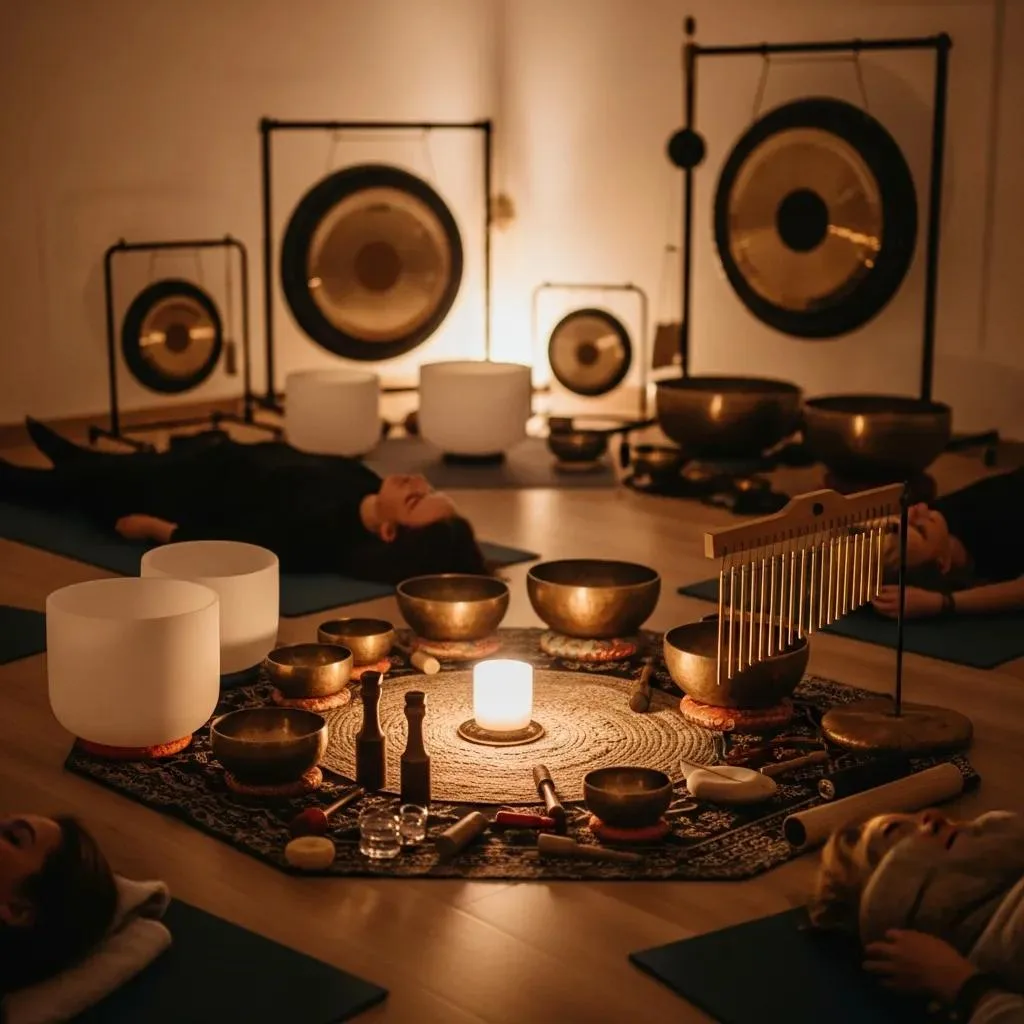
Clinical sound baths typically use instruments with distinct acoustic signatures that serve different therapeutic roles. Singing bowls produce sustained, harmonic tones that encourage steady entrainment and a warm sensation; gongs create wide-spectrum waves that can shift attention and interrupt repetitive thoughts; chimes provide bright, high-frequency cues that help reorient awareness; and tuning forks deliver focused frequencies for somatic work. Each instrument contributes a specific sonic texture that facilitators use to guide the session from grounding to deeper relaxation. Participants usually lie or sit comfortably and notice changing physical sensations—deep calm, tingling, or warmth—rather than expecting visual phenomena. Facilitators choose instruments deliberately to support a safe, scaffolded experience.
Image alt-text suggestion:
This alt-text identifies equipment clearly without making clinical promises.
Next, we explain how those vibrations translate into measurable relaxation and mindfulness effects.
How Do Sound Vibrations Promote Mindfulness and Relaxation?
Sound vibrations offer a steady external focus that supports breath awareness and attentional training, helping shift the nervous system from sympathetic arousal toward parasympathetic calm. Patterned acoustic input can encourage neural entrainment, nudging dominant brainwave activity toward alpha and theta bands associated with relaxed wakefulness and light meditative states; this change is linked to reduced stress responses and lower cortisol in psychophysiological models. In practice, facilitators combine sound with simple guided breathing so participants can track bodily sensations without getting caught in rumination—strengthening attention and lowering reactivity to cravings.
A short practice might include 5 minutes of paced diaphragmatic breathing followed by 20–30 minutes of continuous singing bowl tones to practice nonjudgmental noticing. That mix of bottom-up autonomic regulation and top-down attentional focus is what many programs aim for, and it underpins emerging clinical findings for adjunctive sound interventions in addiction care.
What Are the Science-Backed Benefits of Sound Bath Therapy for Addiction?
Research and clinical reports suggest several measurable benefits of sound baths when used as an adjunct to standard care. Studies and program data show reductions in self-reported anxiety and stress, improvements in sleep quality, better mood regulation, and gains in mindfulness skills that support relapse prevention. Reviews of work from roughly 2010–2023 highlight emerging support for autonomic regulation and sleep benefits, and many programs pair sound baths with mindfulness-based relapse-prevention approaches. Crucially, sound baths are complementary care; medical detox, appropriate medications, and psychotherapy remain primary. The table below summarizes how different benefits map to likely mechanisms and expected clinical effects to help clinicians and clients decide where sound baths might add value.
Matching benefits to mechanisms helps treatment teams align interventions with client goals.
This comparison sets realistic expectations about how each benefit supports recovery goals. The following subsections explore stress and emotional pathways in more clinical detail.
How Does Sound Therapy Reduce Stress and Anxiety in Recovery?
Sound therapy lowers stress by combining physiological regulation with attentional shifts that interrupt rumination and hypervigilance common in early recovery. Acoustic entrainment can increase parasympathetic activity and reduce sympathetic drive, which shows up as improvements in heart-rate markers and lower subjective anxiety. Short-term studies report drops in cortisol and anxiety after single sessions, while repeated sessions are linked to more lasting reductions in baseline arousal and stress reactivity. Clinically, a calmer baseline makes withdrawal symptoms and stress-driven cravings easier to manage and helps clients participate more effectively in counseling.
The next subsection looks at how these calming effects support sleep and emotional processing.
In What Ways Does Sound Bath Enhance Emotional Regulation and Sleep Quality?
Sound baths create a nonverbal, guided setting for noticing and processing feelings, which helps clients practice observing emotions without immediately reacting. Over time, this can strengthen relapse-prevention skills like urge surfing. For sleep, entrainment toward slower brainwave patterns and reduced pre‑sleep arousal often shortens sleep onset and improves perceived sleep quality—benefits that stabilize daytime mood and lower relapse risk. When combined with targeted therapies such as CBT for insomnia or DBT skills training, sound baths can help participants adhere to treatment and consolidate gains by reducing physiological arousal.
Next we outline what a clinical sound bath session looks like at local treatment settings.
What to Expect During a Sound Bath Session at BetterChoice Treatment Center
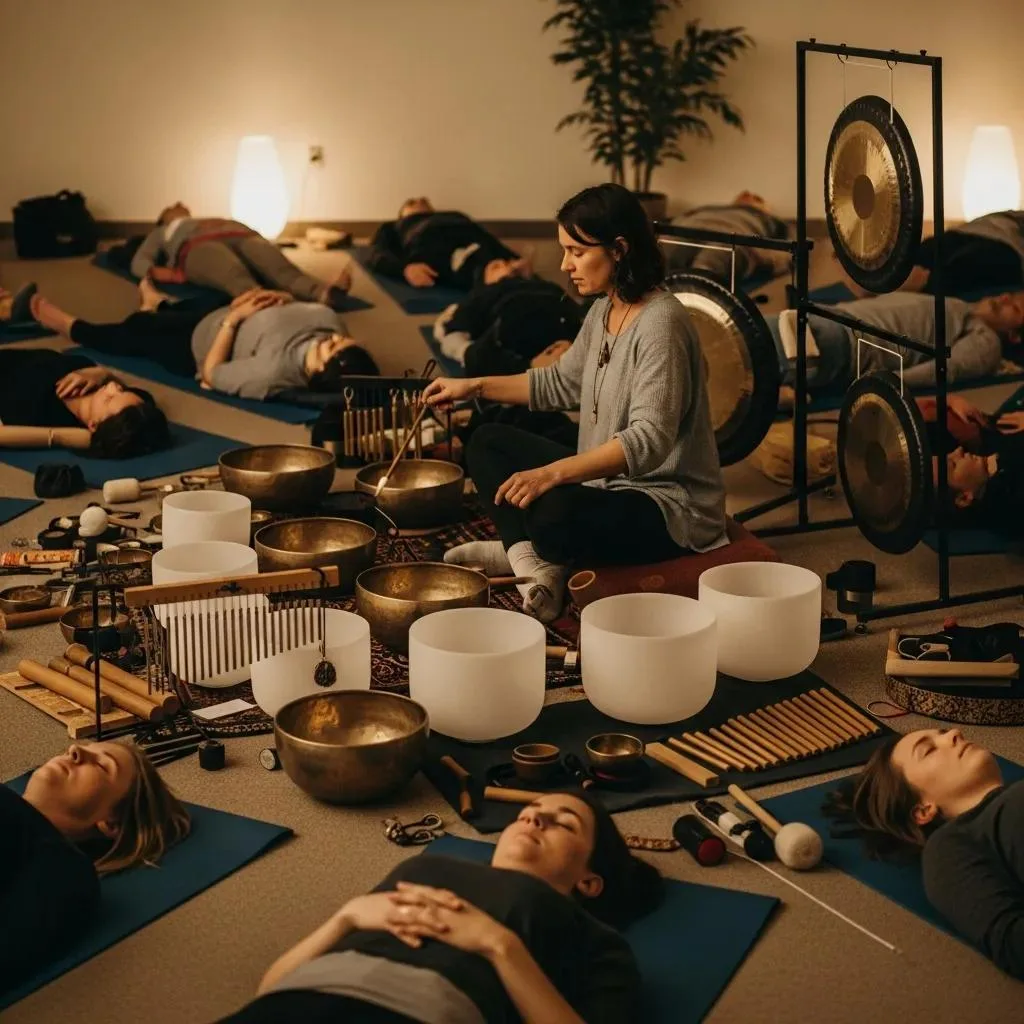
A clinical sound bath at BetterChoice begins with a brief intake and safety screening, then follows a structured flow: grounding, guided breathwork, the main sound immersion, and a short debrief to integrate the experience. Sessions take place in a quiet, private therapy room set up for lying or seated comfort; facilitators review medical and psychiatric contraindications during intake and record consent and participation preferences. A full appointment usually runs 45–75 minutes, including check-in and debrief, with the sound immersion commonly lasting 30–45 minutes. BetterChoice offers sound baths through its Holistic Therapies program, coordinating facilitators with clinical teams so each session aligns with a client’s broader treatment and safety needs. Understanding this structure helps clients prepare mentally and logistically for participation in a supervised clinical setting.
Here’s a simple, step-by-step outline of what happens during a typical session.
- Arrival and Intake: Check-in, short safety screening, and setting comfort preferences.
- Preparation and Grounding: Guided breathing and positioning to create a safe starting place.
- Sound Immersion: 30–45 minutes of layered tones from singing bowls, gongs, chimes, and tuning forks while participants rest.
- Transition and Debrief: 10–15 minutes to reorient, share observations, and note any follow-up recommendations.
This sequence reflects clinical practice designed to reduce risk, protect privacy, and maximize therapeutic benefit. The table below shows common session formats and typical timing so clients and clinicians can pick what fits best.
These timeframes help clients and clinicians choose formats that match medical needs and privacy preferences. The next sections describe session structure in more detail and outline facilitator responsibilities.
How Is a Typical Sound Bath Session Structured?
Most sessions start with a quick safety check and guided breathing to anchor attention and assess tolerance. Facilitators then introduce progressively layered sounds, moving from grounding tones to broader resonant textures before a gentle decrescendo that supports safe reorientation. Instrument choices and volume are adjusted for sensitivity and clinical goals, and sessions often follow three phases: grounding (first 5–10 minutes), immersion (20–35 minutes), and integration (final 10–15 minutes). Accessibility options—such as seated positions, eye masks, or softer instruments—are available to meet sensory and trauma-informed needs. Participants are reminded they can pause or signal discomfort at any time, and the debrief helps translate sensory experience into useful therapy observations.
This phased approach balances exposure with safety and prepares participants for follow-up therapeutic work.
What Is the Role of the Facilitator and Participant Experience?
Facilitators manage safety, pacing, and clinical boundaries: screening for contraindications, setting expectations, sequencing instruments, monitoring responses, and coordinating with clinical teams when needed. In clinical settings facilitators typically have training in trauma-informed approaches, mindfulness instruction, and instrument competency; their role is supportive rather than prescriptive. Participants give informed consent, share comfort preferences, and are encouraged to observe sensations without trying to produce specific effects—this reduces pressure and supports autonomy. Facilitators document session notes so sound work can inform the broader treatment plan without replacing medical interventions.
This collaborative dynamic helps readers see how sound baths fit into ongoing, personalized care plans.
How Is Sound Bath Therapy Integrated into Personalized Addiction Recovery Plans?
We integrate sound baths into individualized plans by matching session timing and frequency to treatment phase, coordinating with medical detox and counseling teams, and using sound sessions to target goals like sleep stabilization or stress management. In medical detox, facilitators typically wait until acute withdrawal is stabilized and the client is medically cleared; inpatient programs may schedule regular group sessions to complement daytime therapy, while outpatient and aftercare plans commonly use sound baths as relapse-prevention supports. BetterChoice coordinates sound sessions with physicians, therapists, and nursing staff so they reinforce—rather than conflict with—medications and psychotherapy.
This map helps treatment teams and clients see where sound baths add practical value across different stages of care.
This mapping underscores that sound baths are adjunctive tools scheduled with clinical judgment and client readiness in mind. The next two subsections give practical guidance on sequencing with medical detox and therapy.
How Does Sound Bath Complement Medical Detox and Counseling?
Sound baths can help address autonomic dysregulation and sleep problems that remain after physiological stabilization, but they are not a substitute for medically supervised detox. Timing matters: immersive sessions should be avoided during acute, medically unstable withdrawal and introduced only after medical clearance. In counseling, a sound session can lower baseline arousal before exposure-based work or help integrate emotionally intense material afterward. Therapists and facilitators may schedule sound baths before individual sessions to increase receptivity or after group work to aid consolidation of therapeutic gains.
This practical sequencing highlights safety boundaries and shows how sound baths can amplify the effects of evidence-based therapies when used in coordination.
What Are the Benefits of Combining Sound Healing with Traditional Therapies?
Combining sound work with traditional therapies often produces complementary gains: better sleep supports daytime cognitive functioning needed for therapy; reduced anxiety improves attendance and participation; and embodied, experiential sound sessions give therapists material to work with in talk-based interventions. Evidence points to better adherence and satisfaction for multimodal approaches compared with single-modality care, especially when interventions target different mechanisms such as autonomic balance and cognitive restructuring. Best practices include scheduling sound sessions 1–3 times weekly depending on phase, tracking responses to tailor frequency, and using brief outcome measures (sleep diaries, anxiety scales) to measure progress. These steps help clinicians and clients set measurable goals and fine-tune treatment pacing over time.
Next we address who is a good candidate and what safety measures clinics put in place.
Is Sound Bath Therapy Right for You? Common Questions and Considerations
Deciding whether sound baths are appropriate involves screening for contraindications, clarifying goals, and checking sensory tolerance and psychiatric stability. Suitable candidates often include people in early recovery with insomnia, elevated anxiety, or difficulty regulating emotions who are medically stable and engaged in a broader treatment plan. Contraindications or cautionary signs include unmanaged psychosis, severe auditory hypersensitivity, or acute medical instability—conditions that require medical or psychiatric clearance first. Family and support people can help clients prepare, attend debriefs, and reinforce continuity of care. The list below outlines common candidate profiles to help you self-assess before discussing sound baths with your clinical team.
- Early recovery with sleep disturbance: People who have trouble falling or staying asleep and feel fatigued during the day.
- High anxiety or stress reactivity: Individuals whose physiological arousal interferes with therapy or daily functioning.
- Clients seeking non-pharmacological adjuncts: Those who want complementary methods alongside counseling and medical care.
These profiles clarify typical use-cases and lead into program-level safety and privacy practices that support informed consent.
Who Can Benefit Most from Vibrational Sound Therapy?
Those who tend to benefit present with stress-related triggers, sleep problems, or a desire to build mindfulness and distress-tolerance skills as part of relapse prevention. Clients with trauma histories can benefit from trauma‑informed, paced sessions that allow gradual exposure to internal sensations, but facilitators should offer opt-outs and extra supports to avoid re-traumatization. People with uncontrolled psychosis, severe auditory processing disorders, or acute medical instability should get medical clearance before participating; these conditions usually require prioritizing conventional medical care first. Careful screening and individualized pacing help maximize benefit and limit risk.
This guidance leads naturally to an overview of safety and privacy steps programs take to protect participants.
What Are the Safety and Privacy Measures at BetterChoice in Las Vegas?
At BetterChoice Treatment Center, sound baths are offered inside supervised clinical programs that emphasize privacy, informed consent, and trauma‑informed facilitation. Sessions occur in private or small-group therapy rooms where participation is optional; facilitators monitor responses and staff coordinate with medical and therapy teams to confirm appropriateness. BetterChoice’s multidisciplinary model—physicians, therapists, and nurses—reviews client status and timing for adjunctive therapies like sound baths, and the center provides information about accreditations and standards of care. Participants can expect clinical confidentiality, private intake screening, and the right to pause or decline participation at any time to preserve safety and autonomy.
Those safeguards lead into brief FAQs that answer common practical questions about clothing, side effects, preparation, and frequency.
Frequently Asked Questions
What should I wear to a sound bath session?
Wear comfortable, loose clothing that lets you relax. Dressing in layers is helpful because room temperature can vary. Bringing a blanket or yoga mat can make you more comfortable during the session. The goal is to be physically at ease so you can focus on the experience.
Are there any side effects associated with sound bath therapy?
Most people tolerate sound baths well, but some may notice temporary emotional release, tiredness, or increased awareness of body sensations. These responses are usually short-lived and can be part of processing. If you have severe auditory sensitivity or certain psychiatric conditions, consult your healthcare provider before participating.
How can I prepare for my first sound bath session?
Arrive a few minutes early to settle in. Come with an open mind and without specific expectations. Staying hydrated beforehand is helpful, and it can be useful to set a simple intention or area of focus to guide your attention during the session.
Can sound baths be used alongside other therapies?
Yes. Sound baths are often used with therapies like CBT or mindfulness-based approaches. They can help lower arousal and make it easier to engage in traditional therapy. BetterChoice coordinates sound sessions with counseling to support overall recovery goals.
Is sound bath therapy suitable for everyone in recovery?
While many people benefit, sound baths aren’t right for everyone. Those with uncontrolled psychiatric symptoms or certain medical concerns should get medical clearance first. A thorough screening process helps determine whether sound baths fit an individual’s treatment plan and needs.
What can I expect to feel during a sound bath session?
People describe a variety of sensations—deep relaxation, tingling, warmth, or emotional release. Experiences differ from person to person, so it’s best to approach the session without strict expectations. The sounds are meant to create a calm space for reflection and mindfulness.
Can Sound Baths Reduce Drug Cravings and Prevent Relapse?
Sound baths can lessen the intensity of cravings by lowering stress and physiological arousal, but they are not a standalone solution for preventing relapse. By calming autonomic tone and improving sleep, sound work can reduce vulnerability to cue-driven relapse and—when combined with counseling and medication management—contribute to a multi-pronged relapse-prevention plan. Clinical guidance recommends using sound sessions alongside evidence-based relapse-prevention tools (for example, mindfulness-based relapse prevention and CBT) rather than relying on acoustic interventions alone. In practice, clients who combine sound sessions with active therapeutic work often report better coping with urges and a greater ability to apply learned skills when cravings occur.
This framing sets realistic expectations and reinforces the adjunctive role of sound baths in comprehensive care.
How Often Should One Participate in Sound Healing Sessions?
Frequency depends on treatment phase, clinical goals, and personal tolerance. In inpatient settings, sessions may occur 2–4 times per week to support stabilization and sleep; outpatient or aftercare plans commonly use 1–3 sessions weekly as adjunctive maintenance or during high-risk periods. For long-term maintenance, monthly or biweekly sessions can help sustain gains. Clinicians typically taper frequency based on measured improvements in sleep and anxiety. Coordinate scheduling with your clinical team so sound baths complement counseling and medication rather than interfere with them.
If you’re interested in sound bath therapy at BetterChoice Treatment Center, the next step is to call our clinical intake line to discuss readiness, current Holistic Therapies schedules, and a brief screening. BetterChoice offers on-site holistic therapies within a coordinated clinical program and can advise on medical clearance, scheduling, and how sessions fit with other levels of care. Contact us at (725) 299-4777 or visit 198 Ebb Tide Cir, Las Vegas, NV 89123 to ask about intake, privacy practices, and individualized planning. This neutral guidance helps you take an informed next step while ensuring clinical coordination before participation.
Conclusion
Sound bath therapy can be a supportive, evidence-informed complement to addiction recovery—promoting stress reduction, better sleep, and greater emotional regulation. When added thoughtfully to a personalized treatment plan, sound work can strengthen relapse-prevention skills and improve therapy engagement. If you’re curious about how sound therapy might fit your recovery path, reach out to our team for a confidential conversation about readiness and next steps. Explore the potential benefits of sound baths at BetterChoice Treatment Center when you’re ready to learn more.