

SAMHSA Resources for Substance Abuse & Mental Health: A Practical, Step‑by‑Step Guide to Treatment and Support
SAMHSA — the Substance Abuse and Mental Health Services Administration — is the federal hub for guidance, data, and tools that help people find and access behavioral health care. This guide breaks down how to use those resources in plain language: how to search for treatment, understand levels of care, contact crisis supports, and take immediate next steps. You’ll learn what SAMHSA does, how to use the national treatment locator and helplines, which evidence‑based practices to expect, where families can find help, and how 2023–2024 data affect demand and access. When a crisis or uncertainty hits, SAMHSA’s centralized tools and best‑practice guidance can shorten the path from need to safe, effective care.
We walk through the agency’s mission and main programs, show how FindTreatment.gov and the 988 Lifeline work, summarize recommended clinical approaches, and point you to family resources. Practical checklists, clear comparison points, and next steps are included so you can verify facility listings, confirm services and accreditations, and contact crisis supports with confidence.
Throughout this article we use searchable, action‑oriented terms like SAMHSA resources, SAMHSA treatment locator, FindTreatment.gov, 988 Lifeline, evidence‑based practices, and SAMHSA resources for families so you can find this information quickly.
What is SAMHSA and How Does It Support Behavioral Health?
SAMHSA is a federal public health agency inside the U.S. Department of Health and Human Services focused on preventing substance misuse, improving treatment, and supporting long‑term recovery. The agency funds programs, issues clinical guidance, collects national data, and offers public tools — like treatment locators and helplines — that connect people to care.
Those activities reduce barriers by aligning funding, clinical guidance, and data‑driven priorities so local providers can build programs that follow proven practices. Knowing what SAMHSA does helps you recognize why its guidance matters when looking for trustworthy services and how federal tools can speed access to appropriate care in your area.
What is SAMHSA’s Mission and Key Programs?
SAMHSA’s mission is to lessen the impact of substance abuse and mental illness and to promote recovery‑oriented systems through prevention, treatment, and improved services. Core programs include the national treatment locator (FindTreatment.gov), the 988 Lifeline and other helplines, training and technical assistance for providers, grants to states and community organizations, and published treatment protocols and toolkits.
These programs give clinicians and the public practical resources and help standardize care so evidence‑based treatments reach more people. For patients and families, that translates into clearer pathways to accredited services, crisis support, and educational materials that explain levels of care and therapeutic options.
How Does SAMHSA Influence Substance Abuse and Mental Health Services?
SAMHSA shapes services three main ways: publishing treatment guidance, awarding grants to expand services, and producing national data that highlight gaps and priorities. Treatment Improvement Protocols (TIPs) and evidence summaries guide clinicians on effective interventions, while grants support service expansion and workforce development in underserved areas.
Surveillance tools like the National Survey on Drug Use and Health (NSDUH) inform policy and local planning, directing where funds and prevention efforts are most needed. In short — guidance, funding, and data together help set clinical standards and improve practical access to care in communities.
How Can You Use the SAMHSA Treatment Locator to Find Care?
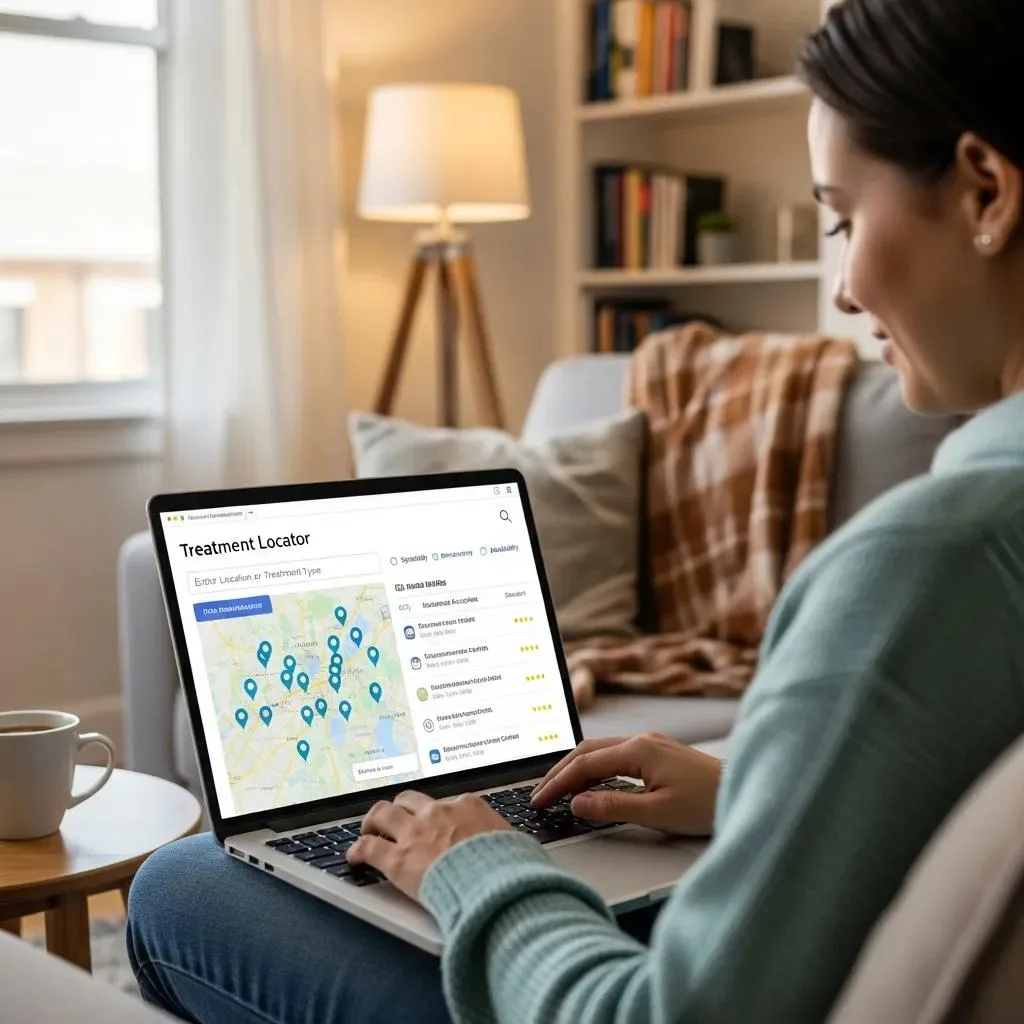
The SAMHSA treatment locator lets you search for local behavioral health services by location, service type, and special filters such as accreditation or programs for co‑occurring disorders. Listings include service descriptions, payment options, and contact information so you can quickly screen facilities. The locator highlights programs that match clinical needs — medical detox, inpatient rehab, medication‑assisted treatment (MAT), and more. Use this short, practical three‑step routine to get immediate results.
- Enter your city, ZIP code, or county and choose the service type you need (medical detox, inpatient, outpatient, etc.).
- Filter for special needs — co‑occurring disorder care, MAT, accreditation, or facility type — then review each listing’s services and contact details.
- Call or use the facility’s intake form to confirm availability, insurance acceptance, intake criteria, and next steps for scheduling an assessment.
This quick workflow narrows options fast and gives you the questions to ask when you contact a program.
What is FindTreatment.gov and How Does It Work?
FindTreatment.gov is SAMHSA’s public treatment locator that matches your search terms to a national database of providers. Results filter by geography, services offered, and client characteristics, and they show service summaries, accreditation flags, and how to contact each program.
Expect to review several listings, compare service offerings (for example medical detox versus intensive outpatient), and check whether a program treats co‑occurring mental health disorders. If a listing is missing details, call or submit the intake form to confirm program specifics — including insurance and any pre‑authorization.
Troubleshooting tips: widen your search radius if results are limited, try alternate keywords (for example “IOP” for intensive outpatient program), and save facility names for follow‑up. A good search will produce a shortlist of programs to call and verify, which speeds access to assessments and possible admission.
How is BetterChoice Treatment Center Listed on SAMHSA’s Locator?
When BetterChoice Treatment Center appears in the SAMHSA locator, the entry should show the services offered, accreditation status, and contact information to help you assess fit and safety. To verify any listing, confirm it includes core services you need — medical detox, inpatient rehab, and treatment for co‑occurring disorders — and ask for accreditation documentation during intake. Prepare questions about the intake process, medical supervision during detox, therapy types, aftercare planning, and any holistic or adjunctive services.
- Short checklist before you call a facility:
Verify the facility lists the specific service you need and that it treats co‑occurring conditions.
Ask which accreditations the program holds and how those affect clinical oversight.
Confirm payment options, whether your insurance is accepted, and if pre‑authorization is required.
That verification helps ensure a listing’s claims match current services and lets you compare programs objectively before scheduling an intake.
This comparison shows which locator features help most when verifying a program and planning next steps.
What Services Does the SAMHSA National Helpline Provide?
SAMHSA supports national helplines that offer crisis counseling, referrals to local treatment options, and information about resources. These helplines triage risk, provide immediate emotional support, and connect callers to local services. The system includes crisis lines such as the 988 Suicide & Crisis Lifeline and referral lines that can identify nearby substance use treatment. Callers can expect confidentiality, crisis de‑escalation, and help finding programs that match clinical and logistical needs. Helplines stabilize immediate risk and guide callers to next steps — often contacting local facilities or arranging intake assessments.
How to Access Immediate Support Through the 988 Lifeline?
Dialing 988 connects you to trained crisis counselors who respond to mental health emergencies, provide de‑escalation, and coordinate referrals when needed — including mobile crisis teams or emergency services. Be ready to describe current risk factors, symptoms, and any immediate safety concerns; counselors assess danger, offer supportive counseling, and help create a short‑term safety plan. Confidentiality is emphasized, and if additional local help is needed, counselors will guide you to in‑person services or follow‑up referrals. After stabilization, they can help you find ongoing treatment options nearby.
What Types of Crisis and Referral Services Are Available?
Crisis services include phone counseling, text/chat supports, community mobile crisis teams, crisis stabilization units, and referrals to emergency departments when medical or safety risks are high. Referral pathways depend on assessed risk: lower‑risk callers may receive information and warm handoffs to outpatient programs; higher‑risk situations may trigger mobile response teams or transport to a crisis center. Typical outcomes include scheduling intake assessments, arranging medication management for acute symptoms, or short‑term stabilization. After a crisis call, follow up with a local provider via a treatment locator to maintain continuity of care.
This table summarizes helpline services and sets clear expectations for callers.
What Are SAMHSA’s Evidence-Based Practices for Addiction and Mental Health Treatment?
Evidence‑based practices (EBPs) are treatments backed by research that improve outcomes for substance use and mental health conditions. SAMHSA promotes EBPs to ensure consistent, effective care across settings. EBPs include behavioral therapies, medications when clinically appropriate, and integrated care for co‑occurring disorders. They are chosen based on clinical need, patient preference, and treatment setting. Using EBPs increases engagement, lowers relapse risk, and supports measurable recovery plans — for example MAT for opioid use disorder and structured therapies like CBT.
Which Treatment Approaches Does SAMHSA Recommend?
SAMHSA highlights several priority approaches: medication‑assisted treatment (MAT) for opioid and certain alcohol disorders; cognitive behavioral therapy (CBT) for many substance use and mental health conditions; motivational interviewing to boost readiness; and trauma‑informed care for people with adverse histories. These methods are used across settings — detox and inpatient care usually combine medical oversight with psychotherapy, while outpatient programs commonly use CBT and motivational strategies alongside medication when indicated. Using these approaches addresses both biological and behavioral factors to improve outcomes.
- Common evidence‑based approaches include:
Medication‑Assisted Treatment (MAT) for opioid and select alcohol use disorders.
Cognitive Behavioral Therapy (CBT) for substance use and co‑occurring mental health conditions.
Motivational Interviewing to support readiness and retention in care.
Use this comparison to match treatments to clinical needs and care settings.
How Does BetterChoice Align Its Programs with SAMHSA Guidelines?
BetterChoice Treatment Center offers medical detox, inpatient rehabilitation, and services for co‑occurring mental health disorders. The center’s stated accreditations and use of evidence‑based modalities reflect the oversight and clinical practices SAMHSA recommends. Medical supervision during detox, integrated behavioral therapies, and individualized treatment planning mirror SAMHSA’s emphasis on combining medication and counseling where appropriate. For families and patients comparing options, recognized accreditation and explicit use of EBPs are practical signals that care follows nationally endorsed standards.
This table links recommended practices to what they look like in treatment and the benefits patients can expect.
What Resources Does SAMHSA Offer for Families and Loved Ones?

SAMHSA offers families clear, practical resources: educational guides, toolkits for supporting a loved one, advice on family involvement in treatment planning, and directories of peer and family support networks. These materials explain healthy boundaries, how to support treatment adherence, and how to work with clinicians in a recovery‑oriented way while protecting family safety and self‑care. For families, these resources reduce isolation and provide concrete steps for participating in treatment decisions, attending family counseling, and planning aftercare. Knowing where to find family‑focused materials helps loved ones act effectively during intake and throughout the recovery journey.
How Can Families Support Recovery Using SAMHSA Resources?
Families can use SAMHSA guides to learn how to talk about substance use and mental health without enabling, spot signs of relapse, and take part in family counseling or orientation sessions. Practical steps include attending program orientations, asking clinicians about family education, and using SAMHSA tools to create safety and communication plans at home. These actions increase the chance of sustained recovery because they align family behavior with clinical recommendations and build structured support. Families should also seek their own peer support and education to stay resilient.
- Family‑support actions include:
Learn about boundaries and non‑enabling behaviors from SAMHSA materials.
Join family support networks for ongoing peer guidance and coping strategies.
Engage with treatment teams to understand roles in aftercare planning.
A short checklist like this turns guidance into immediate steps families can take while a loved one is in care.
Where to Find Educational Materials and Support Networks?
SAMHSA’s publications, online toolkits, and state directories offer printable guides, videos, and listings for peer‑run family organizations that provide structured education and connection. Local community mental health centers and peer networks often host family classes and support meetings; SAMHSA resources can point families to these local options and model curricula for family counseling. Taking these steps prepares families for intake conversations and follow‑up planning with providers and helps reinforce recovery at home.
Many treatment centers also offer family support services that complement SAMHSA materials; for example, BetterChoice Treatment Center lists family‑oriented orientations and involvement as part of its program, which families can confirm when they verify facility details.
What Are the Latest 2023-2024 SAMHSA Statistics on Substance Abuse and Mental Health?
Recent national survey data shape demand for services and reveal gaps between need and treatment capacity — factors that influence wait times and prioritization for certain populations. Key 2023–2024 statistics highlight prevalence of substance use and serious mental illness, rates of untreated conditions, and demographic trends that guide public health responses. Understanding these figures helps individuals and planners anticipate demand, target prevention, and advocate for services tailored to local needs. Turning data into action means comparing local capacity with needs estimated from national surveys.
What Do the National Survey on Drug Use and Health Data Reveal?
NSDUH data provide prevalence estimates for substance use and mental health conditions and identify treatment gaps where many people who need care do not receive it. The data show patterns by age and region, indicating which groups are most affected and where access is limited. For patients and families, the main point is that demand often exceeds capacity in many areas — so early use of tools like the treatment locator and helplines is important for timely care. Policymakers use these data to target grants and workforce development where they’re most needed.
How Do These Statistics Inform Treatment and Prevention Efforts?
Data‑driven priorities translate into funding for expanded services, workforce training, and prevention campaigns in communities with higher prevalence or larger treatment gaps. For providers and families, statistics reinforce the value of evidence‑based strategies that improve retention and outcomes — such as MAT for opioid disorders and integrated care for co‑occurring conditions. Using data to guide decisions means choosing programs that follow proven interventions and advocating for resources where demand is greatest. The result is a better match between individual needs and available services, improving the odds of successful recovery.
- Implications for action include:
Prioritize evidence‑based intake and treatment planning when resources are limited.
Use SAMHSA tools to locate timely services and crisis supports.
Advocate for expanded local capacity based on documented prevalence and gaps.
These steps translate national statistics into practical choices for finding care and supporting recovery.
Frequently Asked Questions
What should I do if I can’t find a treatment facility using the SAMHSA locator?
If the SAMHSA locator doesn’t return what you need, try widening your search radius or using different keywords for the service you want. Reach out to local 988 or community health hotlines for personalized help — they often know about programs not yet listed or can guide you through intake steps. Local community clinics and peer support groups are also useful resources.
How can I prepare for my first appointment at a treatment facility?
Bring ID, insurance information, and any relevant medical records. Write down your current medications, recent symptoms, and questions about treatment goals and medications. Be honest about your history so clinicians can tailor care. Knowing your goals for treatment helps the team create a plan that fits your needs.
What role do family members play in the recovery process?
Family members provide important emotional support and accountability. SAMHSA encourages family involvement in treatment planning and aftercare when it’s safe and helpful. Families can attend counseling, learn recovery skills, set healthy boundaries, and join support groups to better support their loved one while protecting their own wellbeing.
Are there specific resources for youth struggling with substance abuse?
Yes. SAMHSA offers youth‑focused programs, educational materials, and helplines that address young people’s unique needs. Evidence‑based approaches like family therapy and motivational interviewing are commonly used for youth. Parents and guardians can access materials to help them support their child and navigate treatment choices.
How can I find support groups for families affected by substance abuse?
Start with SAMHSA’s website and state directories for listings of family support groups and peer organizations. Community mental health centers and treatment programs often host family meetings. Online forums and virtual support groups can also connect you with peers and shared experiences when in‑person options are limited.
What are the signs that someone may need immediate help for substance abuse?
Warning signs include drastic behavior changes, withdrawal from family and responsibilities, neglect of hygiene, sudden weight loss, mood instability, secrecy, or legal trouble related to substance use. If safety is a concern — suicidal thoughts, severe intoxication, or loss of consciousness — contact 988 or emergency services immediately.
How does SAMHSA ensure the quality of treatment facilities listed in their locator?
SAMHSA encourages facilities to meet recognized accreditation standards and to follow evidence‑based practices. Listings aim to be transparent about services and treatment approaches, and SAMHSA regularly updates the database. Still, always verify details directly with the facility during intake to confirm current services and accreditation.
Conclusion
SAMHSA’s tools and guidance can make finding timely, evidence‑based care less overwhelming for individuals and families. Use the treatment locator, call 988 for crisis support, confirm program details during intake, and lean on family resources and peer networks. Taking these steps — and asking the right questions — helps you move from uncertainty to a clear plan for treatment and recovery. Start by exploring SAMHSA’s resources and reach out to local providers to take the next step toward better mental health and substance use support.