

Opiate Detox & Withdrawal Care in Las Vegas — Safe, Medically Supervised Treatment for Opioid Addiction
When you or someone you love needs opiate detox, clear steps and steady guidance make a stressful time more manageable. This guide explains what medically supervised detox looks like, how withdrawal usually unfolds for different opioids, and which Las Vegas programs match clinical needs with safety. You’ll get practical timelines for early, peak, and late withdrawal stages, an overview of how medication-assisted treatment (MAT) lowers risk and craving, and a plain-language look at inpatient and outpatient pathways. We also map intake steps, insurance checkpoints, and family-focused handoffs so you can move from uncertainty to an actionable plan. Our emphasis is on evidence-based safety, realistic expectations, and useful next steps—whether the aim is fast stabilization, a planned MAT start, or stepping down to outpatient care.
What Is Opiate Detox and How Does Medical Detox Work in Las Vegas?
Medically supervised opiate detox is a structured, clinician-led process that manages withdrawal by watching vital signs, tracking symptoms, and using medications to ease discomfort and reduce medical risk. This model combines clinical assessment, medication-assisted symptom control, and 24/7 observation to prevent dehydration, unstable vitals, or problems from other substances. In Las Vegas, programs typically follow the same clinical sequence: rapid intake, stabilization, symptom control, and planned linkage to follow-up care like inpatient rehab or outpatient MAT to improve safety and engagement. Knowing these steps helps families and patients understand what the first days of care look like and choose the right level of supervision.
What happens at admission flows directly into the day-to-day care most programs use, clarifying how assessment, medication, and monitoring support early stabilization.
What Happens During a Medically Supervised Opiate Detox?
Most medically supervised detoxes start with a focused intake assessment documenting substance use, other health issues, and current medicines, then establishing baseline vitals and a withdrawal score. Clinicians use standard scales to follow symptoms and decide when to start medications like buprenorphine or symptom-relief drugs while nurses monitor hydration, temperature, and heart rate. Symptom care can include anti-nausea meds, IV fluids when needed, and comfort measures such as temperature control and rest. Brief counseling and behavioral support begin early to reduce anxiety and improve cooperation. Daily monitoring continues until the acute phase is controlled, and discharge planning starts as soon as stabilization allows so patients move smoothly to the next level of care.
This daily, clinically supervised approach contrasts with self-managed detox and highlights the advantages of medical oversight during withdrawal.
What Are the Benefits of Medical Opiate Detox Compared to Self-Detox?
Medical detox lowers immediate medical risk by providing objective monitoring, rapid intervention for complications, and access to medications that reduce withdrawal intensity and cravings. Clinical experience and evidence show that supervised detox improves the chance of transitioning into longer-term treatment because providers can start MAT, arrange therapy, and involve family supports. Self-detox usually lacks continuous monitoring and can miss dangers like dehydration, cardiac strain, or hidden substance interactions; it also rarely includes a formal bridge to aftercare. Choosing supervised detox increases safety, preserves treatment options, and raises the likelihood of connecting with rehab or outpatient MAT.
Understanding these benefits sets up the next section on common withdrawal symptoms and timelines, which guide level-of-care decisions.
What Are the Common Opioid Withdrawal Symptoms and Their Timeline?
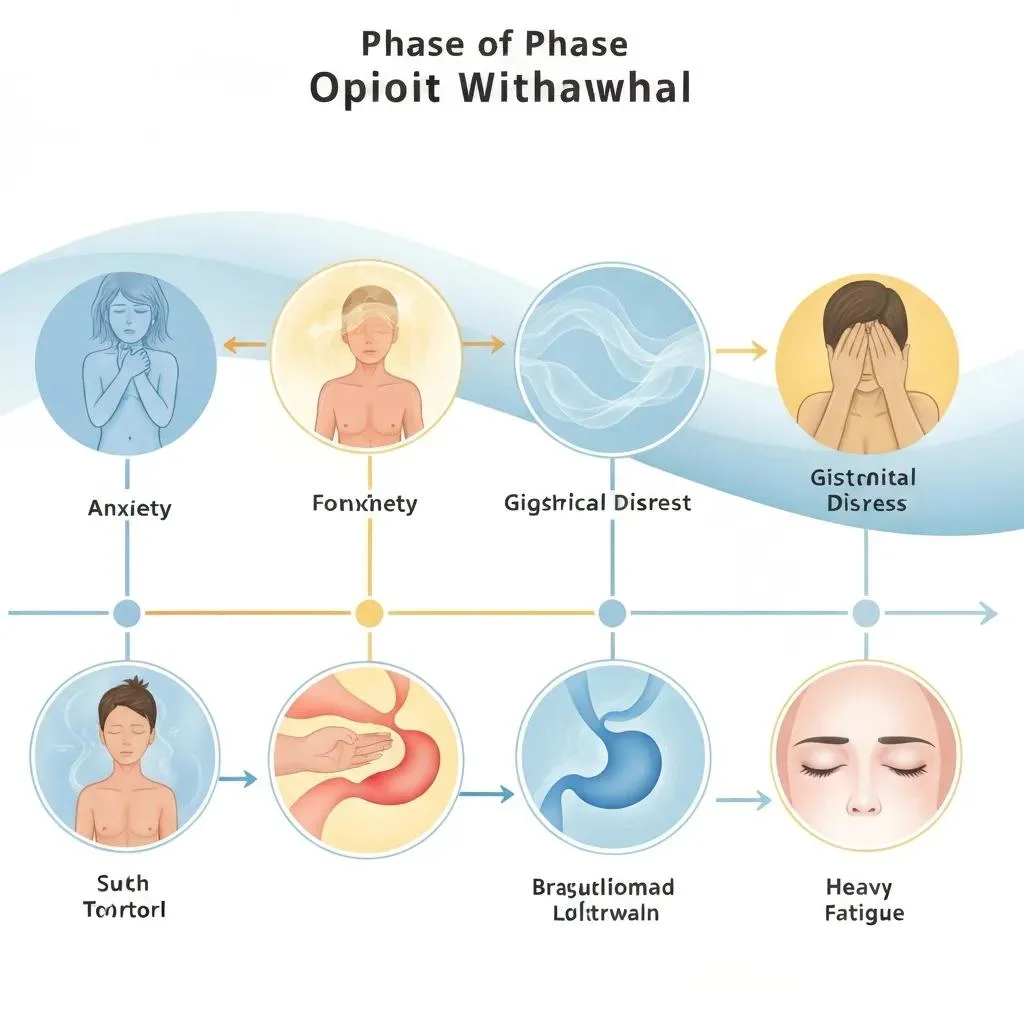
Opioid withdrawal typically follows three phases—early, peak, and late—each with its own set of symptoms that reflect how the brain and body adjust after opioid exposure ends. Early signs often appear within hours to a day (depending on the drug) and include autonomic symptoms and anxiety. Peak withdrawal usually brings intense gastrointestinal and flu-like symptoms. Late symptoms can include sleep disruption, low mood, and lingering cravings that may last weeks. Recognizing these phases helps families and clinicians plan medication timing, anticipate resources needed, and spot red flags that require urgent care. That planning determines whether outpatient observation is safe or whether inpatient monitoring and MAT induction are warranted.
Below is a concise view of how withdrawal typically starts, peaks, and eases across common opioids to help set expectations and plan for safety.
What Are Early, Peak, and Late Symptoms of Opioid Withdrawal?
Early withdrawal commonly starts with anxiety, restlessness, yawning, watery eyes, runny nose, and muscle aches as opioid receptor activity drops. Peak withdrawal—often 48–72 hours after the last dose for short-acting opioids—brings severe nausea, vomiting, diarrhea, abdominal cramping, intense aches, and marked insomnia; these symptoms can lead to rapid fluid and electrolyte changes that may need clinical attention. Late symptoms include ongoing sleep problems, low mood, low energy, and persistent cravings that can last weeks to months and raise relapse risk without behavioral support. Knowing these symptom groups helps caregivers decide when medical detox is needed and when longer-term recovery supports should continue.
Questions about exact timing are natural—duration varies with the opioid’s potency and half-life.
Understanding and Managing Opioid Withdrawal Symptoms
A review of opioid withdrawal as a consequence of chronic opioid use and opioid use disorder, outlining current understanding and management approaches. Withdrawal symptoms are a major barrier to staying in treatment; knowing the timeline and severity helps clinicians plan safer, more effective care.
Opioid withdrawal symptoms, a consequence of chronic opioid use and opioid use disorder: Current understanding and approaches to management, JV Pergolizzi Jr, 2020
How Long Does Opiate Withdrawal Last?
How long withdrawal lasts depends on the drug’s pharmacology, a person’s dosing history, and overall health. Short-acting opioids (like heroin or some immediate‑release pain pills) typically cause early symptoms in 6–12 hours, peak around 48–72 hours, and see most acute symptoms ease by 5–7 days. Long-acting opioids and extended‑release formulations can delay onset to 24–72 hours and extend acute symptoms beyond a week. Individual factors—metabolism, mixing with alcohol or benzodiazepines, and medical conditions—change these ranges and influence whether inpatient monitoring or MAT induction is recommended.
Knowing how substance type changes timing points to clinically relevant differences among fentanyl, heroin, and prescription painkillers.
How Does Withdrawal Differ for Fentanyl, Heroin, and Painkillers?
Fentanyl is highly potent and can present unique withdrawal challenges: short-term use may cause rapid onset, while chronic exposure and analogs can produce severe, unpredictable withdrawal that often needs careful MAT planning and closer monitoring. Heroin usually causes a relatively quick onset with intense peak symptoms that respond predictably to buprenorphine induction and symptomatic care, though injection-related infections and polysubstance use complicate management. Prescription opioids (like oxycodone or hydrocodone) vary by formulation—immediate-release versions resemble heroin timelines, while long-acting formulations delay onset and lengthen recovery—so clinicians customize tapering and MAT accordingly. These substance-specific factors guide program choice and monitoring during detox.
Fentanyl’s Impact on Opioid Withdrawal and OUD Treatment
The rise of illicitly manufactured fentanyl has changed how clinicians approach opioid use disorder and withdrawal. Fentanyl’s potency and rapid action can lead to intense and sometimes prolonged withdrawal, creating new treatment challenges.
Treating Opioid Use Disorder and Opioid Withdrawal in the Context of Fentanyl, S Martinez, 2025
Seeing these timelines side by side explains why specialized detox care is often needed and how program choice matches clinical risk.
Which Specialized Detox Programs Are Available in Las Vegas for Opiate Addiction?
Las Vegas programs offer specialized tracks that account for opioid potency, route of use, and medical stability—ranging from short medical stabilization to full inpatient rehab with behavioral therapy and MAT initiation. Programs vary monitoring intensity, use targeted medication protocols, and add services like infectious disease screening or wound care when injection use is present. Choosing the right program depends on severity, co-occurring conditions, and social supports; clinicians assess medical necessity and coordinate transitions to ongoing care. Knowing program differences makes it easier to match needs with the appropriate level of support and reduces gaps when moving patients from emergency care to specialized detox services.
Below we describe three practical program types and how they adjust clinical elements for different opioid profiles, using local program features to illustrate typical care components.
What Is Involved in Fentanyl Detox Programs at BetterChoice?
Fentanyl-focused detox centers on careful risk evaluation, closer monitoring for atypical withdrawal patterns, and individualized MAT planning because fentanyl’s potency and variable formulations can cause intense, prolonged symptoms. At BetterChoice Treatment Center, we conduct structured assessments to time inductions, increase nursing checks during the acute phase, and begin counseling early to address high relapse risk. MAT is offered as part of a continuum from stabilization to maintenance. Safety measures include frequent vitals, flexible medication adjustments, and intentional discharge planning with family engagement and outpatient appointments to minimize care gaps. This level of oversight helps reduce complications and speed linkage to follow-up treatment.
Managing Fentanyl Withdrawal: Buprenorphine Induction Strategies
Guidance on buprenorphine induction for patients with chronic fentanyl exposure suggests careful dosing and timing to reduce the chance of precipitated withdrawal. Fentanyl’s fast action and fat solubility are factors that make induction planning more complex.
Managing opioid withdrawal symptoms during the fentanyl crisis: a review, 2024
These fentanyl-specific protocols sit alongside other program categories that address heroin and prescription opioid detox differences.
How Does Heroin Detox Differ from Other Opiate Detox Programs?
Heroin detox programs emphasize quick symptom recognition, prompt MAT induction when appropriate, and screening for injection-related problems like infections or abscesses that may need extra care. Programs commonly evaluate for hepatitis C and other comorbidities and coordinate medical referrals as needed. Immediate behavioral counseling helps reduce impulsive relapse during acute withdrawal. Because heroin’s timing often makes patients eligible for office-based buprenorphine or inpatient stabilization, clinicians tailor the pathway from admission to discharge and onward to outpatient supports.
After inpatient stabilization for heroin, many patients do well with step-down care that preserves clinical gains and supports recovery.
What Are Painkiller Detox Options in Nevada?
Detox for prescription painkillers usually involves working with the prescribing clinician, considering slower tapers for long-term high-dose patients, or using inpatient stabilization followed by office-based buprenorphine when appropriate. Outpatient options include office induction for lower-risk cases and coordinated care with primary care or pain specialists to manage chronic pain while treating addiction. Inpatient care is available for more complex cases, offering medical oversight, tailored medication adjustments for withdrawal and pain, and warm handoffs to outpatient MAT and therapy. These pathways balance pain management with addiction treatment to reduce relapse risk from unmanaged pain.
Program choice depends on medical complexity and social supports, which guides whether inpatient or outpatient care is safer and more effective.
How Does Medication-Assisted Treatment Support Opiate Detox and Recovery?

Medication-assisted treatment (MAT) pairs FDA‑approved medications with counseling and psychosocial support to ease withdrawal, reduce cravings, and improve long-term retention in treatment. These medications act on opioid receptors—either partially activating or blocking them—to stabilize brain chemistry during early recovery and lower the reward of illicit opioid use. MAT is backed by strong evidence: it reduces overdose risk and increases engagement with therapies that rebuild coping skills. In practice, MAT helps make detox safer by allowing clinicians to time inductions to avoid precipitated withdrawal, keep physiologic stability, and connect patients to outpatient maintenance programs that lower relapse risk.
Knowing specific medications and monitoring needs clarifies how MAT is used across inpatient and outpatient settings and why it’s central to modern detox care.
What Medications Are Used in MAT for Opioid Addiction?
Main MAT medications include buprenorphine (partial agonist), methadone (full agonist), naltrexone (antagonist), and adjuncts such as clonidine for symptom relief. Each has a different action and monitoring requirement. Buprenorphine reduces cravings and blocks illicit opioid effects and is commonly started in office-based or inpatient settings with observation for precipitated withdrawal. Methadone is provided in clinics for severe OUD and requires daily supervised dosing and regulatory oversight. Naltrexone blocks opioid receptors and is used after confirmed detox. Clonidine helps autonomic symptoms but does not treat cravings long term.
This table outlines each medication’s role and practical monitoring points so patients and families can ask focused questions during intake.
Medications work best when combined with counseling and community supports that address behavioral drivers and strengthen recovery planning.
How Does MAT Help Manage Withdrawal Symptoms and Prevent Relapse?
MAT eases withdrawal by stabilizing receptor activity and reducing the physical intensity of symptoms, which helps patients participate in therapy and rebuild daily routines during early recovery. By lowering cravings and blunting the effects of illicit opioids, MAT reduces relapse risk and lowers overdose deaths; long-term maintenance is linked to better social functioning and lower mortality. When MAT is paired with counseling, patients learn relapse-prevention skills while case management connects them to housing, work, and legal help that influence outcomes. Together, medication and psychosocial care create a continuous support system rather than a single detox episode.
Because MAT often spans multiple settings, knowing the roles of inpatient and outpatient programs clarifies next steps after stabilization.
What Are the Inpatient and Outpatient Opiate Rehab Options in Las Vegas?
Treatment forms a continuum from medically supervised inpatient stabilization to partial hospitalization (PHP), intensive outpatient programs (IOP), and standard outpatient care—each level matching intensity to need and daily function. Inpatient programs offer 24/7 medical monitoring, structured therapy schedules, and immediate access to nursing and medical staff—appropriate for unstable patients or those with severe withdrawal or medical comorbidities. Step-down options like IOP and outpatient MAT provide focused counseling and medication management while patients reestablish daily responsibilities; they emphasize relapse prevention, skills training, and community resource linkage. Choosing the right level depends on withdrawal severity, housing stability, mental health conditions, and available supports.
Knowing the core components of each level helps families put safety first and then choose rehabilitation elements that sustain recovery.
What Does Inpatient Opiate Rehab Include at BetterChoice Treatment Center?
Inpatient care at BetterChoice Treatment Center blends continuous clinical supervision, daily structured therapy, and integrated supports to stabilize patients and begin recovery work. Core components include 24/7 nursing and medical oversight, physician evaluation for MAT eligibility, individual and group counseling, family services, and complementary therapies such as mindfulness or movement to support wellbeing. Discharge planning starts on day one to schedule outpatient MAT, therapy appointments, and community resources so gaps after leaving inpatient care are minimized. This integrated model lowers risk during early recovery and improves the chance of engaging in ongoing treatment.
These inpatient elements create a solid foundation for safe transitions into step-down services that preserve progress and lower relapse risk.
How Do Outpatient Opiate Treatment Programs Support Long-Term Recovery?
Outpatient programs—from IOP to regular clinic visits—offer flexible schedules for counseling, peer support, and MAT management while patients rebuild daily life. Common components include regular individual therapy, group relapse-prevention classes, medication visits for buprenorphine or naltrexone, and case management that links patients to jobs and housing. Outpatient care focuses on coping skills, trigger management, and community reintegration while clinicians monitor medication adherence and adjust plans as needed. For many people, outpatient services become the backbone of recovery once withdrawal is stabilized and routines return.
Transitioning from inpatient stabilization to outpatient care requires concrete insurance and scheduling steps that families should prepare for ahead of time.
How Much Does Opiate Detox Cost in Las Vegas and What Insurance Plans Are Accepted?
Cost depends on level of care, length of stay, need for MAT, and whether extra medical services (like wound care or infectious disease treatment) are required; inpatient stays cost more than outpatient inductions because of 24/7 staffing and facility resources. Insurance often reduces out-of-pocket costs, but benefits vary by plan, medical necessity rules, and prior authorization requirements. Local practice is to verify insurance early during intake, request benefit details in writing, and obtain pre-authorization when required to avoid surprise bills. Having a step-by-step verification checklist helps families estimate costs and choose timely, feasible care options.
Below is a practical insurer table and a short checklist to help verify coverage and plan payment in Nevada.
Which Major Insurance Providers Cover Opiate Detox and Rehab in Nevada?
Many Las Vegas providers accept several major insurers, but network status and prior‑authorization rules differ by plan and level of care. Reported carriers include Aetna, Anthem/Blue Cross Blue Shield, Cigna, Beacon Health Options, Magellan Health, and Tricare. Coverage usually depends on documented medical necessity, clinical assessments, and the requested level of care (detox, inpatient rehab, outpatient MAT). Confirm whether the facility is in‑network, whether prior authorization is needed, and which services (medications, therapy, length of stay) are covered. Early verification prevents admission delays and clarifies copays or deductible responsibilities.
This table points families to the key insurer questions and paperwork to gather before admission.
How Can Patients Verify Insurance Coverage and Understand Payment Options?
Verifying coverage is a stepwise process families can complete before or during intake to avoid surprises and keep care moving. Start by calling the insurer with the member ID and asking for behavioral health and substance use disorder benefits; confirm in‑network status and any prior authorization or referral requirements, and record the agent’s name and confirmation numbers. Next, share those details with the facility’s admissions team so they can do a benefits check and provide a written cost estimate (copays, coinsurance, deductible). Finally, confirm which medications and outpatient services the insurer will pay for so continuity of care after discharge is clear.
- Gather policy details: Member ID, plan type, and primary care/referral requirements.
- Call insurer: Ask about medical necessity rules, prior authorization, and in‑network status.
- Coordinate with admissions: Provide insurer info for a benefits check and written estimate.
These steps reduce delays, clarify financial responsibilities, and support smoother transitions to aftercare.
For help with admissions, benefits, or program selection in Las Vegas, BetterChoice Treatment Center offers intake support and insurance navigation by phone at (725) 299-4777. Our clinicians can explain program options, assist with benefits checks, and schedule next-step appointments.
Frequently Asked Questions
What Should I Expect During the First Few Days of Opiate Detox?
In the first days of detox you can expect a safe, structured setting focused on symptom control and stabilization. Day one typically includes a medical assessment, vital signs, and a withdrawal score. Clinicians may start medications to ease symptoms and begin brief counseling to help manage anxiety. Staff will monitor progress daily and adjust treatment as needed, with discharge planning starting once the acute phase is controlled.
How Can Family Members Support a Loved One During Detox?
Family support matters. Encourage open, non‑judgmental communication, learn about the detox process so you know what to expect, and join family counseling sessions if they’re offered. Practical help—transportation, attending appointments, and assisting with planning for aftercare—also makes a big difference. Above all, keep a calm, supportive presence that helps the person feel safe.
What Are the Risks of Self-Detoxing from Opiates?
Self-detox carries significant risks, including severe dehydration, electrolyte problems, and in some cases seizures or other medical emergencies. Without monitoring, warning signs can be missed and there’s typically no direct path into continuing care, increasing relapse risk. Medically supervised detox provides monitoring, timely interventions, and a bridge to ongoing treatment—making it a safer and more effective choice for many people.
How Does the Length of Detox Vary by Substance?
Detox length depends on the opioid used. Short-acting opioids (like heroin) typically produce symptoms within 6–12 hours, peak around 48–72 hours, and largely resolve within a week. Long-acting opioids (such as methadone) may have delayed onset and a longer withdrawal course. Individual health, history of use, and co-occurring conditions also affect duration, so timelines are best used as general guidance rather than exact predictions.
What Role Does Counseling Play in Opiate Detox?
Counseling addresses the emotional and behavioral side of addiction. During detox, therapy helps manage intense feelings and cravings, teaches coping skills, and prepares patients for ongoing recovery. Integrating counseling with medical care increases the chance of engaging in longer-term treatment and supports a smoother transition into outpatient programs.
What Are the Signs That Someone Needs Immediate Medical Attention During Detox?
Seek immediate care for severe dehydration, persistent vomiting, seizures, or major changes in heart rate or blood pressure. Also get help right away if someone experiences hallucinations, extreme agitation, or suicidal thoughts. These red flags require urgent medical attention; medical detox is designed to monitor for and respond quickly to these risks.
Conclusion
Medically supervised opiate detox in Las Vegas provides a safer, more structured path through withdrawal and into ongoing recovery. By understanding withdrawal timelines and available specialized programs, patients and families can choose care that fits clinical needs and personal circumstances. A supervised detox not only lowers immediate health risks but also eases the move into long-term supports. For personalized guidance and to explore our treatment options, contact BetterChoice Treatment Center today.