

OCD and Addiction Treatment — Integrated care for lasting recovery
Obsessive‑compulsive disorder (OCD) and substance use disorder (SUD) often occur together, creating a complicated picture where intrusive thoughts, repetitive behaviors, and alcohol or drug use feed one another. This guide explains how the two conditions interact, why coordinated (dual‑diagnosis) care leads to better results, and which evidence‑based therapies and care pathways are used to treat both at the same time. You’ll find clear explanations of the common mechanisms behind co‑occurrence, the risks of treating disorders separately, core components of integrated programs (from medical detox to ERP and CBT), and practical next steps for finding care. We also cover intake and assessment, medication considerations, family roles in recovery, and how a Nevada‑based provider organizes coordinated services. By the end, you should have a clearer map of integrated options, what to expect during intake and stabilization, and how continuity of care supports lasting recovery from both OCD and substance use.
What links obsessive‑compulsive disorder and substance use?
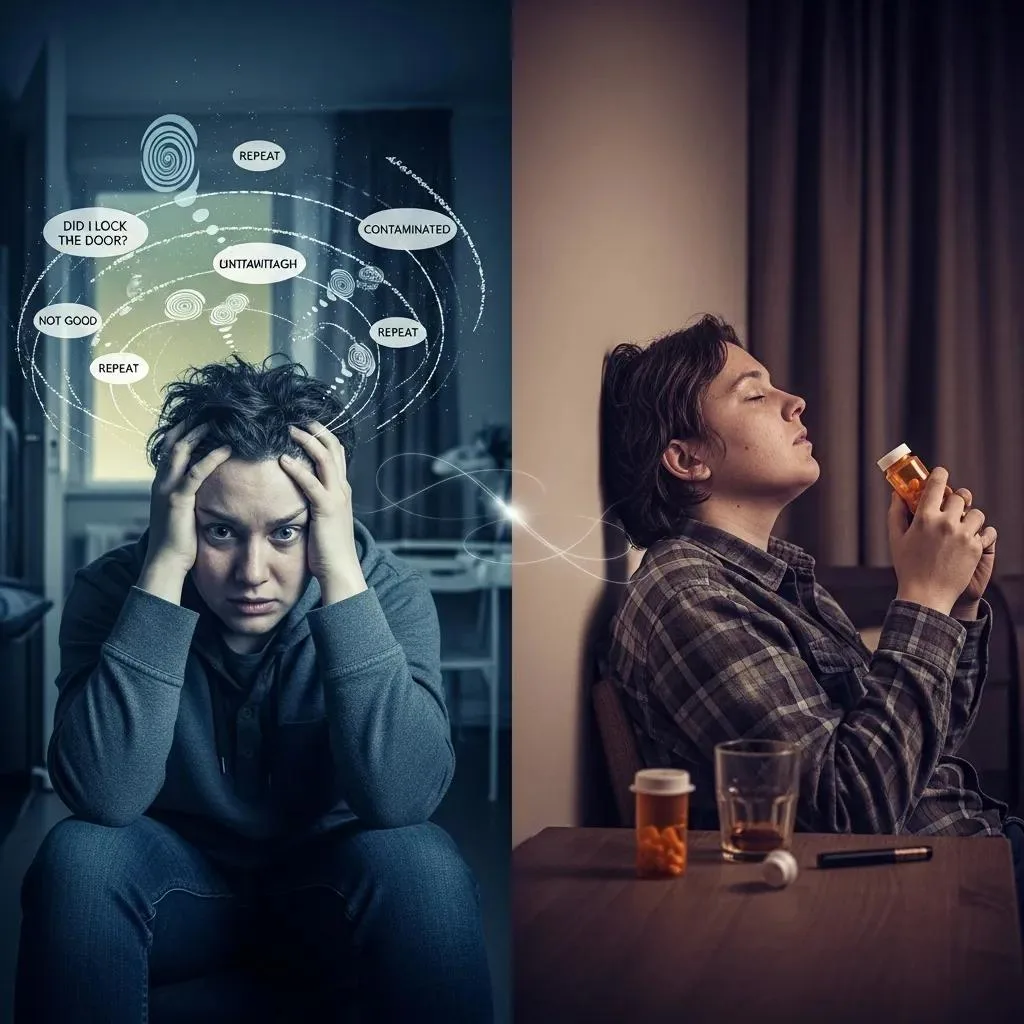
OCD and SUD share several underlying processes: using substances to ease anxiety or intrusive thoughts (self‑medication), the shift from intentional behavior to automatic compulsivity, and overlapping brain pathways that govern habits and reward. Clinically, someone with OCD might use alcohol or drugs to blunt distress or speed through a ritual, which can strengthen both the OCD and the addiction and make diagnosis harder. Recognizing these links helps clinicians screen for co‑occurring issues and choose interventions that target anxiety‑driven urges and substance‑related triggers together. The sections that follow show how specific OCD symptoms can lead to substance use and what research tells us about how often they co‑occur.
Common mechanisms connecting OCD and substance use include:
- Self‑medication: Substances can temporarily lower anxiety or intrusive thoughts, which reinforces use.
- Compulsivity crossover: Brain systems that maintain compulsions can also support addictive habits.
- Avoidance and ritual replacement: Substance use can become an avoidant ritual that takes the place of healthier coping.
These patterns point to the need for coordinated screening and integrated treatment plans rather than siloed care.
How can OCD symptoms lead to substance misuse?
Intense intrusive thoughts, overwhelming anxiety, and rituals that consume time can push people toward substances as an immediate way to cope. For instance, someone with severe contamination fears might drink or use sedatives to calm anxiety before or during rituals; over time the substance itself becomes part of the compulsive response. Neuroadaptations in reward and habit circuits make stopping harder and increase relapse risk when OCD triggers return. Clinicians therefore assess how substance use functions within a person’s OCD and how withdrawal interacts with anxiety—because treating one disorder without addressing the other often leaves core triggers unaddressed and undermines lasting recovery.
How common is co‑occurring OCD and addiction?
Study results vary: some population studies show similar or lower substance use rates among people with OCD, while treatment‑seeking samples sometimes report higher rates. Overall co‑occurrence estimates in clinical settings commonly fall between about 10% and 20%. These figures support routine screening for substance use in OCD clinics and for OCD symptoms in addiction settings. Because prevalence can be higher among people who seek treatment, integrated screening tools and dual‑diagnosis assessments are important for accurate diagnosis and care planning. The next section explains why integrated treatment models help reduce relapse and improve functioning.
Why is integrated treatment essential for co‑occurring OCD and addiction?

Integrated treatment addresses OCD and SUD at the same time because the conditions interact behaviorally, psychologically, and biologically. Treating only one disorder often leaves the other untreated and raises the risk of relapse. Coordinated care lets clinicians align medications, deliver behavioral therapies like ERP and CBT together, and build relapse‑prevention plans that address both anxiety‑driven triggers and substance cues. Research and clinical experience show integrated approaches improve adherence, reduce substance use, and lower psychiatric symptoms when psychotherapy and medication are coordinated across diagnoses. Below are the main reasons to choose integrated care over fragmented care.
Integrated care matters for three key reasons:
- Unified treatment plan: Behavioral and medication strategies are combined to target shared triggers.
- Improved safety and monitoring: Teams avoid medication conflicts and watch for withdrawal effects that can worsen OCD.
- Better long‑term outcomes: Coordinated discharge and aftercare reduce relapse and support continuity.
These benefits illustrate why many clinicians favor integrated models. The following paragraphs outline risks of fragmented care and how dual‑diagnosis programs improve recovery.
What risks come from treating OCD or addiction separately?
Separating care can create blind spots that prolong disability and increase relapse risk—for example, managing alcohol withdrawal without treating the OCD that drove drinking in the first place may leave a person likely to return to substance use. Fragmented care can also produce conflicting medication plans, poor communication between providers, and confusion for patients juggling multiple referrals. To avoid those problems, coordinated assessment and shared treatment planning are needed so detox, mood stabilization, and exposure‑based therapies proceed together.
How does dual‑diagnosis care improve recovery?
Dual‑diagnosis care synchronizes treatments—ERP for OCD, CBT for substance‑related thinking, medication management for co‑occurring symptoms, and structured relapse‑prevention—so each element reinforces the others. Studies and practice show integrated programs have better retention, lower substance use at follow‑up, and greater reductions in psychiatric symptoms than isolated or sequential treatments. Consistent messaging from a multidisciplinary team reduces mixed signals about coping strategies and prevents medications for OCD from unintentionally undermining addiction recovery. The result is steadier engagement and better real‑world functioning.
What integrated programs does BetterChoice offer for OCD and addiction?
Our integrated continuum runs from medical detox to inpatient rehabilitation and step‑down outpatient care, combining evidence‑based therapies (ERP, CBT), medication management, family involvement, and supportive holistic services. BetterChoice Treatment Center in Las Vegas, Nevada, structures each level so it supports stabilization, readiness for therapy, and smooth transitions to the next phase—always with coordinated dual‑diagnosis care and evidence‑based standards. The table below outlines common levels of care so patients and families can compare goals, oversight, and typical durations.
This comparison shows how each level prepares patients for the next stage and supports integrated treatment goals. The sections that follow describe core components and how clinical services are coordinated.
Integrated programs typically include a core set of evidence‑based interventions:
- Exposure and Response Prevention (ERP): Targeted OCD therapy adapted for dual‑diagnosis care.
- Cognitive Behavioral Therapy (CBT): Focuses on substance‑related thinking and behavior change.
- Medication management and MAT: Coordinates psychiatric medications with addiction pharmacotherapies.
- Family therapy and psychoeducation: Engages supports and clarifies roles in recovery.
How does medical detox support safe withdrawal?
Medical detox gives supervised stabilization—managing acute withdrawal, addressing medical risks, and preparing patients to engage meaningfully in ERP and CBT once safe. Nursing and medical staff monitor vital signs, adjust medications for comfort and safety, and assess psychiatric needs so therapy can start without the confound of severe withdrawal. Detox length depends on the substance and individual factors; effective programs arrange handoffs to residential or outpatient care before discharge. Stabilization during detox reduces immediate medical risk and increases readiness for targeted OCD work that follows.
What therapies are included in inpatient rehabilitation?
Inpatient rehab provides a structured daily schedule of individual therapy, group work, ERP‑focused sessions, skills training, and psychoeducation to treat OCD and substance use together. ERP is adapted so exposures are safe within addiction recovery, while CBT modules address cravings, relapse triggers, and cognitive patterns that maintain substance use. Group and family sessions reinforce skills and mend relationships, and relapse‑prevention planning starts early to support a strong post‑discharge plan. This integrated environment ensures compulsive symptoms and substance‑related behaviors are treated consistently.
How do outpatient and continuing care programs support long‑term recovery?
Outpatient options—Partial Hospitalization Program (PHP), Intensive Outpatient Program (IOP), and standard outpatient therapy—offer stepped support to maintain gains and help people reintegrate into daily life. PHP provides near‑daily clinical contact for those needing structure, IOP meets multiple times per week, and outpatient therapy delivers weekly individual or group care focused on relapse prevention and ERP maintenance. Aftercare plans include medication monitoring, peer‑support connections, and coordinated follow‑up with community providers to sustain progress. Matching intensity to need helps reduce relapse risk.
What holistic therapies complement treatment?
Holistic practices—yoga, mindfulness, meditation, and somatic work—serve as adjuncts that lower baseline anxiety, improve body awareness, and support relapse prevention when offered alongside core clinical care. These activities are scheduled to complement—not replace—ERP and CBT, giving extra tools for managing cravings and intrusive thoughts and helping with sleep, mood, and stress resilience. When integrated thoughtfully, holistic modalities can increase engagement and provide non‑drug strategies for symptom relief.
How is medication management handled for dual‑diagnosis patients?
Medication management is coordinated between psychiatric and addiction teams to align OCD pharmacotherapy (often SSRIs) with any medication‑assisted treatment (MAT) or adjunctive agents used for substance stabilization. Clinicians monitor effectiveness, side effects, and drug interactions. SSRIs are titrated for OCD while MAT options are carefully supervised to avoid conflicts and manage withdrawal. Decisions are individualized—based on symptom severity, substance type, and medical history—with routine medication reviews to ensure safety during transitions across care levels. The table below summarizes common medication classes and monitoring points.
Careful coordination of medication enhances safety and therapeutic synergy. The next section describes intake and personalized planning that shape these treatment choices.
How does the intake and personalized treatment planning process work?
Intake begins with a thorough dual‑diagnosis assessment that reviews psychiatric history, substance use patterns, medical status, and safety risks to build a stage‑appropriate plan. The assessment determines whether immediate stabilization (detox) is needed, which therapies to prioritize (ERP intensity, MAT), and the role of family and aftercare. Insurance verification and prior‑authorization steps are handled early to clarify coverage and timelines, and staff explain confidentiality and safety procedures. Below is a clear, step‑by‑step pathway for starting care and what to expect.
Follow these steps to begin integrated treatment:
- Initial contact & screening: A brief intake to assess immediate safety and determine the appropriate level of care.
- Comprehensive dual‑diagnosis assessment: In‑depth psychiatric, medical, and substance‑use evaluations.
- Stabilization or detox if needed: Medical oversight for withdrawal before formal therapy begins.
- Personalized treatment plan: A tailored mix of ERP, CBT, medication, and an appropriate level‑of‑care placement.
- Transition and aftercare planning: Arrange outpatient supports, family involvement, and medication follow‑up.
These steps form a practical “how to start” pathway that guides patients and providers through safe, coordinated entry into dual‑diagnosis care.
What happens during the comprehensive dual‑diagnosis assessment?
The assessment includes structured interviews covering psychiatric history, substance‑use timeline, medical review, safety and suicide risk screening, and standardized tools to measure symptom severity. Clinicians collect collateral information when possible and perform basic medical tests that influence treatment choices. The outcome is a recommended level of care, an initial treatment plan, and a timeline for stabilization and transition. Clear expectations about goals help patients and families prepare documents and questions for the team.
How are treatment plans tailored to individual needs?
Plans are customized to clinical severity, co‑occurring conditions, social supports, and practical constraints like work, legal obligations, or insurance limits. For example, someone with severe OCD may receive an ERP‑intensive schedule paired with MAT for SUD, while a person with milder OCD might begin in IOP with outpatient ERP. Progress is tracked with standardized scales and behavioral milestones, and plans are adjusted based on response, safety, and life circumstances. Coordination with outside providers helps preserve continuity across settings.
What insurance and payment options are available?
Insurance verification is done early to identify covered services and any prior‑authorization requirements. Common insurers accepted include Magellan Health, TRICARE, Aetna, Anthem, Blue Cross Blue Shield, Beacon Health Options, Cigna, and EmblemHealth. Verification clarifies inpatient versus outpatient benefits, authorization timelines, and needed documentation such as clinical summaries or prior‑treatment records. For patients without coverage or with limits, we discuss alternative payment options and financial counseling to find feasible care pathways. Early verification reduces unexpected barriers to timely treatment.
How does BetterChoice protect confidentiality and patient safety?
BetterChoice follows established accreditation and clinical safety standards—including Joint Commission accreditation and LegitScript certification—to protect privacy and maintain high safety levels during detox and inpatient care. Practical measures include secure clinical records, private assessments, 24/7 monitoring during high‑risk phases, and clear informed‑consent procedures that explain privacy protections to patients and families. These safeguards minimize risk during stabilization and assure patients that clinical decisions prioritize safety and regulatory compliance.
How can families support loved ones with OCD and addiction?
Families are vital to recovery by supporting treatment engagement, joining education and therapy sessions, and helping carry out relapse‑prevention plans while keeping healthy boundaries. Involvement improves outcomes by ensuring consistent messaging and by helping spot early warning signs of relapse or worsening OCD. The list below offers concrete ways families typically participate with treatment teams.
Practical ways families can help include:
- Attend family therapy and education: Learn about OCD, addiction, and supportive strategies.
- Assist with logistics: Help with transportation, scheduling, and medication routines.
- Set and maintain boundaries: Avoid enabling behaviors and clearly state expectations for treatment and sobriety.
These roles balance support with accountability and prepare families to work collaboratively with clinicians. The next subsection outlines available family resources and typical expectations.
What family resources and involvement opportunities are available?
Families can join psychoeducation workshops, structured family therapy sessions, and support groups that teach communication, boundary‑setting, and crisis planning. Programs usually offer family education early so caregivers understand ERP, common relapse triggers, and how to support medication adherence without reinforcing compulsions or substance use. Referrals to community support groups and ongoing family‑focused aftercare help sustain family resilience over time.
How can family members be helpful during recovery?
Family members should provide steady emotional support, practical help with treatment adherence, and clear non‑enabling boundaries that protect both the person in recovery and the family system. Helpful actions include attending key sessions, learning conflict‑reduction skills, and arranging follow‑up supports like outpatient appointments or mutual‑help meetings. Caregiver self‑care is important too—families are encouraged to seek their own supports to manage stress and remain involved long term.
What are the next steps to begin integrated OCD and addiction treatment at BetterChoice?
To start integrated care, gather a brief clinical history (current substances, psychiatric symptoms, medications) and contact BetterChoice Treatment Center in Las Vegas, Nevada, to schedule an initial screening. Our coordinated intake includes insurance verification and guidance on level‑of‑care decisions. Typical admission timelines move from screening and assessment to stabilization or detox if needed, then to a personalized treatment placement with clear follow‑up plans. Below are practical steps to prepare and what your first visit will look like.
When preparing to contact a provider for consultation:
- Prepare information: Brief notes on substance use, current medications, and recent psychiatric symptoms.
- Choose a contact method: Call or use the online intake form to start screening and schedule an assessment.
- Expect privacy and triage: Staff will prioritize safety, explain confidentiality, and determine immediate needs such as detox.
These steps help make the first interaction efficient and supportive, and they set clear expectations for the initial clinical encounter.
How to contact BetterChoice Treatment Center for a consultation?
When you contact BetterChoice, provide a concise clinical summary—current substances, recent detox or hospitalizations, and any urgent safety concerns—so the intake team can triage level of care and begin insurance verification. Staff may request documentation to speed authorizations and will explain privacy safeguards. The process is supportive and non‑pressured while gathering the clinical and logistical details needed for timely placement decisions.
What should patients expect during their first visit?
The first visit usually includes a comprehensive clinical interview, medical and psychiatric review, basic safety checks, and a discussion of recommended treatment options. If immediate stabilization is needed, staff arrange detox or appropriate referrals. Clinicians outline an initial treatment recommendation, discuss expected timelines for authorization and admission when relevant, and coordinate family involvement as appropriate. Follow‑up therapy and medication appointments are scheduled before discharge or transition to outpatient care to preserve continuity and momentum in recovery.
Frequently Asked Questions
What are the signs that someone may have both OCD and a substance use disorder?
Signs include ongoing intrusive thoughts, repetitive rituals, and reliance on substances to manage anxiety or distress. You might notice avoidance of triggers, failed quit attempts, more time spent on rituals, or neglect of responsibilities because of substance use or OCD behaviors. Early identification through screening improves the chance of effective, coordinated treatment.
How can integrated treatment improve quality of life for people with OCD and addiction?
Integrated treatment improves quality of life by treating both conditions together, which lowers relapse risk and boosts overall functioning. A unified plan targets the root issues of both disorders, leading to better symptom control, steadier mood, and healthier coping. That translates into stronger relationships, better work or school performance, and improved daily functioning.
What role does family involvement play in treatment?
Family engagement is an important part of recovery—providing emotional support, reinforcing treatment goals, and helping maintain sober routines. Families who participate in education and therapy learn how to support loved ones without enabling and how to set appropriate boundaries. This collaborative approach improves communication and treatment outcomes.
Are there therapies that work especially well for both OCD and addiction?
Yes. Exposure and Response Prevention (ERP) is the front‑line therapy for OCD and can be adapted for people in recovery, and Cognitive Behavioral Therapy (CBT) targets substance‑related thinking and relapse triggers. When used together in an integrated program, ERP and CBT tackle both compulsive behaviors and addiction‑related patterns in a coordinated way.
What should people expect during the intake process for integrated treatment?
Expect a thorough assessment of psychiatric history, substance‑use patterns, and any co‑occurring conditions to determine the right level of care. The intake team will discuss symptoms, treatment goals, and immediate needs (such as detox). They’ll also explain confidentiality and insurance verification so you feel informed and supported from the start.
How can holistic therapies complement traditional treatment?
Holistic approaches—mindfulness, yoga, meditation—add practical coping skills that reduce anxiety and improve emotional regulation. Paired with evidence‑based therapies, these practices can increase engagement, improve sleep and mood, and offer non‑pharmacologic tools to manage intrusive thoughts and cravings as part of a balanced recovery plan.
Conclusion
Integrated treatment for OCD and addiction offers a practical, evidence‑based path that treats both conditions together—reducing relapse risk and supporting real, lasting change. Understanding how these disorders interact helps people access tailored therapies that promote recovery and improve everyday life. If you or a loved one are ready to take the next step, explore our dual‑diagnosis options and reach out for a coordinated, compassionate plan.