

Neurofeedback Therapy for Addiction Recovery in Las Vegas: Practical Brain Training to Support Lasting Sobriety
Neurofeedback is a non‑invasive form of brain training that uses real‑time EEG biofeedback to help people in recovery strengthen self‑regulation, reduce cravings, and lower relapse risk. This article explains how neurofeedback and qEEG brain mapping work, reviews the evidence for substance use disorders, and outlines practical steps for adding neurotherapy to a comprehensive treatment plan. You’ll learn the physiological basis of EEG‑guided training, what a typical session looks like, how clinicians measure progress with objective metrics, and how neurofeedback can complement medical detox, inpatient rehab, and psychotherapy. We also cover costs, insurance considerations, and who is most likely to benefit. Recent 2024 research trends and anonymized clinical vignettes illustrate outcomes and limitations so you can weigh neurofeedback’s place in a recovery pathway. Throughout, useful search terms like neurofeedback addiction, EEG therapy, brain training recovery, qEEG brain mapping, and neurofeedback Las Vegas are woven into practical guidance for patients and families.
What is Neurofeedback Therapy and How Does EEG Biofeedback Work?
Neurofeedback is a behavioral intervention in which surface EEG sensors measure brainwave activity and give immediate feedback so a person can learn to shift neural patterns tied to cravings, emotional dysregulation, and relapse vulnerability. The approach uses operant conditioning and neuroplasticity: the system rewards desired brain states, reinforcing healthier network activity over time—often in prefrontal control and reward circuits. In practice, a clinician places scalp sensors, captures a qEEG baseline, and programs training software to reinforce specific frequency changes; repeated sessions help the brain adopt more adaptive regulation. Knowing how this works clarifies why neurofeedback is most effective as an adjunctive tool—not a stand‑alone cure—and how it complements behavioral therapies within a coordinated treatment plan.
At BetterChoice Treatment Center we present neurofeedback as one part of a holistic, evidence‑informed toolkit that supports medical detox and inpatient care without promising miraculous cures. Our approach emphasizes multidisciplinary coordination, clinical oversight, and accreditation‑based standards when neurotherapy is part of someone’s plan. That context prepares patients and families for the assessment‑driven process that follows qEEG mapping.
What is EEG Biofeedback and Brainwave Training?
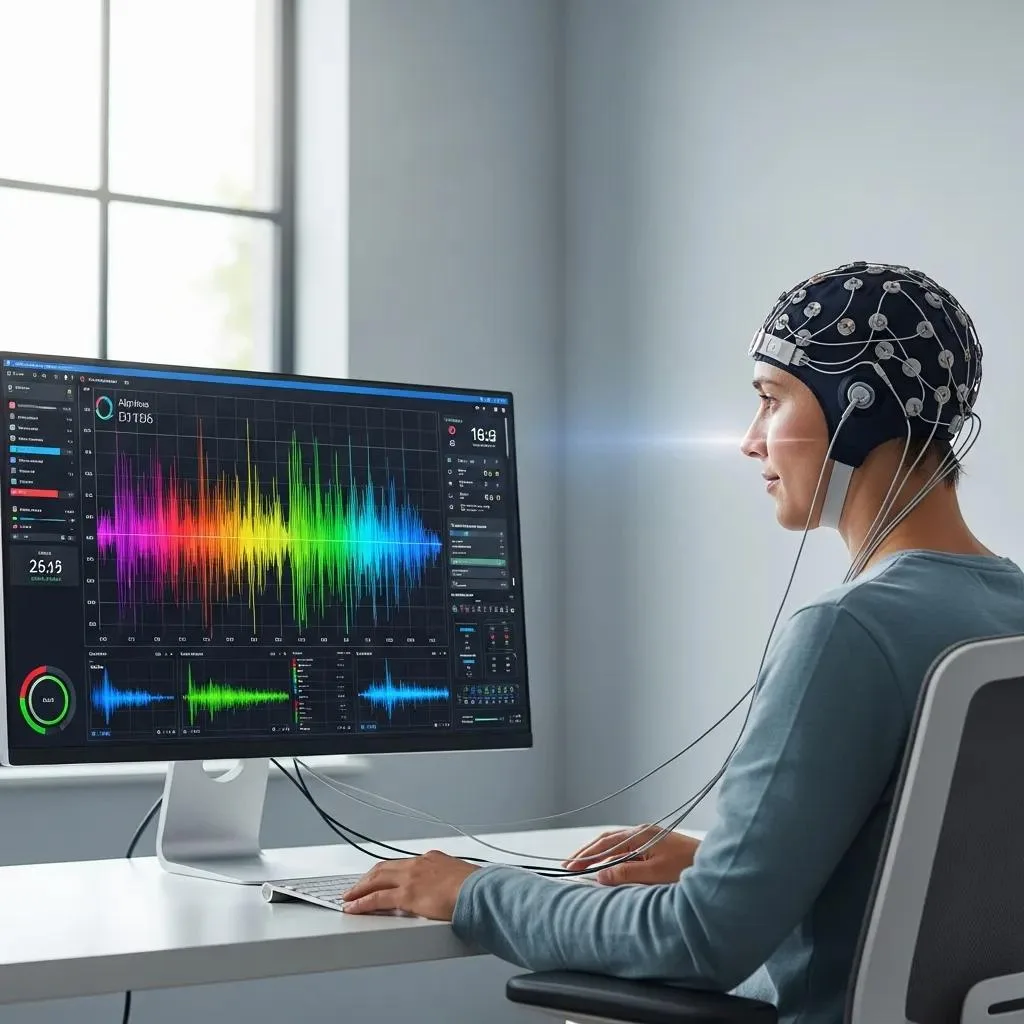
EEG biofeedback records electrical activity across common brainwave bands—delta, theta, alpha, beta, and gamma—and presents those signals in ways a person can sense, like simple games, tones, or visual meters. Delta/theta dominate deep sleep and drowsiness; alpha reflects relaxed wakefulness; beta supports focused thinking. Elevated theta/beta ratios can show up in dysregulated states tied to craving or impulsivity. During training, clinicians pick protocols (for example SMR or alpha‑theta) to boost helpful rhythms and reduce dysregulated patterns; the software rewards the brain when it produces the target activity. The process is safe, painless, and designed to teach the brain new regulatory responses through repeated, reinforced practice, preparing the clinician to create individualized protocols after qEEG mapping.
How Does Neurofeedback Retrain the Brain for Addiction Recovery?

Neurofeedback taps neuroplasticity to strengthen healthier electrophysiological patterns in networks that support impulse control, emotional regulation, and reward sensitivity—shifting responses that drive substance‑seeking behavior. For example, enhancing prefrontal beta activity can improve top‑down control over limbic craving signals, while theta/alpha training may reduce reactivity to drug cues and normalize arousal. Clinicians translate qEEG targets into session protocols—SMR enhancement or alpha‑theta relaxation, for instance—and monitor change with objective EEG metrics and behavioral measures. Over several weeks many patients report steady improvements in urge management and mood stability; these neural gains are best integrated with CBT, relapse‑prevention work, and medication‑assisted treatments for a coordinated recovery plan.
What Are the Proven Benefits of Neurofeedback for Addiction Recovery?
Neurofeedback addresses neural mechanisms that support sustained sobriety, emotional balance, and relapse prevention. Current clinical practice and the research literature show reductions in cravings and cue reactivity, improved emotional regulation and impulse control, better sleep, and supportive effects for common comorbidities such as anxiety or PTSD. These outcomes arise from modulating reward circuitry and strengthening executive networks, producing both subjective symptom relief and measurable EEG changes. The table below summarizes key benefits, the underlying mechanisms, and typical clinical outcomes clinicians observe.
Different neurofeedback benefits align with specific mechanisms and expected patient outcomes.
This comparison helps clinicians and families prioritize neurofeedback targets within a broader treatment plan. The following section explains how those neurophysiological changes translate into real‑world reductions in cravings and better impulse control during therapy.
Neurofeedback gains are usually incremental and most reliable when combined with psychosocial therapies, reinforcing its role as an adjunct in comprehensive addiction care.
How Does Neurofeedback Reduce Cravings and Urges?
Neurofeedback helps reduce cravings by retraining the brain’s response to internal cues and external triggers that previously led to substance use. Protocols that normalize theta/beta ratios or tone down hyperactive subcortical responses can decrease the physiological arousal that accompanies craving, making urges less intense and easier to manage. Clinically, many people notice fewer or milder compulsive urges after several weeks of twice‑weekly sessions, though results vary with severity and concurrent treatment. Neurofeedback is most effective for cravings when combined with cognitive strategies—coping skills are essential so lower physiological urges translate into sustained behavioral choices.
These neural changes also support better adherence to other recovery tasks, which leads into how emotional regulation and impulse control improve through targeted training.
How Does Neurofeedback Enhance Emotional Regulation and Impulse Control?
By improving connectivity in prefrontal networks and balancing cortical excitation and inhibition, neurofeedback strengthens the top‑down regulation that supports impulse control and emotional stability. Improvements commonly show up as fewer mood swings, steadier decision‑making, and greater tolerance for distress—skills that matter during high‑risk moments for relapse. Protocols that focus on SMR or slow cortical potentials often lead to measurable gains in attention and behavioral inhibition; clinicians then reinforce those gains with concurrent psychotherapy such as CBT. As emotional regulation improves, patients often report better sleep and clearer thinking, which further reduce relapse vulnerability and support longer‑term recovery.
Stronger self‑regulation from neurofeedback creates a practical foundation for integrating skills‑based therapies, which is where program‑level coordination becomes important.
How Does BetterChoice Treatment Center Integrate Neurofeedback into Comprehensive Addiction Care?
Operationally, neurofeedback at BetterChoice is delivered as an adjunctive therapy woven into the continuum of medical detox, inpatient rehab, and multidisciplinary counseling, with clinical teams coordinating care to ensure safety and clinical relevance. We follow an assessment‑driven model: patients complete clinical screening and qEEG mapping to establish suitability and targets, then neurofeedback is scheduled alongside medical oversight and psychotherapy. Our multidisciplinary team—medical providers, therapists, and neurofeedback clinicians—aligns treatment goals, monitors medication interactions, and adapts protocols based on progress and co‑occurring diagnoses. Accreditations such as Nevada’s Health Workforce Development Council recognition, LegitScript, and The Joint Commission serve as trust signals about our commitment to clinical standards and coordinated care.
This integration supports patient‑centered pathways. The next subsections explain sequencing and how personalized plans usually include neurotherapy.
How is Neurofeedback Combined with Medical Detox and Inpatient Rehab Programs?
Neurofeedback is typically introduced after medical stabilization: once detox safely reduces acute withdrawal risk, clinicians perform qEEG assessment and begin low‑intensity training while the patient remains in a monitored inpatient setting. This sequence—stabilize → assess → train—promotes safety, avoids confounding withdrawal effects, and allows staff to manage medications that influence EEG. Inpatient schedules usually include brief neurofeedback sessions (30–45 minutes) several times per week, coordinated to avoid conflicts with group therapy and medical rounds. Ongoing communication between neurofeedback technicians and the clinical team lets us adjust protocols for sleep disruption, acute stress, or medication changes, creating a safe bridge from inpatient care to continued outpatient therapy.
Clear sequencing smooths transitions into individualized outpatient plans, outlined next.
What Personalized Treatment Plans Include Neurofeedback Therapy?
Individualized plans focus on intake evaluation, qEEG mapping, collaborative goal setting, tailored protocol selection (e.g., SMR, alpha‑theta), session cadence, and objective progress metrics tied to behavioral goals like craving frequency or sleep quality. A common template starts with intake and qEEG in week one, then two to three neurofeedback sessions per week for six to twelve weeks, with periodic re‑mapping to refine protocols. Plans explicitly combine psychotherapy, family involvement, and discharge planning so neurofeedback gains transfer into daily life and relapse‑prevention strategies. When appropriate, families join goal‑setting meetings to support continuity and reinforce changes after discharge.
We use measurable outcomes to guide session intensity and duration. The next section explains what patients can expect during the therapy process.
What to Expect During the Neurofeedback Therapy Process at BetterChoice?
Our neurofeedback process follows a clear, documented workflow: clinical intake and screening, qEEG brain mapping, individualized protocol design, repeated training sessions with objective monitoring, and transition to outpatient supports as progress allows. Each step is coordinated by the clinical team to maintain safety—especially during and after medical detox. Expect an initial consultation to review history and co‑occurring conditions, followed by a qEEG that records resting and simple task‑based activity to guide protocol targets. Regular progress reviews combine EEG markers with behavioral scales to decide when to taper sessions and emphasize outpatient therapies and relapse‑prevention work.
Below is an operational table that lays out the process steps, what happens, and typical timelines so patients and families know what to plan for.
The following timeline clarifies the typical patient journey through neurofeedback.
This structured pathway helps patients and families plan time commitments and coordinate neurofeedback with other therapies. The next subsection explains the qEEG assessment and what to expect during mapping.
What Happens in the Initial Assessment and qEEG Brain Mapping?
The initial assessment combines a clinical intake interview, medication review, and safety screening, followed by a qEEG brain mapping session that records resting‑state and simple task‑related electrical activity across multiple sites. During qEEG, sensors are applied to the scalp and baseline recordings are captured with eyes open and closed; short cognitive tasks may be used to evoke network responses. The session usually lasts 45–90 minutes. Clinicians then analyze spectral and connectivity patterns to identify dysregulated regions or frequency bands that guide protocol choice; findings are reviewed with the patient in a collaborative goal‑setting meeting. That objective baseline both informs personalized protocol selection and establishes metrics for measuring progress—helpful information for families about what improvements to expect.
With the qEEG baseline established, the next subsection describes the structure and cadence of individual training sessions.
How Are Tailored Neurofeedback Training Sessions Structured?
Tailored sessions generally last 30–45 minutes and include a brief symptom check‑in, sensor setup, several training blocks with feedback, and a short debrief with progress notes. A common cadence is two to three sessions per week; over six to twelve weeks cumulative training supports reinforced neural change. Protocols vary—SMR to improve inhibition, alpha‑theta for relaxation and trauma‑related dysrhythmia—and patients typically notice subtle shifts like more calm, reduced mental chatter, or sharper focus rather than dramatic physical effects. Clinicians monitor both EEG metrics and validated behavioral scales, adjusting thresholds and targets as skill acquisition progresses to keep training challenging and avoid plateaus.
Consistent session routines and clear progress measures make transitions to outpatient care smoother when appropriate. Next we cover common questions to help with decision making.
Is Neurofeedback Therapy Right for You? Addressing Common Questions and Concerns
Deciding whether neurofeedback fits your recovery plan means weighing costs, insurance coverage, time commitment, candidate suitability, and safety. This section gives practical answers to common questions and a short decision checklist families can use. Neurofeedback is generally safe and non‑invasive, but candidacy depends on clinical stability, co‑occurring conditions, and realistic expectations—gains are incremental and best achieved alongside psychotherapy and medical supervision. The table below answers typical patient and family queries and flags when to contact a provider for assessment.
Common questions and answers to support quick, informed decisions.
This Q&A equips patients and families to ask the right questions and schedule appropriate assessments. The next two subsections cover costs/insurance and who benefits most from neurofeedback.
What Are the Costs, Insurance Coverage, and Time Commitments for Neurofeedback?
Costs include the qEEG assessment, per‑session fees, equipment and software, and clinician time. Because neurofeedback is typically adjunctive, many insurers treat it as a non‑core service and coverage varies by plan. Time commitments commonly involve 2–3 sessions per week for 6–12 weeks as an initial course, so plan for multi‑week scheduling and the expense of repeated visits. To check coverage, ask your clinician for a medical necessity letter, submit pre‑authorization requests, and inquire about sliding‑scale options or bundled packages for an assessment plus a block of sessions. For families, planning ahead—confirming benefits, scheduling around therapy groups, and arranging transportation—reduces barriers to consistent participation and supports better outcomes.
Clear financial and scheduling planning helps determine readiness and candidacy. The next subsection outlines who typically benefits most.
Who Can Benefit Most from Neurofeedback Therapy for Addiction?
Neurofeedback often helps people who continue to struggle with cravings despite standard care, individuals with co‑occurring anxiety, PTSD, or attentional difficulties, and those with sleep or emotion‑regulation problems that undermine recovery. It’s less appropriate for people with uncontrolled seizures, severe cognitive impairment that prevents engagement with feedback tasks, or unstable medical conditions—these require clinical screening. A basic screening checklist—detox stability, willingness to attend multiple sessions, and engagement with concurrent psychotherapy—helps clinicians assess fit. Families can support candidacy by documenting symptoms, tracking triggers, and joining collaborative goal‑setting to reinforce gains across settings.
Knowing who benefits most and who should be excluded helps patients and families plan realistically. The final main section summarizes recent evidence and practical success stories.
What Does Recent Research and Success Stories Reveal About Neurofeedback in Addiction Recovery?
Recent 2024 studies and meta‑analyses suggest that neurofeedback shows promise as an adjunctive therapy for substance use disorders—particularly for improving self‑regulation, reducing cue reactivity, and supporting relapse prevention when used alongside established behavioral treatments. The evidence shows modest‑to‑moderate effect sizes, varied protocols, and a need for larger randomized trials with standardized outcomes; nevertheless, consistent reports of improved sleep, reduced cravings, and better therapy engagement support clinical use. Patient‑reported benefits often line up with objective EEG changes, and some long‑term follow‑ups indicate that early neuroregulatory gains can translate into lower relapse rates when reinforced by psychosocial supports. The next subsection distills key 2024 findings and methodological caveats clinicians should weigh when recommending neurofeedback.
These research insights guide practical implementation and patient expectations. The final subsection offers anonymized vignettes that show how neurofeedback has been used in integrated care.
What Do 2024 Studies Say About Neurofeedback’s Effectiveness?
The 2024 literature indicates that neurofeedback can yield measurable improvements in craving intensity, sleep quality, and executive function when combined with cognitive‑behavioral approaches, though heterogeneity in protocols and small sample sizes limit definitive conclusions. Meta‑analytic trends point to moderate effects for emotional regulation and small‑to‑moderate reductions in relapse proxies, while also calling for standardized outcome metrics and replication across centers. Methodological caveats include variable control conditions, different training doses, and mixed blinding practices; still, more studies now use qEEG baselines and follow‑up re‑mapping to document change. Overall, findings support cautious optimism and reinforce that neurofeedback should be integrated within multidisciplinary care rather than offered as a lone treatment.
Below we translate research into practice with anonymized clinical vignettes that reflect typical adjunctive benefits seen in integrated programs.
How Have Patients Benefited from Neurofeedback at BetterChoice?
Anonymized vignettes from our integrated care pathways show how neurofeedback has complemented detox and counseling to produce meaningful improvements: one patient experienced progressive reductions in cue‑triggered cravings and better sleep after a 10‑week SMR course, which improved engagement in relapse‑prevention groups. Another person with co‑occurring anxiety reported less hyperarousal and greater distress tolerance, which helped them stay in therapy and lowered early discharge risk. BetterChoice clinicians point to aggregated improvements—better sleep metrics, fewer reported urges, and higher psychotherapy attendance—as indicators that neurofeedback contributed adjunctively to sustained recovery. These examples highlight that neurofeedback’s greatest value is often reinforcing medical stabilization and evidence‑based therapies, not replacing them.
The clinical narratives close by underscoring neurofeedback’s adjunctive role and the importance of coordinated, accredited care for lasting recovery outcomes.
Frequently Asked Questions
What is the typical duration of a neurofeedback treatment program?
Most neurofeedback programs run 6 to 12 weeks, with patients attending 2 to 3 sessions per week. Each session usually lasts 30 to 45 minutes. This schedule allows time to establish a qEEG baseline and then deliver repeated training that reinforces desired neural patterns. The gradual approach helps people adapt to training and integrate what they learn into daily life, supporting longer‑term recovery.
Can neurofeedback therapy be used alongside other treatments?
Yes. Neurofeedback is designed to complement treatments such as cognitive‑behavioral therapy (CBT), medical detox, and inpatient rehabilitation. When neurofeedback is integrated into a comprehensive plan, clinicians can address multiple recovery targets—emotion regulation, sleep, and impulse control—while reinforcing the skills learned in other therapies. This multidisciplinary approach often produces better outcomes than any single modality alone.
What should I expect during my first neurofeedback session?
Your first visit typically includes a clinical intake interview to review history and co‑occurring conditions, followed by qEEG brain mapping where sensors record your brain activity. The mapping usually takes 45 to 90 minutes and helps identify neural patterns to target. After mapping, your clinician will discuss findings and set collaborative goals for the training plan.
Are there any side effects associated with neurofeedback therapy?
Neurofeedback is generally safe and non‑invasive, with minimal side effects reported. Some people notice mild fatigue or a headache during early sessions as their brain adjusts; these effects are usually short‑lived. Always tell your clinician about any concerns—protocols can be adjusted to keep training comfortable and effective.
How is progress measured during neurofeedback therapy?
Progress is measured with objective EEG metrics and behavioral assessments. Clinicians compare baseline qEEG data with periodic re‑mapping results, and patients complete validated questionnaires to track changes in cravings, emotional regulation, and overall well‑being. Combining quantitative EEG markers with self‑report measures gives a fuller picture of treatment effect and guides protocol adjustments.
Is neurofeedback therapy suitable for everyone?
Neurofeedback can help many people in recovery, but it’s not appropriate for everyone. Uncontrolled seizures, severe cognitive impairment, or unstable medical conditions may limit candidacy. A full clinical screening determines suitability. Discuss your medical history and goals with a clinician to see if neurofeedback is a good fit for your recovery plan.
What role does family involvement play in neurofeedback therapy?
Family involvement can strengthen neurofeedback outcomes. Inviting family members to goal‑setting meetings and treatment discussions builds a supportive environment and helps reinforce changes outside the clinic. Families can offer valuable observations about behavior and progress, improving continuity of care and supporting long‑term sobriety.
Conclusion
Neurofeedback therapy is a promising adjunctive tool for addiction recovery—helping people improve self‑regulation, reduce cravings, and stabilize mood. When integrated into a comprehensive, evidence‑based plan, neurotherapy can produce measurable benefits that support lasting recovery. If you or a loved one are considering neurofeedback, contact our team for a personalized consultation. BetterChoice Treatment Center is here to help you explore how neurofeedback and coordinated care can support your path to lasting sobriety.