Narcotics Anonymous Meetings Las Vegas: A Practical Guide to Finding Support and Recovery
Narcotics Anonymous (NA) is a peer-led fellowship built on the 12 steps that helps people recover from drug addiction through shared experience, accountability, and ongoing community. This guide covers what NA is, why Las Vegas meetings matter, and how to find the right meeting—whether in person or online—so you can connect with steady peer support. If you’re finishing clinical care and wondering what to do next, this article gives practical search tips, explains meeting formats, summarizes the evidence behind 12‑step participation, suggests ways families can help, and shows virtual meeting options that improve access. You’ll learn where meetings commonly meet, how to choose between open and closed formats, what to expect at your first visit, and how community resources can complement clinical aftercare so you can move from stabilization toward lasting recovery with clear, actionable steps.
What Is Narcotics Anonymous and How Does It Support Addiction Recovery?
Narcotics Anonymous is a worldwide, peer-run fellowship that offers regular mutual-support meetings for people who want to stop using drugs. NA pairs the 12‑step framework with regular fellowship: members share experience, often work the steps with a sponsor, and hold one another accountable. The main benefits come from social support, structured reflection during step study, and accountability through sponsors and steady meeting attendance—actions that reduce isolation and build relapse‑prevention routines. Knowing how these pieces work together helps when choosing local meetings or blending NA into a clinical aftercare plan, because the social and procedural parts shape how recovery is maintained over time.
NA’s structure focuses on group autonomy, member anonymity, and voluntary sponsorship; these features shape how meetings run and what newcomers can expect. NA is not a replacement for medical care—it complements evidence‑based treatment by providing community support that helps maintain recovery. The next section explains the Traditions and principles that guide meeting behavior and group culture.
What Are the Core Principles and Traditions of NA?
NA’s Traditions create a predictable, safe space that protects members’ privacy and keeps meetings focused on recovery rather than outside interests. Key ideas include anonymity to protect confidentiality, group autonomy so each meeting sets its own format, and non‑affiliation to avoid outside endorsements or political influence. The Traditions also describe service structure and the concept of group conscience, which guides choices about format, literature, and outreach while keeping groups member‑run.
Because these principles put recovery and mutual support first, they shape common practices like opening readings, time‑limited sharing, and using first names only. That culture helps reduce stigma and makes it easier for newcomers to speak honestly. Knowing the Traditions helps attendees respect group norms and see sponsorship and service as paths to deeper involvement.
How Does NA Facilitate Long-Term Recovery Through 12-Step Programs?
The 12 Steps give a step‑by‑step framework for changing addictive behavior through reflection, making amends, and building spiritual or personal practices that support ongoing abstinence. A sponsor pairs a newcomer with an experienced member who mentors step work, models stable recovery behavior, and provides accountability for concrete actions like regular meeting attendance and daily check‑ins. Step‑study meetings and structured readings make ideas actionable, strengthening coping skills and lowering relapse risk through repeated, community‑based practice.
Public health summaries and recent research indicate that regular involvement in 12‑step fellowships often links with longer periods of abstinence and better long‑term outcomes—especially when combined with clinical treatment. Understanding how sponsorship, step work, and consistent attendance interact helps people pick meeting formats that best support their recovery goals.
How Can You Find NA Meetings in Las Vegas?
Finding NA meetings in Las Vegas starts with trusted directories and regional resources, and then narrowing by accessibility, format, and focus so you can find meetings that suit you. Start with official regional NA listings or national directories, then filter by day, time, meeting type (open vs. closed), and access needs like wheelchair access or language. Always confirm meeting details before you go—schedules and venues change—by calling the contact on the listing or checking recent announcements from the local service body. These steps reduce uncertainty and make your first visit easier.
Follow these practical steps to locate meetings quickly:
- Search the regional NA directory or national NA resources by city and day for verified listings.
- Filter for meeting type, accessibility, and format (speaker, step‑study, discussion) to match your comfort level.
- Verify the time and venue shortly before attending—call the listed contact or check recent updates.
- Consider virtual meetings if transportation, scheduling, or privacy are barriers to in‑person attendance.
These steps help you find meetings and prepare for your first visit. If you’re leaving clinical care and need referrals or discharge planning, local treatment providers can often provide updated meeting lists and scheduling help; for assistance you can contact BetterChoice Treatment Center at (725) 299-4777 or visit their Las Vegas campus at 198 Ebb Tide Cir, Las Vegas, NV 89123 to ask about aftercare coordination.
Las Vegas hosts a variety of meeting venues and schedules to match different needs; the short directory below gives sample meeting types and times to illustrate common options and accessibility notes.
Introductory directory examples below show representative meeting types and typical scheduling; always confirm current times with the hosting group.
These examples make it easier to compare meeting options and pick locations that fit your schedule and access needs.
Where Are NA Meetings Held and What Are Their Schedules?
In Las Vegas, NA meetings usually meet in neutral community spaces like church halls, community centers, treatment facilities, and sometimes libraries. Virtual meetings have also increased availability. Schedules run from early‑morning daily meetings to evening speaker nights and weekend step‑study sessions, and frequency varies by neighborhood. Groups often note wheelchair access and transit details so newcomers can plan travel. Because times and locations can change, always confirm a meeting’s current schedule through the local service body or a verified directory before attending.
Many venues work with local partners to provide private, sober spaces that encourage open sharing while protecting anonymity. Knowing typical venue types and schedule patterns helps you find dependable meetings that fit work, family, and treatment commitments. The section below explains the different meeting formats you’ll encounter and how to pick the best fit.
What Types of NA Meetings Are Available in Las Vegas?
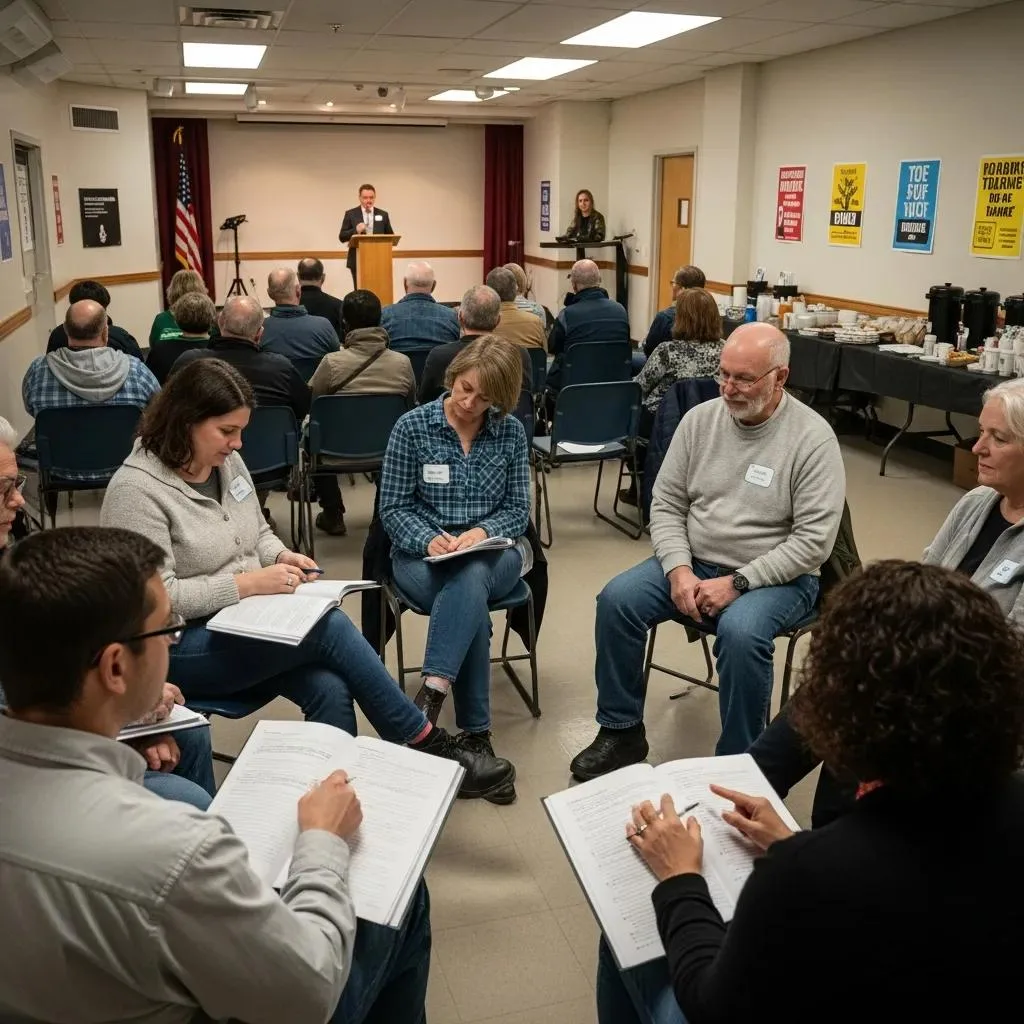
NA offers several meeting formats to match readiness and comfort: open meetings for anyone curious about recovery, closed meetings for people who identify as having a drug problem, and specialty meetings for groups such as men‑only, women‑only, or LGBTQ+ attendees. There are speaker nights with personal recovery stories and step‑study meetings for focused work on the 12 Steps. Each format serves a purpose—open meetings introduce newcomers, closed meetings create a focused sharing space, and step‑study meetings support deeper recovery work.
Pick a meeting type based on your readiness and goals—for example, people early in treatment may prefer closed step‑study sessions for structured guidance, while others might start with open discussion meetings before choosing a sponsor. Use the quick list below to match format to need.
- Open Meeting: Anyone may attend to learn about NA and hear sharing.
- Closed Meeting: Attendance is limited to those who identify with a drug problem to protect focused sharing.
- Speaker Meeting: One or more members share their recovery story; useful for inspiration.
- Step‑Study Meeting: Focused on working the 12 Steps in sequence; helpful for deepening recovery.
Choosing the right format improves the chance a meeting will feel supportive and relevant. After you find a good fit, meeting with a sponsor and keeping a steady attendance routine are natural next steps.
How Does BetterChoice Treatment Center Integrate NA Into Aftercare?
BetterChoice Treatment Center helps people in Nevada shift from clinical stabilization to community recovery by including NA referrals and support coordination in discharge planning. Their approach links clinical services to readiness for NA, following a pathway from medical detox and stabilization through inpatient care, outpatient programs, counseling, and community meeting involvement. Discharge planning steps often include scheduling a first meeting, giving an up‑to‑date list of local meetings, arranging transportation if needed, and offering alumni check‑ins to encourage early attendance. This coordination respects NA’s anonymity while giving patients clear next steps and support after leaving formal care.
Below is a concise service‑to‑readiness map that shows how clinical offerings prepare patients for community participation in NA and support sustained recovery after discharge.
This mapping shows how clinical steps build the practical and social readiness that makes NA engagement more effective.
What Addiction Treatment Services Prepare You for NA Participation?
Services that best prepare someone for NA include medical detoxification, group therapy that practices healthy sharing and boundaries, relapse‑prevention education, and one‑on‑one counseling that addresses shame and builds readiness for fellowship. Detox eases physical symptoms so people can participate in groups, while therapeutic groups mirror the sharing format of NA to ease the transition to community meetings. Outpatient programs and counseling keep continuity of care and reinforce the skills needed to benefit from sponsorship and step work.
These services often follow a timeline—stabilization, skill building, then transition planning—which can include staff arranging an introduction to a meeting or providing a curated list of local groups. The next section explains how a treatment provider supports ongoing recovery through non‑promotional supports like alumni programs and referral coordination.
How Does BetterChoice Support Ongoing Recovery Through NA?
BetterChoice Treatment Center supports ongoing recovery by coordinating referrals to local NA meetings, offering alumni check‑ins, and including NA orientation in discharge plans to reduce barriers to first attendance. Staff can create a personalized aftercare plan that lists meeting schedules, points out nearby groups that match demographic preferences, and offers transportation guidance when needed—always emphasizing patient choice and anonymity. Alumni programs and follow‑up calls help keep people engaged during the early, higher‑risk weeks after discharge, while counseling appointments reinforce step work and help integrate fellowship support into relapse‑prevention plans.
These practices respect NA’s Traditions by facilitating access without violating anonymity or endorsing specific groups, and they aim to ensure continuity between clinical care and community supports. For patients and families seeking help with referrals or discharge planning, BetterChoice can be reached at (725) 299-4777 for guidance on local resources and aftercare coordination.
What Are the Benefits of Attending NA Meetings in Las Vegas?
Attending NA meetings in Las Vegas offers clear benefits—peer support, structure, and sponsorship—that help many people sustain abstinence and rebuild social networks after treatment. The fellowship reduces isolation by connecting members to others who have faced similar challenges, increases accountability through regular attendance and sponsor relationships, and provides low‑cost, ongoing access to recovery resources. These benefits are stronger when community meetings are paired with clinical follow‑up, combining medical care with social support. Knowing these advantages helps members choose meeting types and participation levels that match their recovery stage and needs.
How Does Community Support Enhance Addiction Recovery?
Community support in NA helps recovery by offering social reinforcement, role models, and practical assistance that lower relapse risk and improve daily functioning. Peers who share their success provide practical coping strategies and help expand a person’s sober network—reducing isolation and creating opportunities for reciprocal support like rides to meetings or sponsor calls during cravings. Service roles and steady meeting attendance give purpose and routine, both important protective factors for long‑term recovery. Community validation also helps reduce stigma that might otherwise block help‑seeking.
These social supports show up in everyday ways—sponsor contact during high‑risk moments, shared resources for housing or work leads, and group problem solving—that complement clinical care and make recovery more sustainable. The section below summarizes the research linking NA participation with better outcomes.
What Evidence Supports the Effectiveness of NA Meetings?
High‑level evidence and public health reviews show that 12‑step mutual‑help organizations, including NA, are associated with higher abstinence rates and that sustained participation tends to improve long‑term outcomes—especially when combined with clinical care. Systematic reviews and government summaries report that regular attendance and active engagement (for example, having a sponsor and working the steps) predict better substance‑use outcomes than minimal or no participation. Research also notes individual variability and emphasizes that fellowship participation works best as part of a continuum of care that includes medical and psychosocial interventions.
Practically, this means combining clinical supports with consistent NA involvement, choosing meetings that fit personal needs, and using sponsorship to turn step work into everyday coping strategies. These research‑backed practices help people use NA as a dependable component of a multi‑modal recovery plan.
How Can Families Support Loved Ones Through NA and Recovery?
Families play an important role in helping someone enter NA and stay in recovery by offering logistical support, encouraging engagement without pressure, and using family‑focused resources to learn about boundaries and relapse triggers. Good family support mixes practical help—like driving someone to meetings or helping with scheduling—with emotional approaches such as reflective listening and avoiding enabling behaviors. Families should also respect NA’s anonymity rules and avoid publicizing someone’s attendance; instead, work with treatment providers for guidance on aftercare logistics. Supportive, non‑pressuring help makes it more likely a loved one will connect with community supports and stay in recovery.
Working with clinicians or family support organizations helps relatives learn healthy boundaries, join family therapy when offered, and find peer support for themselves. The next section lists local and national resources families can use for education and emotional support.
What Resources Are Available for Families of NA Participants?
Families can use a variety of resources, including family education programs, family therapy from treatment providers, and national organizations that advise on supporting someone in mutual‑help fellowships. Educational materials explain how to respect anonymity, communicate constructively, and coordinate logistics—like transportation and appointments—without applying undue pressure. Local counseling services and family programs often run structured sessions that teach coping skills, boundary‑setting, and relapse‑prevention planning tailored to family dynamics.
These resources help families support recovery while maintaining healthy relationships and self‑care. If families need direct help with referrals or aftercare coordination, local treatment providers can offer guidance without compromising a member’s anonymity.
How Can Families Encourage Engagement with NA Meetings?
Families can encourage involvement by offering practical support—driving a loved one to a meeting or helping find times that fit their schedule—while using motivating, non‑coercive language. Gentle offers to help, like accompanying someone to a first meeting or helping them look for a sponsor if they want one, are more effective than ultimatums. Celebrate small steps—attending, sharing, or connecting with a sponsor—to reinforce progress and build momentum without taking over the recovery process.
Families should avoid trying to control recovery. Instead, provide steady logistical help and emotional encouragement that empowers the person in recovery to make their own choices. These behaviors reduce practical barriers and increase the chance of early and continued NA involvement.
Are There Online and Virtual NA Meetings Available in Las Vegas?

Yes—virtual NA meetings are now a common complement to in‑person groups, offering flexible access for people in Las Vegas who face transportation, scheduling, or privacy barriers. Virtual meetings run on familiar platforms and follow the same formats—open, closed, speaker, or step‑study—as face‑to‑face groups, with extra attention to anonymity and online etiquette. Virtual options increase choice, let you attend consistently when travel or health issues interfere, and make it easier to find niche or specialty meetings that don’t meet locally. Knowing how virtual meetings work will help you decide when an online meeting is a helpful supplement or an alternative.
Because virtual meetings need some technical setup, the next section outlines how to join, participation norms, and privacy tips for online attendance.
How Do Virtual NA Meetings Work and Who Can Join?
Virtual NA meetings follow the same fellowship principles as in‑person meetings but ask participants to follow digital etiquette like muting when not sharing, using first names only, and protecting confidentiality. Many virtual meetings are open; some are closed and ask participants to self‑identify as having a drug problem. Moderators enforce norms to keep the meeting’s purpose clear. To join, use the link or dial‑in info provided by the hosting group, register if required, and follow any guidance about cameras or chat to protect anonymity and focus.
Virtual meetings are useful for people needing anonymity, those with mobility limits, or anyone living where in‑person meetings are scarce. They can make forming close interpersonal bonds harder than face‑to‑face contact, so combining online and in‑person meetings when possible often helps deepen connections.
What Are the Advantages of Online NA Support Groups?
Online NA groups increase accessibility by removing geographic limits, offering more meeting times, and letting people join from private places if they worry about visibility or travel. They lower the initial barrier to participation, making it easier for people early in recovery to connect, find specialty meetings, and try different formats until they find a fit. Virtual meetings can also be a bridge to in‑person meetings by building confidence in sharing and helping create sponsor relationships that transfer to local groups.
Online options expand access but may need extra effort to build deeper ties and to turn online accountability into real‑world support. Combining virtual and in‑person attendance often produces the best results for sustained recovery and social reintegration. If you need help linking virtual participation with local aftercare, treatment providers can advise on scheduling and referrals.
- Directories and Regional Resources: Use your regional NA service body to find verified meeting times and formats.
- Confirm Before You Go: Call or check meeting announcements shortly before attending to verify time and venue rules.
- Mix Formats for Best Results: Combine virtual and in‑person meetings to balance access and deeper connection.
- Ask for Support: If transportation or scheduling is a barrier, ask a treatment provider or local resource about referral and coordination options.
These tips help you use both in‑person and online NA options to build a dependable recovery routine.
Frequently Asked Questions
What should I expect at my first NA meeting?
Your first NA meeting will usually feel welcoming. Meetings often start with the NA preamble or readings, then introductions where people use first names only. You’ll hear members share personal stories and there will be time for open sharing. Feeling nervous is normal—many people attend several meetings just to listen. You’re welcome to observe until you feel ready to speak.
Can I attend NA meetings if I am still using drugs?
Yes. NA welcomes anyone who identifies as having a drug problem and is looking for support, even if they are still using. The fellowship is non‑judgmental, and many members began attending while still struggling. Showing up can provide connection, insight, and hope from others who understand.
How can I find a sponsor in NA?
A sponsor is an experienced member who helps with step work and provides one‑on‑one support. You can ask for a sponsor at meetings or connect with someone you feel comfortable with after a meeting. Look for someone whose approach and recovery history feel like a good match; many members are open to sponsoring newcomers.
Are there age restrictions for attending NA meetings?
Most NA meetings are open to adults of all ages, but some meetings are designed for specific age groups—like youth meetings—or other demographics. If you are a minor, check with the meeting organizer first to confirm the environment is appropriate and supportive.
What should I do if I feel uncomfortable sharing in a meeting?
It’s perfectly fine not to share. Many newcomers listen for several meetings before speaking. Share only when you feel ready. If you want support, talk with a sponsor or a trusted member outside the meeting. NA aims to be a safe space—your comfort matters.
How can family members support someone attending NA?
Families can provide emotional encouragement and practical help like rides to meetings, help with scheduling, and learning about NA principles. Support works best when it’s non‑coercive—offer to help, don’t pressure. Respect the member’s anonymity and work with treatment providers for guidance on aftercare logistics when needed.
What resources are available for those who cannot attend in-person meetings?
If you can’t attend in person, many NA groups offer virtual meetings via Zoom or teleconference. NA’s official resources list online meeting schedules and formats. These virtual options let you access support and community from wherever you are.
Conclusion
Narcotics Anonymous meetings in Las Vegas offer community, accountability, and practical support that can make a real difference in recovery. By learning meeting formats, using trusted directories, and combining fellowship with clinical care, you can find the right mix of supports for your situation. If you’re ready, take the next step—explore local NA meetings today and connect with people who understand the path you’re on.