

Legal help in Las Vegas for addiction recovery — clear, practical support
Legal aid for people in recovery blends civil and criminal services, court programs, and advocacy designed to remove barriers to treatment, housing, and work while protecting rights in Las Vegas. This guide outlines the types of help available, how drug court and supervision can connect with care, what Nevada law generally protects, and where to find low-cost or pro bono assistance. Many people facing substance-use–related legal problems need both clinical care and clear legal support; knowing what’s available helps reduce risk, protect housing and employment, and improve outcomes by linking treatment with diversion options. Below we map civil, criminal, and family services, explain drug court structure and eligibility, summarize employment and housing protections, and offer practical next steps and a directory-style resource overview so you can prepare intake materials and connect treatment documentation with legal advocacy.
What legal services are available for addiction recovery in Las Vegas?

Legal aid for recovery commonly includes civil help for housing and benefits, criminal defense and diversion programs for drug- or DUI-related charges, family-law assistance for custody or visitation, and help with expungement or sealing records where eligible. Providers assess legal risk, negotiate alternatives to incarceration, and help secure stable housing and employment that support recovery. Which service you need depends on whether the immediate issue is criminal representation, family-law advocacy, civil support for housing or income, or record and discrimination help. Understanding the types of services makes it easier to gather the right documents—like treatment records and income verification—before intake, which speeds referrals through courts and social services. Below is a quick list to clarify when each service is typically used and to help with urgent searches.
Legal aid in Las Vegas commonly covers these areas:
- Free and Low-Cost Civil Legal Aid: Help with housing, public benefits, and consumer issues that affect stability during recovery.
- Criminal Defense and Diversion Services: Defense counsel, public defenders, and programs that refer eligible people to drug court or treatment-based alternatives.
- Family Law Support: Guidance and representation for custody, visitation, and parental-rights issues where substance use is a factor.
Next steps are straightforward: identify your primary legal need, gather treatment and income documents, and contact the appropriate intake service to start an application or referral.
Which organizations provide free and low-cost legal help for substance use issues?
Several nonprofit and government organizations in southern Nevada provide civil legal services that intersect with recovery—helping with eviction, benefits, and discrimination complaints. These providers usually screen income and case type during an intake call and offer phone triage, clinic appointments, or referrals to specialized family or criminal counsel. When you prepare for intake, have proof of income, lease or eviction notices, relevant court paperwork, and treatment records ready to speed eligibility checks and strengthen case assessments. Many centers also run legal education clinics and pro se help for filing basic forms when immediate representation isn’t available.
Common intake steps for free or low-cost providers include:
- Phone or online screening to confirm eligibility and legal issue type.
- Scheduling a legal clinic or appointment for advice and limited-scope representation.
- Referral to pro bono attorneys or reduced-fee private counsel when criteria are met.
These services exist to remove civil-law obstacles to recovery; knowing the intake sequence helps you secure timely support and stay focused on treatment.
How can legal aid help people facing DUI or drug charges?
Legal aid and defense attorneys guide clients through the criminal process, advise on pleas, represent clients at arraignment, and pursue diversion when eligible. Defense counsel and public defenders assess qualification for drug court or other treatment-focused programs, gather mitigating evidence (including proof of treatment), and negotiate with prosecutors for supervised treatment plans instead of incarceration. Treatment documentation—enrollment records, progress notes, and clinician statements—can influence bail, sentencing, or specialty-court placement, so it’s important to coordinate with counsel early. Ask for copies of intake and progress records and share them with your lawyer promptly; every case needs a strategy tailored to its facts.
Key steps after an arrest:
- Secure legal counsel quickly to explore diversion and minimize charges.
- Document treatment participation and give those records to your attorney to support mitigation.
- Follow your attorney’s instructions for court dates and any testing or treatment requirements.
When legal aid and treatment providers work together, the chance of diversion into rehabilitative programs and better long-term outcomes increases.
How do Las Vegas drug court programs support recovery?
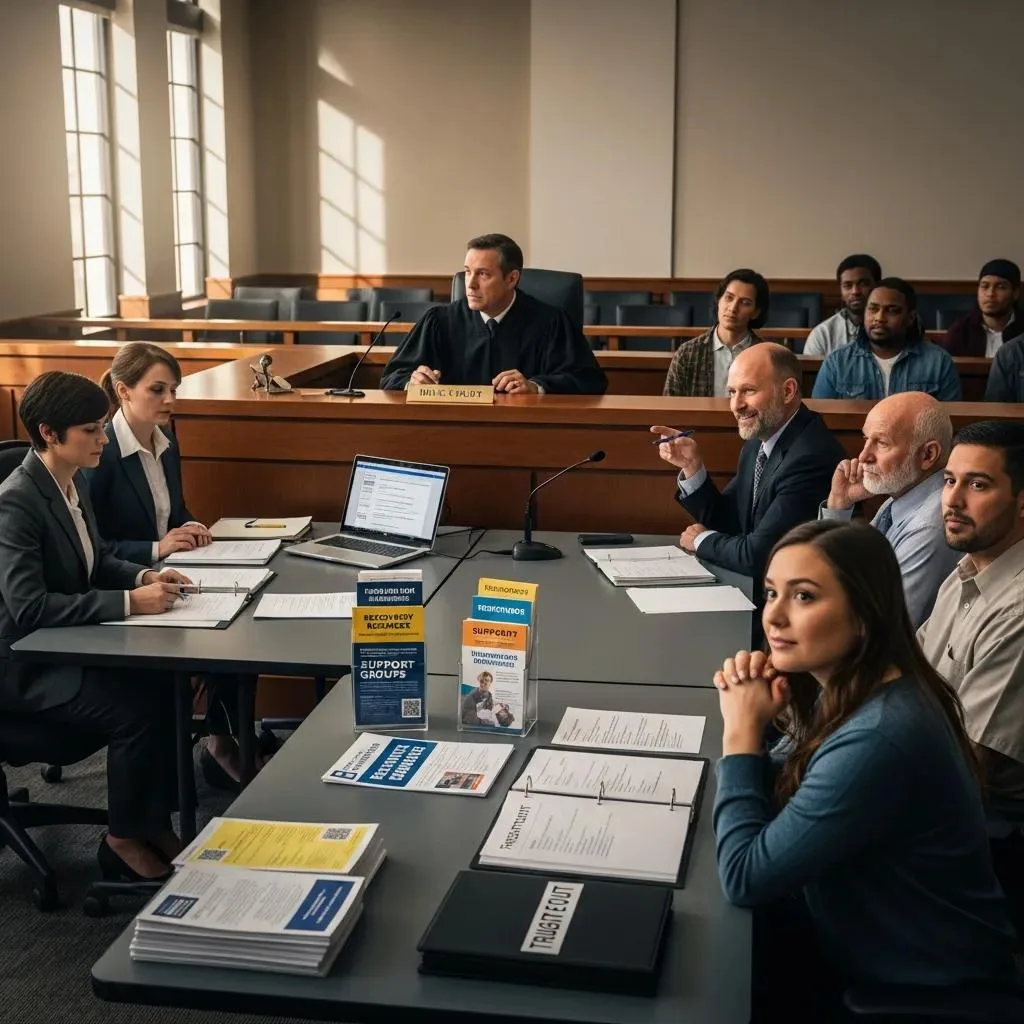
Drug courts are specialized criminal-justice programs that trade standard sentencing for structured court supervision combined with treatment and ongoing monitoring. Their focus is rehabilitation and reducing recidivism rather than punishment. Participants follow individualized plans that may include medical or behavioral health care, frequent court check-ins, random drug tests, and a system of incentives and sanctions managed by a multidisciplinary team. Judges, prosecutors, defense attorneys, treatment providers, and probation officers coordinate to support sobriety while holding participants accountable. Successful completion often leads to reduced charges or case dismissal, which makes drug court an attractive option for eligible defendants seeking treatment-focused alternatives.
Drug court programs work through three core elements:
- Assessment and treatment placement: Clinical evaluation determines whether medical detox, residential, or outpatient care is appropriate.
- Judicial supervision and incentives: Regular court reviews paired with rewards for compliance and graduated sanctions for setbacks.
- Integrated support services: Case management, job-help, and housing referrals to stabilize recovery.
By aligning legal incentives with evidence-based care, drug courts aim to promote long-term sobriety and smoother community reintegration.
What is the eligibility and application process for drug courts in Nevada?
Eligibility typically requires a qualifying non-violent offense, a demonstrated substance-use disorder, and approval by the court and prosecution; rules vary by jurisdiction and are decided on referral. The referral process often starts when a prosecutor, defense attorney, or judge identifies a candidate and orders a clinical assessment to confirm dependence and treatment needs. After assessment, the team reviews suitability and makes a recommendation to the court; if admitted, participants sign program agreements detailing phases, requirements, and expectations. Timelines vary, but many programs move from referral to intake within weeks once assessments and paperwork are complete.
Typical drug court steps include:
- Referral from counsel or the court, followed by a clinical assessment.
- Team review and court acceptance with a signed treatment plan.
- Enrollment with scheduled supervision and progress checks.
Having prior treatment records and current assessments ready can speed acceptance and ensure appropriate placement.
What are the benefits of drug court for long-term recovery?
Drug court participation is linked to lower recidivism, better treatment retention, and greater social stability by combining judicial oversight with evidence-based care. Evaluations show that supervised treatment with incentives and support reduces reoffending more than traditional adjudication and improves access to coordinated medical and behavioral-health services. Practical gains include clear accountability, coordinated case management that addresses housing and employment, and legal outcomes that often preserve community ties. For many, drug court provides a structured path that supports sustained recovery.
Primary participant benefits include:
- Lower recidivism: Supervised treatment decreases the chance of future criminal activity.
- Faster treatment access: Quicker connection to clinical care matched to needs.
- Improved legal outcomes: Potential reduction or dismissal of charges after successful completion.
These outcomes make drug court a practical option for defendants whose recovery and legal future depend on structured, sustained care.
What legal rights and protections exist for people in recovery in Las Vegas?
People in recovery are covered by a mix of state and federal protections that can limit discrimination and protect privacy, though there are exceptions tied to safety-sensitive roles and specific legal rules. Employment laws may allow certain actions—like termination for on-the-job impairment—while federal statutes and Nevada law can bar adverse actions based solely on past, treated substance use in some cases. Housing protections often fall under disability discrimination and reasonable-accommodation rules, but landlords can still enforce valid lease terms. If you suspect housing discrimination, state agencies and civil legal aid can help. Confidentiality for treatment records is governed by HIPAA and substance-use confidentiality rules, which restrict disclosure without consent and protect clinical information from routine employer or court access.
Know how and when to assert your rights:
- Treatment records are generally protected but may be shared with consent or in narrow legal situations.
- Use evidence of treatment engagement when seeking accommodations or mitigation in legal proceedings.
- Contact civil legal aid for help filing complaints and pursuing remedies if you face discrimination.
Organizing records and clear documentation helps you invoke protections and pursue remedies when violations occur.
How does Nevada law protect against addiction-related employment and housing discrimination?
Nevada and federal laws prohibit disability discrimination that can apply to people in recovery, allowing requests for reasonable accommodations and limiting adverse actions based on a history of substance use when treatment is documented and performance isn’t impaired. Protections are narrower for safety-sensitive jobs or where federal rules apply; still, employees can request accommodations like modified schedules or medical leave for treatment. For housing, anti-discrimination laws can prevent denial of housing or eviction solely due to disability status, though landlords retain rights for lease violations or safety concerns. Filing with the state human-rights agency or working with civil legal aid are common steps when you believe discrimination has occurred.
Steps to address suspected discrimination:
- Document the adverse action and any references to substance-use history.
- Request reasonable accommodation in writing and keep copies of responses.
- Contact civil legal aid or a state agency to file a complaint if informal resolution fails.
These actions create a record and open administrative paths for enforcement or legal remedies.
What family-law issues affect people in recovery, including custody?
Family courts review parental fitness by looking at substance-use history, current treatment engagement, and stability factors like housing, employment, and support systems. Active participation in certified treatment and supervised visitation can improve custody outcomes. Courts prioritize child safety, so ongoing unmanaged substance use may lead to restricted or supervised visits, while documented recovery—backed by treatment plans and clinician reports—can show commitment and progress. Work with counsel and provide objective clinical documentation, parenting-course certificates, and proof of stable housing to strengthen custody claims. Family-law legal aid can help present treatment-based mitigation and negotiate plans that protect children while supporting reunification.
Actions that support better family-law outcomes include:
- Attend treatment consistently and request clinician statements documenting progress.
- Complete court-recommended parenting and substance-use programs and keep certificates.
- Work with family-law counsel or clinics to prepare evidence and custody proposals.
Proactive documentation and steady engagement can shift court assessments toward rehabilitation and family preservation when safety is addressed.
How can probation and parole support recovery while meeting legal obligations?
Probation and parole can incorporate treatment into supervision through mandatory counseling, drug testing, and referrals to medical or behavioral-health services—helping people meet legal obligations while getting care. Supervision officers often coordinate with treatment providers and may include treatment attendance as a condition of compliance, creating structure that supports sobriety and reduces reoffending. You can sometimes seek modifications—like different treatment modalities or adjusted reporting—through legal petitions or with help from counsel when clinical providers document the need. Understanding typical conditions and how to work with your officer helps you stay compliant while accessing services needed for recovery.
Typical probation and parole roles in recovery include:
- Monitoring compliance through testing and reporting.
- Facilitating treatment referrals and sharing progress with the court when appropriate.
- Enforcing conditions while allowing for modifications based on clinical needs.
What are common probation requirements for people with substance-use disorders?
Common conditions include regular drug testing, attendance at counseling or treatment sessions, required check-ins with a probation officer, and participation in services that support stability like employment or housing programs. These rules balance public safety with rehabilitation and appear in your supervision agreement at sentencing or release. Noncompliance can lead to sanctions up to revocation, while documented treatment engagement can reduce penalties and support requests for eased restrictions. Probation officers and treatment providers contribute reporting that shapes supervision outcomes.
Checklist for staying compliant:
- Keep an up-to-date treatment schedule and obtain progress notes from clinicians.
- Track drug-test results and all court or probation communications.
- Tell your probation officer right away about treatment changes or barriers to compliance.
Consistent records and open communication with supervision staff lower the risk of misunderstandings that could lead to violations.
How can legal aid help with probation violations and compliance problems?
Legal aid can offer advice or representation when violations are alleged, help file petitions to change unreasonable conditions, and gather treatment-based mitigation for hearings. If a violation is alleged, act quickly: contact counsel, document your treatment engagement and any barriers, and request a hearing to explain circumstances. Counsel can negotiate alternatives—such as additional treatment instead of incarceration—or ask for continuances to stabilize clinical circumstances. Early legal advice increases the chance courts will consider treatment records and compliance history when deciding sanctions.
Practical steps to protect your rights after an alleged violation:
- Contact legal aid or a defense attorney as soon as possible.
- Collect treatment records, drug-test documentation, and proof of attempts to comply.
- Request modification hearings or alternative sanctions that emphasize treatment over incarceration.
Combining legal advocacy with engaged clinical support often improves outcomes and preserves access to rehabilitative services.
How does BetterChoice Treatment Center support clients with legal challenges?
BetterChoice helps people in Nevada access treatment quickly and provides clear, practical guidance during recovery. While BetterChoice does not provide legal representation, we support clients by preparing clinical documentation, supplying treatment plans and progress reports with consent, and making warm referrals to trusted Las Vegas legal resources. As a licensed, accredited facility offering medical detox and inpatient care, BetterChoice creates records—by medical staff, therapists, and nurses—that can be useful in court, probation, or drug court settings. Our team can explain how to authorize release of records and help draft clinician statements about engagement and compliance. If legal issues affect a client’s ability to get care, our intake staff will help plan next steps and connect clients to civil legal aid partners for complementary support.
Examples of provider support activities include:
- Preparing treatment summaries and progress reports for counsel with client consent.
- Coordinating warm referrals to community legal aid organizations and court-liaison programs.
- Advising clients on the types of documentation courts and probation officers commonly request.
What role does treatment documentation play in legal proceedings and drug court?
Treatment documentation—admission notes, individualized plans, attendance logs, and discharge summaries—shows engagement and progress and often carries weight in diversion, sentencing mitigation, and modification requests. Courts and drug court teams regularly review verified clinical records when deciding program admission, sentencing alternatives, or probation changes; accurate, timely documentation can be decisive. Before sharing records, clients must sign consent forms that meet confidentiality rules; treatment providers can explain what information is most useful to attorneys and judges. Well-organized documentation links clinical progress to behavior change and strengthens mitigation arguments.
Common documents that matter in legal settings include:
- Admission and assessment reports that confirm diagnosis and treatment needs.
- Ongoing progress notes and attendance records showing compliance.
- Discharge summaries that describe completion, aftercare, and clinician recommendations.
Providing these documents in an organized packet helps counsel and courts assess readiness for diversion or reduced sanctions.
How can BetterChoice connect clients to trusted legal resources in Las Vegas?
BetterChoice maintains lists of local legal aid organizations and referral pathways for clients who need criminal defense, family-law, or civil-legal help while in treatment. Our staff do warm handoffs—making introductions or sharing recommended contacts—and advise on what paperwork to bring to legal intake (treatment records, ID, proof of income). Although we don’t offer legal services, we can prioritize urgent legal needs and coordinate release of records when clients consent, smoothing collaboration between medical and legal teams. This liaison reduces delays that complicate court timelines and ensures legal advocates receive the documentation they need to argue for treatment-based outcomes.
Typical referral steps include:
- Identify the legal issue and match it to the right type of legal aid.
- Prepare a packet of treatment, identity, and income documents for intake.
- Facilitate permissioned record transfers and advise on privacy safeguards.
These steps help clients combine clinical progress with timely legal advocacy, improving chances for diversion, accommodations, or custody outcomes.
Where and how can people find reliable legal aid resources for recovery in Las Vegas?
Start by identifying the legal category (criminal, family, housing, discrimination) and gather core documents—proof of income, treatment records, court paperwork, and ID—before contacting intake services. Local civil legal aid groups, law-school clinics, court self-help centers, and pro bono networks each serve different needs and have varied eligibility rules, so clear documentation speeds intake and increases the chance of representation or a useful referral. The table below compares common service types to help you decide where to start and what to bring to intake.
This comparison helps you choose the right entry point and prepare the documents legal advocates commonly request.
What are the contact points and services of key legal aid centers in southern Nevada?
Below is a practical, non-exhaustive directory-style table of organizations that commonly assist people in recovery; contact notes show intake methods or where to find offices rather than phone numbers, since intake processes vary. Before calling any organization, gather your treatment documentation, ID, and any court papers to streamline intake and strengthen your case.
Quick guidance: contact the organization that matches your legal category, prepare core documents, and ask at intake about timelines and warm-referral options to specialized counsel.
How do I access pro bono or low-cost legal services for addiction-related issues?
Getting pro bono or low-cost help usually follows the same steps: screen eligibility, submit documents, and expect possible waitlists. Alternatives include law-school clinics, limited-scope representation, and sliding-scale attorneys. To improve your chances of prompt help, assemble an intake packet with proof of income, ID, treatment records, and any court orders. Many pro bono programs prioritize urgent matters—like imminent eviction or upcoming hearings—so clearly describe deadlines during intake. If you don’t qualify for full pro bono representation, ask about limited help, payment plans, or court self-help resources to get immediate forms and guidance.
How to apply effectively for pro bono help:
- Complete the organization’s intake screening and provide requested documents quickly.
- Explain any urgent deadlines (eviction dates, court hearings) during intake.
- Ask about alternatives—law-school clinics, limited-scope services, or sliding-scale options—if full representation isn’t available.
This guide aims to give people in Las Vegas a practical map of legal aid options that support recovery, explain how drug court and probation can integrate with treatment, outline rights and protections, and walk through concrete steps to access pro bono and low-cost services. If you’re facing legal issues while seeking treatment, gather the documents described here and contact the right intake services to build a strong foundation for legal advocacy alongside clinical care.
BetterChoice Treatment Center
198 Ebb Tide Cir, Las Vegas, NV 89123 — Phone: (725) 299-4777
Frequently Asked Questions
What should I do if I can’t afford legal representation for my addiction-related issues?
Start by contacting local legal aid groups that offer free or low-cost help. Nonprofits and law-school clinics often assist based on income. Prepare proof of income and treatment records to speed intake. Pro bono referral networks can connect you with volunteer attorneys. When you call, tell them about any urgent deadlines so your case can be triaged appropriately.
How can I keep my treatment records private during legal proceedings?
Treatment records are protected by HIPAA and substance-use confidentiality rules, but disclosures can occur with consent or under narrow legal exceptions. Only sign release forms when you understand what’s shared and with whom. Ask your attorney to file privacy protections if needed, and contact legal aid if you suspect improper disclosure.
What should I do if I face housing discrimination because of my recovery status?
Record every incident—dates, times, who said what—and save any written notices. File a complaint with the Nevada Equal Rights Commission or contact civil legal aid that handles housing cases. Evidence of treatment and recovery can strengthen your claim; legal aid can advise on next steps and possible representation.
How do I prepare for a legal aid intake appointment?
Gather documents that show your legal need and eligibility: proof of income, photo ID, treatment records, and any court papers. Organize them so you can explain your situation and timelines clearly. That makes the intake process faster and helps staff decide how to help.
What happens if I don’t comply with probation requirements related to treatment?
Noncompliance can lead to increased supervision, extra testing, or, in serious cases, revocation of probation. To reduce that risk, keep your probation officer informed, document your treatment progress, and get legal advice quickly if you face barriers to compliance. Counsel can sometimes negotiate alternatives that prioritize treatment over incarceration.
Can legal aid help with custody and visitation issues for people in recovery?
Yes. Legal aid can advise and represent parents in custody and visitation matters. Demonstrating consistent treatment attendance, clinician statements, and stability (housing, employment) can positively influence court decisions. Family-law specialists at legal-aid organizations understand these dynamics and can help present recovery as part of a reunification plan.
Where can I learn more about my legal rights while in recovery?
Legal aid centers, online legal resources, and community groups offer information about rights related to employment, housing, and treatment confidentiality. Many centers run workshops or clinics on these topics. For specific questions, a consultation with a legal professional will give the clearest guidance for your situation.
Conclusion
Accessing legal aid in Las Vegas can be a critical part of a successful recovery path. By knowing what services exist, preparing the right documents, and reaching out to appropriate intake providers, you can protect your rights and strengthen your recovery plan. Use the organizations listed here as a starting point, gather your records, and take the next step toward legal stability and better health.