

Equine-Assisted Therapy for Addiction Recovery: How Horses Help, What to Expect, and How We Coordinate Care
Equine-assisted therapy uses guided interactions with horses—combined with structured activities and clinical processing—to support emotional regulation, rebuild trust, and create hands-on learning during substance use treatment. This article walks through what equine-assisted therapy (also called horse therapy or equine-assisted psychotherapy) is, how horses provide real-time feedback that helps clients notice and change patterns, the main clinical benefits, and common techniques like grooming, groundwork, and therapeutic riding. Many people in recovery feel disconnected or mistrustful of talk therapy; equine work offers a body-based, nonverbal way to practice new skills that complements medical detox and counseling. You’ll also find guidance on who tends to benefit, how programs manage safety and contraindications, what professional organizations (EAGALA, PATH Intl) recommend, and practical steps for Nevada residents who need referrals, intake tips, or insurance guidance.
What Is Equine-Assisted Therapy and How Does It Support Addiction Recovery?
Equine-assisted therapy (EAT) pairs licensed clinicians and trained equine specialists with horses to meet psychological and behavioral goals in recovery. Horses respond to body language and emotional tone, offering immediate, nonverbal feedback that can reveal patterns, teach boundaries, and reinforce regulation skills that translate to relationships and relapse prevention. EAT is an experiential therapy often delivered under models recognized by groups like EAGALA and PATH Intl, which set safety and practice standards. Knowing these basics helps clinicians and families see how horse-based experiences can strengthen trauma-informed care and fit into a larger, integrated recovery plan.
What Is Equine-Assisted Therapy?
Equine-assisted therapy includes several approaches. Equine-assisted psychotherapy is clinician-led and focuses on processing emotional material, while equine-assisted learning emphasizes horsemanship skills and personal growth. Programs operate in clinics, on ranches, or through certified teams that combine a licensed clinician with an equine specialist responsible for horse welfare and safety. EAGALA-style work often centers on ground-based exercises with clinical processing, while PATH Intl programs may include therapeutic riding when medically appropriate. Both prioritize consent, risk assessment, and measurable goals—important distinctions when choosing the right format for clients with substance use disorders and co-occurring conditions.
How Do Horses Facilitate Emotional Healing in Addiction Recovery?
Horses give immediate, nonverbal cues that reflect a person’s posture, tone, and emotional state. That natural mirroring helps clients notice internal signals and practice calming responses in real time—something talk therapy alone may not always provide. Working calmly with a large, sensitive animal can build confidence, lower hypervigilance, and strengthen self-efficacy—skills tied to reduced relapse risk. Understanding these mechanisms lets clinicians design sessions that target outcomes like lower anxiety, better impulse control, and greater readiness for interpersonal therapy.
Equine-Assisted Psychotherapy and Emotion Regulation: Mediating Factors
Dissertation examining how equine-assisted psychotherapy may improve emotion regulation, self-efficacy, and self-awareness (2017).
What Are the Key Benefits of Equine Therapy for Addiction and Co-Occurring Disorders?
Equine therapy delivers several psychosocial and clinical benefits that align with common recovery goals: better emotion regulation, repaired communication and trust, trauma-informed processing, and daily routines that support sobriety. Current practice guidelines and emerging research show these benefits are strongest when EAT is used alongside evidence-based addiction treatments like cognitive behavioral therapy, medication-assisted treatment when indicated, and structured inpatient care.
Below is a clear look at how specific benefits work through mechanisms to produce measurable outcomes for people in recovery.
Equine-assisted therapy offers these core benefits:
- Emotional Regulation: Helps clients notice bodily signals and practice calming responses during real-time interactions with horses.
- Trust-Building: Creates low-judgment relational practice that supports rebuilding social skills outside substance-driven patterns.
- Trauma Support: Provides paced, body-based exposure and safety skills that can reduce trauma-related triggers linked to relapse.
- Routine and Responsibility: Regular horsemanship tasks add structure and predictability that reinforce recovery habits.
This table links equine therapy’s mechanisms to practical outcomes and helps treatment teams choose measurable goals for sessions.
How Does Equine Therapy Enhance Emotional Regulation and Self-Awareness?
Activities like grooming and leading ask participants to tune into internal cues—heart rate, breath, tension—and adjust behavior to influence the horse’s response. That process builds interoceptive awareness and strengthens self-regulation. Clinicians then use reflective debriefs to map corral insights onto real-world triggers and coping plans, reinforcing relapse-prevention strategies. For people with anxiety or mood disorders, these practices often speed recognition of escalation patterns and improve use of grounding techniques, creating a strong base for deeper psychotherapy.
In What Ways Does Equine Therapy Build Trust and Improve Communication Skills?
Working with horses requires clear, calm nonverbal communication—steady posture, intentional movement, and predictable cues. That practice lets clients rehearse attunement and reciprocity without the perceived judgment of human partners. Over time, success in guiding a horse often translates into greater confidence in human relationships, making it easier to accept support and engage in group or family therapy. Facilitated role-play and debriefs help turn animal-based experiences into verbal communication strategies used in broader treatment.
How Does Equine Therapy Address Trauma and Support Co-Occurring Mental Health Disorders?
Trauma-informed equine programs emphasize safety, pacing, and client choice, allowing people to approach difficult material through body-based tasks rather than through verbal exposure alone. Facilitators screen for contraindications and integrate EAT with trauma-focused therapies so somatic learning complements cognitive processing for PTSD or complex trauma. For co-occurring depression or anxiety, equine work adds behavioral activation—outdoor time, physical care, and social engagement—that can reduce symptoms and increase treatment participation. This integrated approach supports stabilization and prepares clients for more intensive psychotherapy work.
What Techniques and Activities Are Involved in Equine-Assisted Therapy for Addiction?
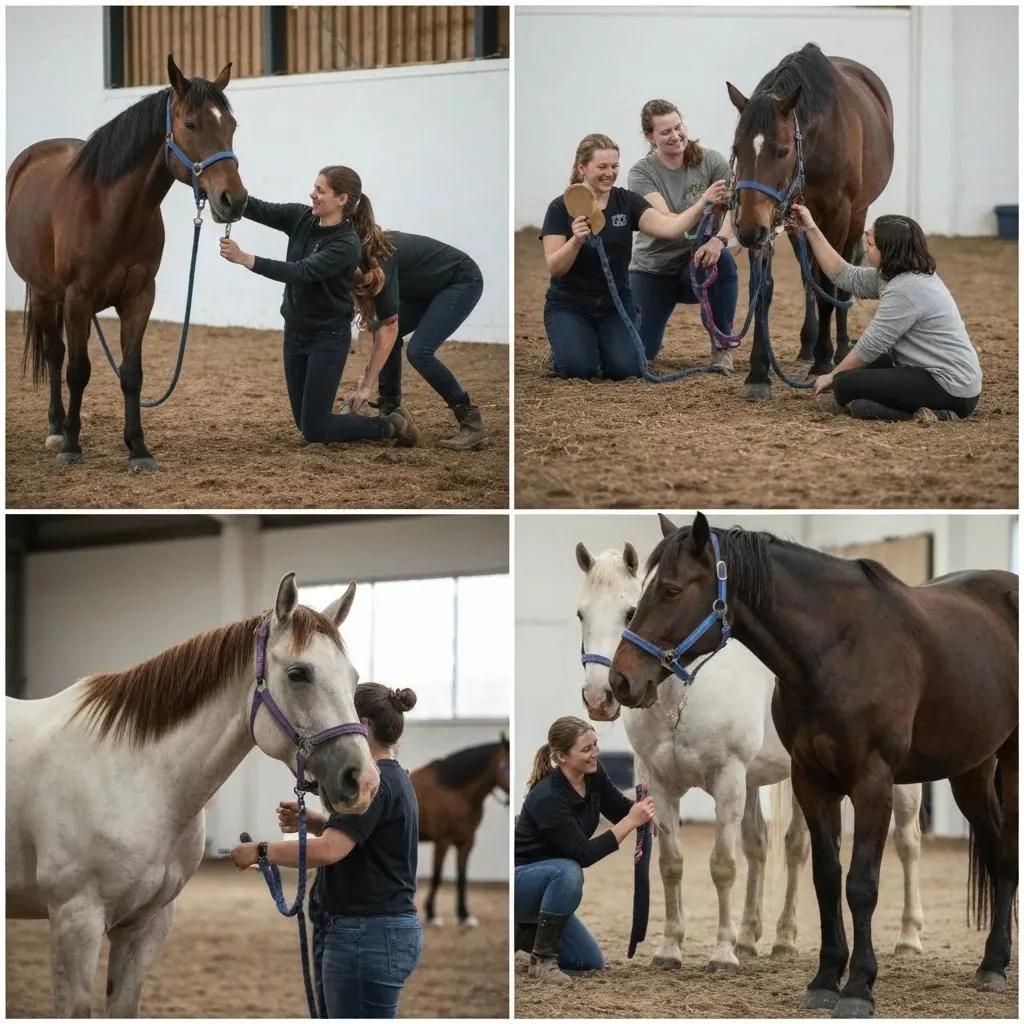
Equine-assisted therapy combines horsemanship tasks, groundwork, and—when medically cleared—therapeutic riding, paired with clinical debriefing to meet recovery goals. Sessions typically start with safety orientation and intake, move through hands-on exercises like grooming or leading, and end with clinician-led processing that links the experience to substance-use triggers and coping strategies. Below are common techniques and how they map to clinical aims so clinicians and families can match activities to outcomes.
Common equine-assisted techniques include:
- Grooming and basic care: Teaches responsibility and routine while encouraging calm, focused contact.
- Groundwork and leading: Practices boundaries, leadership, and clear nonverbal communication.
- Therapeutic riding: Uses mounted work to support posture, balance, and embodied confidence (with medical clearance).
- Debriefing and psychotherapy integration: Clinician-guided reflection translates experience into relapse-prevention skills.
Use this table to align specific activities with therapeutic aims when planning measurable session goals.
What Are the Common Equine Therapy Techniques Used in Addiction Recovery?
Grooming is a common entry point—low-risk, calming, and helpful for building rapport while modeling caretaking. Groundwork asks clients to give clear cues and maintain consistent boundaries, reinforcing impulse control and leadership without confrontation—skills that directly address relapse triggers like poor distress tolerance. Therapeutic riding may be introduced when clients are medically cleared and comfortable mounted, offering proprioceptive feedback that supports regulation and confidence. Every activity ends with clinician-led processing to connect the physical work to cognitive and behavioral changes in recovery.
How Is Equine-Assisted Psychotherapy Integrated into Treatment Programs?
Equine work can be offered as standalone outpatient sessions or scheduled within inpatient and residential programs as one component of weekly therapy. Effective integration needs multidisciplinary coordination—medical clearance from addiction medicine, scheduling with counseling groups, and clear documentation of behavioral goals—so equine sessions complement detox stabilization and psychotherapy rather than replace them. Progress notes and outcome tracking support continuity of care and help measure gains in regulation and social functioning. Clear referral pathways and shared treatment plans ensure equine activities align with medication-assisted treatment and relapse-prevention strategies.
Below we outline how clinical teams and treatment navigators coordinate experiential approaches within broader care systems.
For Nevada residents and families, BetterChoice Treatment Center helps you find options quickly and provides straightforward guidance on recovery planning while coordinating with clinical providers when needed. We assist with intake navigation, explain usual timelines for medical detox and inpatient stabilization, and support decision-making about complementary services. Because BetterChoice does not list equine-assisted therapy as an in-house service, our staff can assess whether an outside equine program fits a client’s plan and help connect you to vetted providers while emphasizing safety and required medical clearance.
How Is Equine Therapy Integrated into Addiction Recovery Programs at BetterChoice Treatment Center?
This section explains practical steps organizations and families use to add experiential therapies to medicalized addiction care, and how a treatment navigation service like BetterChoice supports that process without implying direct delivery of every modality. Coordinating equine-assisted therapy with medical detox and inpatient rehab requires medical oversight, staged scheduling after stabilization, and clear documentation of goals and safety clearances. Navigation organizations can make referrals smoother by ensuring medical notes, behavioral goals, and transportation or scheduling details accompany referrals so clients join equine programs at the right recovery phase. These steps reduce friction and increase the chance that experiential work reinforces—rather than interrupts—core addiction treatments.
How Does BetterChoice Combine Equine Therapy with Medical Detox and Inpatient Rehab?
Timing and medical clearance matter: equine activities are safest after acute withdrawal is managed and basic stabilization is in place. BetterChoice’s role in Nevada is to help you find the right level of care quickly and to clarify clinical needs—such as whether a client needs medical clearance before joining off-site experiential therapies. Our staff can explain common sequencing—detox first, stabilization and counseling next, then referral to complementary services—and support communication between medical teams and external equine providers to document safety parameters and therapeutic goals.
What Can Clients Expect During Equine Therapy Sessions at BetterChoice?
Because BetterChoice focuses on navigation and referral, we help clients understand what a typical equine-assisted therapy session looks like rather than delivering the service on-site. A standard session includes arrival and safety orientation, hands-on activity (grooming or groundwork), clinician-led processing, and documentation of behavioral goals. Clients should plan to wear comfortable clothes and closed-toe shoes and bring any medical clearance forms required by the external provider. We also emphasize confidentiality, trauma-informed facilitation, and clear expectations around consent and readiness when arranging services.
Who Are the Qualified Therapists and Facilitators Leading Equine Therapy?
Qualified teams usually pair a licensed mental health clinician—trained in trauma-informed care and the chosen equine model—with an equine specialist who manages horse welfare and safety. Look for certifications from organizations like EAGALA or PATH Intl and documented experience with horse handling and safety protocols. When BetterChoice helps locate programs, we encourage families to confirm facilitator credentials, review animal welfare policies, and verify that the program requires medical and behavioral clearances before participation.
Who Can Benefit from Equine-Assisted Therapy for Addiction Recovery?
Equine-assisted therapy can help adults and teens whose goals include improving emotional regulation, reconnecting socially, and addressing trauma-related triggers that feed substance use. People who distrust conventional talk therapy, struggle to name emotions, or need body-based approaches alongside cognitive work often respond well. Contraindications include severe animal allergies, active medical instability, or behavior that poses safety risks around large animals—cases where other experiential options may be safer. Thorough screening and individualized planning determine who will benefit most and who should pursue alternate evidence-based treatments.
Equine-Assisted Therapy Effectiveness for Substance Use Disorders: Emotion Regulation, Self-Efficacy, Self-Esteem
Randomized controlled trial assessing equine-assisted therapy as a complementary treatment for people with substance use disorders, focusing on emotion regulation, self-efficacy, and self-esteem (2023).
Which Individuals Are Ideal Candidates for Equine Therapy in Addiction Treatment?
Ideal candidates are motivated to try experiential learning, physically able to participate in hands-on activities, and medically stable after detox when applicable. People with co-occurring PTSD, social anxiety, or trust difficulties often show quick gains because horses offer immediate, nonjudgmental feedback. Clinicians use screening forms to check allergies, mobility, and psychiatric stability and schedule equine sessions at a recovery phase that maximizes safety and benefit. Referral decisions should always prioritize medical clearance and alignment with the overall treatment plan.
What Are Common Concerns About Equine Therapy and How Are They Addressed?
Typical concerns include safety around large animals, allergies, cultural fit, and animal welfare. Programs manage these issues with trained handlers, pre-session medical screening, informed consent, emergency protocols, and attire requirements (sturdy, closed-toe shoes). Facilities should document veterinary care, humane handling, and rest schedules for horses. If clients or families are uncomfortable with animals, clinicians can suggest comparable experiential options—like adventure therapy or somatic psychotherapy—as alternatives.
For Nevada residents looking for help, practical next steps include gathering clinical information to speed referrals and intake conversations.
Before contacting a treatment navigator or program, collect recent medical notes, a current medication list, and a brief summary of substance-use history to streamline eligibility and referral decisions. When working with organizations that help locate care, expect privacy protections and a structured intake that asks about medical clearance, treatment goals, and insurance. These steps protect safety and make timing for experiential programs clearer. BetterChoice focuses on helping people in Nevada find treatment quickly and offers plain, steady guidance on intake steps, timelines, and what to have ready—always with respect for privacy and client readiness.
Frequently Asked Questions
What types of individuals are best suited for equine-assisted therapy?
Equine-assisted therapy often benefits people who are motivated to engage in hands-on learning and who are medically stable after detox. Ideal candidates may include those with PTSD, social anxiety, or trust issues—conditions that often respond well to the horse’s nonjudgmental feedback. Programs screen for allergies, mobility, and psychiatric stability to make sure the experience is safe and useful for each person.
How can families support their loved ones during equine therapy?
Families can support by encouraging attendance, learning about the therapeutic goals, and keeping open lines of communication about what comes up in sessions. Attending family sessions when offered and coordinating with the treating clinician helps align goals and reinforces progress at home. Your involvement creates a more supportive environment for recovery.
What safety measures are in place during equine therapy sessions?
Safety measures typically include pre-session screenings for allergies and contraindications, trained facilitators and handlers, required footwear and attire, safety briefings, and documented emergency protocols. Programs should also share animal-welfare policies and offer alternatives for participants who cannot safely work around horses.
Can equine therapy be combined with other forms of treatment?
Yes. Equine therapy is most effective as a complementary intervention alongside therapies like CBT, medication-assisted treatment, group therapy, and relapse-prevention work. Coordination between therapists and equine specialists ensures that equine sessions reinforce broader treatment goals.
What should clients wear to equine therapy sessions?
Wear comfortable, weather-appropriate clothing and closed-toe shoes with a sturdy sole. Long pants are recommended to prevent scrapes; avoid loose jewelry or dangling accessories that could catch on tack or the environment. Being prepared helps you focus on the work.
How can clients track their progress in equine therapy?
Progress is tracked through clinician debriefs, measurable goals set at intake, and regular documentation in treatment notes. Keeping a personal journal about feelings, challenges, and breakthroughs between sessions can also clarify changes over time and strengthen insights gained during equine work.
What Is the Typical Duration and Cost of Equine Therapy Programs?
Sessions usually last 60–90 minutes (check-in, hands-on activity, and clinical debrief). Programs range from single sessions to weekly series or multi-week intensives depending on goals. Cost varies by region and staffing—some programs are private-pay while others offer sliding scales or grant-funded spots. Insurance coverage is inconsistent; we recommend requesting a coded clinical note from your referring clinician, asking providers about preauthorization, and confirming which behavioral-health benefits apply. These steps help avoid surprise costs and clarify who pays for which services.
Is Equine Therapy Evidence-Based and Supported by Research?
Research on equine-assisted therapy shows encouraging results for emotion regulation, social functioning, and treatment engagement, but randomized controlled trials remain limited and study methods vary. Professional groups like EAGALA and PATH Intl offer practice standards that support safe, ethical delivery. Recent studies (through 2023–2024) report benefits in small to moderate samples, particularly when EAT is used alongside evidence-based psychotherapies. Because of this, equine therapy is best used as a complementary treatment within a comprehensive care plan rather than a stand-alone cure for substance use disorders.
How Does Equine Therapy Complement Other Addiction Treatments?
Equine therapy provides embodied opportunities to practice regulation and interpersonal skills that clinicians then process verbally, reinforcing cognitive and behavioral strategies learned in counseling. It fits alongside medication-assisted treatment, group therapy, and relapse-prevention work by offering a somatic pathway to change. Examples include using equine sessions to rehearse refusal skills, practice boundary-setting before group therapy, or rebuild trust prior to family work—making equine-assisted activities a practical part of multidisciplinary recovery planning.
- Checklist before reaching out to a provider: Gather a current medication list, recent medical notes, and a short summary of substance-use history.
- Insurance navigation steps: Ask for clinical codes, request preauthorization when possible, and confirm what behavioral-health services your plan covers.
- Safety and privacy questions to ask providers: Inquire about emergency protocols, facilitator credentials, and confidentiality practices.
Conclusion
Equine-assisted therapy can be a powerful complement to traditional addiction treatment—helping people develop emotional regulation, restore trust, and process trauma through guided work with horses. When paired with medical care and evidence-based psychotherapy, it can deepen engagement and support lasting recovery. If you’re curious whether equine work is a fit, reach out to a treatment navigator or a local provider to discuss personalized options and next steps. Taking that first step—asking questions and getting the right clearances—can open a new path toward healing.