

How to Prepare for Detox: A Practical Checklist Before Starting Addiction Treatment
Getting ready for detox is more than packing a bag — it’s a set of steps that lowers medical risks and improves your chances for lasting recovery. This guide walks you through what to do before admission: medical checks, mental preparation, practical planning, family involvement, and insurance and admissions tasks. Many people don’t realize how long withdrawals can last or what paperwork and coping tools they’ll need. Use this checklist for short, actionable steps and clear tables that set expectations so you arrive ready for safe, medically supervised care. Read on to learn why preparation matters, how to get mentally and physically ready, what to pack, ways family can help, and how to confirm insurance and handle admissions.
Why Preparing for Detox Matters
Preparation lowers immediate medical risks, helps you engage with care, and cuts down on last-minute surprises that can interrupt treatment. A clear pre-detox plan helps clinicians manage withdrawal safely, tailor medications if needed, and set realistic timelines and aftercare plans. Being organized ahead of time also protects your privacy and eases anxiety — paperwork, transportation, and emergency contacts are already in place. The sections that follow explain the concrete benefits and show how preparation directly supports a safer, smoother detox.
What You Gain from Preparing Well
Good preparation keeps you safer, sets expectations, and speeds entry into effective treatment. It reduces the chance of serious withdrawal complications by making sure clinicians have your medical history and medication list before you arrive. People who know what to expect tend to follow clinical guidance and stay in treatment through the early, higher-risk days. Families also benefit — planning cuts last-minute stress and helps caregivers coordinate logistics and aftercare.
- Safer care when withdrawal is monitored and emergencies are anticipated.
- Better treatment engagement because timelines and expectations are clear.
- Fewer logistical delays that can increase stress or interrupt care.
These benefits lead to better outcomes over time — and the next section explains the mechanisms behind that improvement.
How Preparation Improves Detox Outcomes
Preparation lines up the clinical, emotional, and practical supports you’ll need, which increases treatment adherence and lowers complications. A pre-admission medical evaluation lets clinicians match the detox plan to the substance, co-occurring conditions, and medication needs, reducing physiological risk and smoothing withdrawal. When expectations are set and family support is organized, people are more likely to stay in follow-up programs because they feel backed and know the next steps. Use these links between preparation and results to prioritize checklist actions — from medical clearance to aftercare planning.
How to Get Mentally Ready for Detox

Mental preparation means setting realistic expectations, learning simple coping tools, and connecting with counseling resources before you arrive. Being mentally ready reduces panic during withdrawal and increases your chance of fully engaging with therapy and aftercare. It also means addressing shame and building motivational anchors that will help you keep going after detox. Below are practical coping techniques and mindset exercises you can start in the days and weeks before admission.
Practical Coping Strategies for Detox
Use short, proven techniques to manage anxiety and cravings in early withdrawal. Try structured breathing (4-7-8), grounding exercises when urges spike, and a quick distraction list (walk, journal, call someone) to shift focus safely. Progressive muscle relaxation and light movement can ease tension and help sleep in the days before admission. If you ever feel unsafe or out of control, contact emergency services or your treatment provider right away.
- Practice 4-7-8 breathing and five-minute grounding exercises daily.
- Keep a short distraction list for cravings and strong urges.
- Use light exercise and sleep-friendly habits to stabilize mood pre-admission.
These tools support the physical preparation steps below, like medical evaluation and nutrition, and strengthen your overall resilience.
How to Build a Positive Mindset Before You Arrive
Build momentum with small, achievable goals, kind self-talk, and a short routine that prioritizes rest and self-care. Pick one specific goal for the first 72 hours of detox — for example, attend clinical checks and follow staff guidance — and write a few encouraging reminders that focus on progress, not perfection. Schedule a brief pre-admission call with a trusted contact or counselor to anchor motivation and reduce isolation. These simple psychological steps make it more likely you’ll follow through with treatment and aftercare.
- Set one achievable goal for the first three days of detox.
- Write short affirmations that emphasize action and steady progress.
- Arrange a quick pre-admission check-in with a counselor or trusted supporter.
Once your mindset is in place, move on to the physical steps that ensure clinical safety and comfort.
What Physical Steps to Take Before Detox
Physical preparation focuses on a medical evaluation, medication review, and basic nutrition and hydration strategies that can lessen withdrawal severity and support medical monitoring. Scheduling a clinical assessment before admission helps providers decide if you need inpatient monitoring, medication-assisted treatment, or specialized withdrawal care. Simple actions — documenting medications, staying hydrated, and choosing light, nutrient-dense meals — stabilize your body and make early clinical interventions more effective. The sections below outline key medical evaluation items and straightforward nutrition and hydration tips.
A pre-admission medical evaluation gives clinicians the details they need to match care level to risk. It finds co-occurring conditions, flags needed lab tests, and identifies urgent interventions.
Why a Medical Evaluation Is Critical
A medical evaluation identifies the level of monitoring you need and spots medical or psychiatric issues that could complicate withdrawal. By collecting medication history, vitals, and basic labs, clinicians can determine whether inpatient detox, outpatient supervision, or medication-assisted treatment is appropriate. That tailored approach reduces the chance of severe complications and lets staff plan symptom management from the moment you arrive. Schedule your evaluation well before admission — it’s a key checklist item.
Nutrition and Hydration Guidelines Before Detox
Balanced meals and steady hydration help stabilize your body and can ease some withdrawal symptoms, making clinical management smoother. Aim for regular meals that include protein, complex carbs, and fluids with electrolytes. Avoid heavy alcohol, excess caffeine, and sugary drinks in the 24–48 hours before admission. Small, frequent meals and oral rehydration solutions can correct imbalances that complicate withdrawal and improve tolerance for medications. These dietary steps work with your medical evaluation to support safer, more comfortable detox care.
- Prioritize protein-rich snacks, whole grains, and electrolyte drinks.
- Avoid excessive caffeine and alcohol close to admission.
- Eat small, frequent meals to keep blood sugar stable before detox.
With nutrition and medical readiness in place, you’ll be better prepared for the logistical planning that follows.
Logistical Planning: What to Arrange Before Arrival
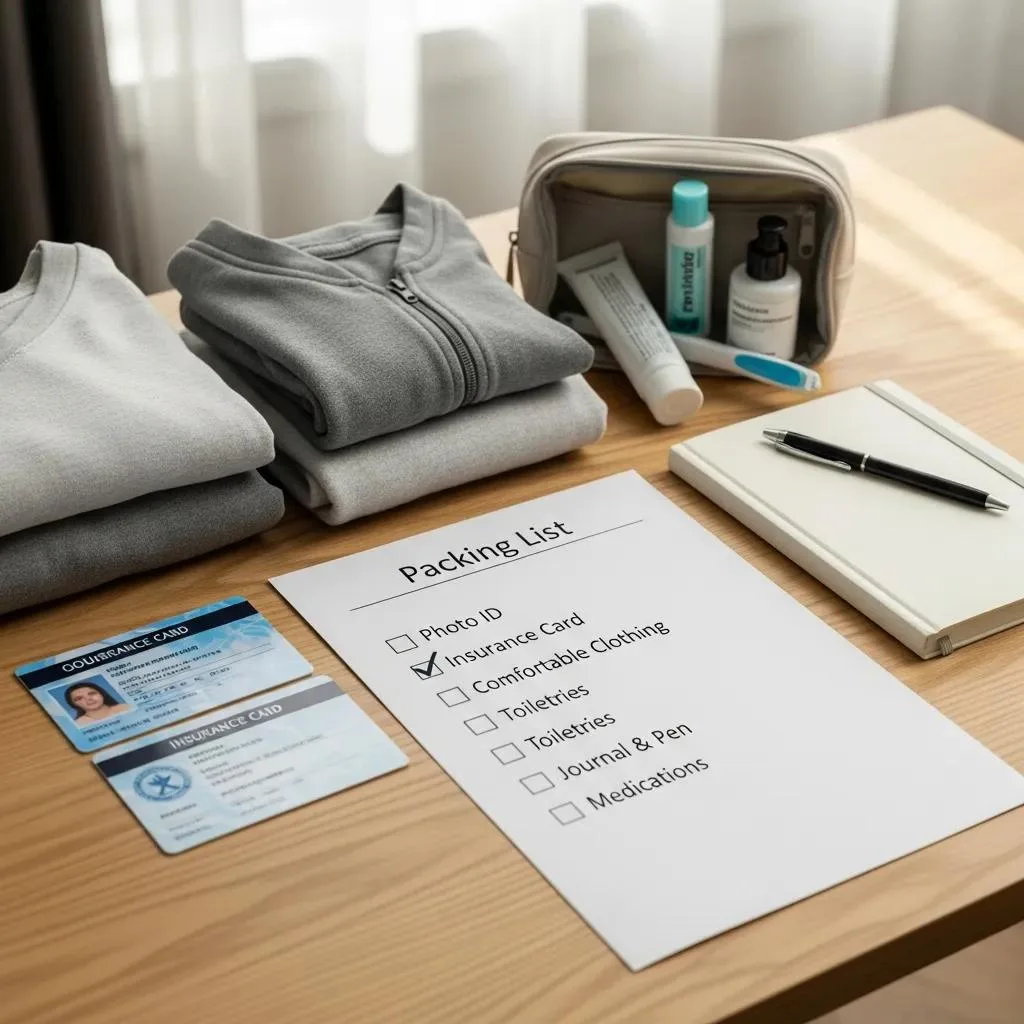
Logistics include packing, requesting time off, arranging transportation, and gathering paperwork to ensure a smooth admission. Having your ID, insurance card, medication list, and emergency contacts ready cuts delays and protects your privacy during intake. Scheduling time away from work or school and securing reliable transportation prevents last-minute cancellations and lowers stress for you and your support network. Below is a focused packing table and practical steps for time-off and travel arrangements.
Keep your packing compact and follow facility rules about prohibited items. Bring only what supports care and leave valuables at home.
Essentials to Pack for Detox
Pack only items that support your care and recovery. Bring photo ID, insurance details, a complete medication list, basic toiletries, and one or two comfort items like a book or headphones. Leave valuables, alcohol, drugs, and sharp objects at home to comply with facility rules and stay safe. Put items in a small bag labeled with your name and keep essential documents in an easy-to-reach folder so intake can move quickly.
How to Arrange Time Off and Transportation
Tell your employer or school with a brief, factual message requesting medical leave and expected dates — there’s no need to share private details. Arrange a ride with a trusted friend, family member, or a private service; avoid driving yourself if withdrawal is likely. Aim to arrive during daytime hours when intake staff are available, and call the facility ahead to confirm arrival instructions or any fasting requirements. These steps reduce hassle and help you arrive calm and ready for clinical intake.
- Use a simple employer script: “I need medical leave starting [date] for treatment; I will provide updates.”
- Arrange a trusted ride and confirm pickup/drop-off times.
- Call ahead to confirm arrival instructions and any fasting requirements.
Next, learn how family involvement can strengthen your preparation and the continuity of care.
How Family Support Can Help Your Detox Preparation
When done with clear boundaries, family involvement adds emotional support, helps with logistics, and improves continuity into aftercare. Relatives who understand the detox timeline, privacy rules, and logistics can gather documents, provide transportation, and help plan aftercare — all of which increase the chance you’ll complete treatment. Setting boundaries prevents enabling and keeps the focus on safety and recovery. The sections below offer sample scripts for conversations and specific roles family members can take on.
Talking to Loved Ones About Detox
Start conversations with calm, non-judgmental language that focuses on care and clear next steps. Try a straightforward script: “I need medical help to manage withdrawal and get healthier. Can you help with transportation and paperwork?” Ask for specific support (a ride, document collection, brief check-ins) and set clear boundaries about contact and behavior. Being direct about confidentiality and timelines helps reduce family worry and keeps support practical.
- Make clear requests and avoid rehashing past behaviors.
- Ask for specific help (rides, documents, short check-ins).
- Set boundaries about how often and in what ways you want contact.
Ways Family Can Support Detox Success
Family can help by handling paperwork, providing safe transportation, and coordinating aftercare tasks like appointments and rides home. Practical roles include gathering ID and insurance info, arranging transport, and collecting discharge documents and aftercare resources. Emotional support that encourages accountability without enabling substance use also boosts retention in treatment. If available, brief family counseling through the treatment team can teach relatives how to support boundaries and recovery healthily.
- Collect and organize documents and emergency contacts before admission.
- Provide safe transportation and follow facility check-in procedures.
- Join family education or counseling sessions when offered.
The final section covers insurance verification and what to expect during admissions, including facility-specific steps.
Insurance and Admissions: What to Check Before Detox
Confirming insurance and knowing admissions timelines prevents delays and surprises so your medical assessment and treatment can start promptly. Key actions include calling your insurer with policy details, confirming coverage for medical detox or inpatient services, and checking whether prior authorization or pre-approval is needed and what copays to expect. Having photo ID, insurance cards, and a medication list ready makes intake faster. The subsections below offer a step-by-step verification checklist and explain the admissions process at BetterChoice Treatment Center, plus contact options for help.
Steps to Verify Insurance Coverage
Follow these steps to identify benefits, exclusions, and prior authorization needs so you can plan financially and logistically. First, find your policy number and call your insurer to ask about coverage for “medical detox” and for inpatient versus outpatient treatment. Next, ask if prior authorization is required, how to start it, and what documentation the facility must supply. Finally, confirm estimated out-of-pocket costs, copays, or daily rates and ask to speak with a supervisor or case manager if anything is unclear. These checks reduce the chance of admission delays and clarify costs before you arrive.
- Have your policy number, ID, and medication list ready before you call.
- Ask if “medical detox” and inpatient care are covered, and note authorization steps.
- Confirm estimated out-of-pocket costs and request a case manager if available.
Once coverage is verified, the admissions process below describes the typical next steps at the treatment center.
What to Expect During Admissions at BetterChoice Treatment Center
Admissions at BetterChoice Treatment Center usually start with an initial contact and insurance check, followed by a clinical intake that determines your level of care and schedules arrival. The intake call gathers basic medical history, current medications, and emergency contacts so clinicians can plan a personalized detox approach — this is when family documents and your medication list are most useful. After coverage is confirmed and the clinical team approves the level of care, staff arrange an arrival time and give clear instructions on what to bring. For help with verification or to discuss admission logistics, call (725) 299-4777 or visit the facility at 198 Ebb Tide Cir, Las Vegas, NV 89123 to speak with our admissions team.
- Initial contact and insurance verification start the process.
- Clinical intake evaluates needs and decides the appropriate monitoring level.
- Scheduling and arrival instructions complete logistics for safe admission.
This overview finishes the checklist and prepares you to take the next steps toward a safe, medically supervised detox.
Frequently Asked Questions
What should I expect during the detox process?
Expect a medically supervised environment where staff monitor withdrawal and provide needed care. Detox usually lasts several days, depending on the substance and your health. You’ll have regular assessments to make sure you’re safe and as comfortable as possible, and medications may be used to ease symptoms. Stay open with your treatment team about any discomfort or concerns so they can help effectively.
How can I ensure a smooth transition from detox to treatment?
Plan your aftercare before detox ends. That includes scheduling follow-up appointments, therapy sessions, and support group meetings. Engaging family or a support network adds accountability and encouragement. Talk with the treatment team during detox about aftercare options and make sure you understand the next steps to keep your recovery moving forward.
What role does therapy play during detox?
Therapy addresses the emotional and behavioral sides of addiction while your body stabilizes. Integrating individual or group therapy during detox helps you learn coping tools, process emotions, and prepare for longer-term treatment. Many facilities offer therapy during detox to boost engagement and provide peer support.
How can I manage cravings during detox?
Manage cravings with coping strategies and support: mindfulness, deep breathing, and distraction techniques can help in the moment. Stay connected with staff and attend therapy to learn trigger-management skills. Keep a list of supportive contacts and safe activities to use when cravings arise.
What should I do if I feel overwhelmed during detox?
If you feel overwhelmed, tell the treatment staff immediately. They can provide extra support, adjust your plan, or offer interventions. Relaxation techniques like guided imagery or progressive muscle relaxation can help calm intense feelings. Remember that strong emotions are common during detox — asking for help is part of recovery.
Can I bring personal items to detox?
Most facilities allow basic personal items: comfortable clothing, toiletries, and a small comfort item such as a book or journal. Items that pose a risk — alcohol, drugs, or sharp objects — are not permitted. Check with the facility ahead of time to confirm their packing rules and avoid problems during admission.
Conclusion
Preparing for detox is a vital step toward safety, better engagement in care, and fewer logistical hurdles. Follow this checklist to make your transition into treatment smoother and increase the chance of long-term success. Start today by organizing documents, arranging support, and lining up any needed evaluations. For more resources and help, explore our site or reach out to our team.