Continuing education and life skills that support lasting recovery
Continuing education in recovery means focused learning and practical skill-building that run alongside medical care and counseling. Research and clinical practice show that structured learning—everything from coping-skills groups to job training—strengthens resilience, lowers relapse risk, and helps people restore meaningful roles at work and at home. This article lays out the life skills that matter most, how sobriety-skills programs work, and which aftercare education approaches produce durable results after rehab. You’ll find practical techniques for managing stress and triggers, a clear comparison of program types, tips for choosing personalized aftercare, and a short guide to community and online learning options. Throughout, we focus on usable steps: simple practices to try, criteria for evaluating programs, and how to move forward safely and efficiently. By the end you’ll have a straightforward roadmap for adding continuing education and life-skill training into a long-term recovery plan.
What are the essential life skills for successful addiction recovery?
Essential life skills are practical abilities—coping techniques, clear communication, decision-making, stress management, financial sense and job-ready skills—that lower relapse risk and improve day-to-day functioning. These skills expand a person’s toolbox (for example, coping and emotional-regulation strategies) and create routines and social supports that replace substance-focused habits. Learning them leads to concrete improvements: steadier employment, more stable housing, healthier relationships, and better handling of cravings and stress. Below are the core skill areas, why each matters, and one simple practice you can start with.
The most important skill areas fall into interpersonal, self-management, and practical life domains:
- Coping skills: Simple techniques to ride out urges and reduce impulsive use.
- Communication: Assertive, “I”-statement approaches that set boundaries and rebuild trust.
- Decision-making: Checklists and small-steps planning to prevent snap choices that risk relapse.
- Stress management: Daily routines for sleep, movement, and relaxation that lower baseline stress.
- Financial literacy: Budgeting and bill-management habits that reduce environmental pressure.
- Vocational skills: Job-search, interview prep, and workplace coping that support steady employment.
- Time management: Short planning practices that create routines and accountability.
- Emotional regulation: Ways to name, tolerate, and redirect strong feelings without using substances.
Together these areas build a foundation for everyday life and directly serve relapse prevention by replacing old responses with healthier choices. Work on one skill at a time and practice it in low-pressure settings so the new behavior transfers to higher-risk moments with more confidence.
Which coping skills support long-term sobriety?

Coping-skills training covers techniques like urge-surfing, grounding, distraction, structured problem-solving, and calming the body’s stress response. Urge-surfing teaches you to notice a craving’s rise and fall without acting—using breath and observation—while grounding uses the senses to interrupt automatic reactions. Problem-solving breaks a stressor into steps: name the immediate problem, list options, try one small action, then review what happened. Short practice scripts—such as a five-breath urge-surf or a one-minute action checklist—help shift attention and reduce the body’s arousal in the moment.
Regular practice makes these skills usable in daily life and builds distress tolerance. Over time, practiced responses replace automatic relapse behaviors. Rehearsing skills in a supportive setting or with peer accountability speeds retention and builds confidence, which supports long-term sobriety.
How do communication and decision-making skills aid recovery?
Clear communication and stepwise decision-making lower interpersonal stress and reduce impulsive choices that can lead to relapse. A reliable communication tool is the “I” statement: name the feeling, describe the behavior, and make a clear request (for example, “I feel overwhelmed when calls come late; can we talk earlier?”). A simple decision checklist—define the choice, list options, weigh pros and cons, pick one, and set a short monitoring plan—helps avoid snap reactions.
Using these tools in everyday situations—an argument with a roommate or deciding whether to attend a social event—builds skill through practice and feedback. Over time, better communication repairs relationships and strengthens supports, while thoughtful decision-making reduces risky impulsive actions. Both make the recovery environment safer and more sustainable.
How do sobriety skill-development programs improve recovery outcomes?
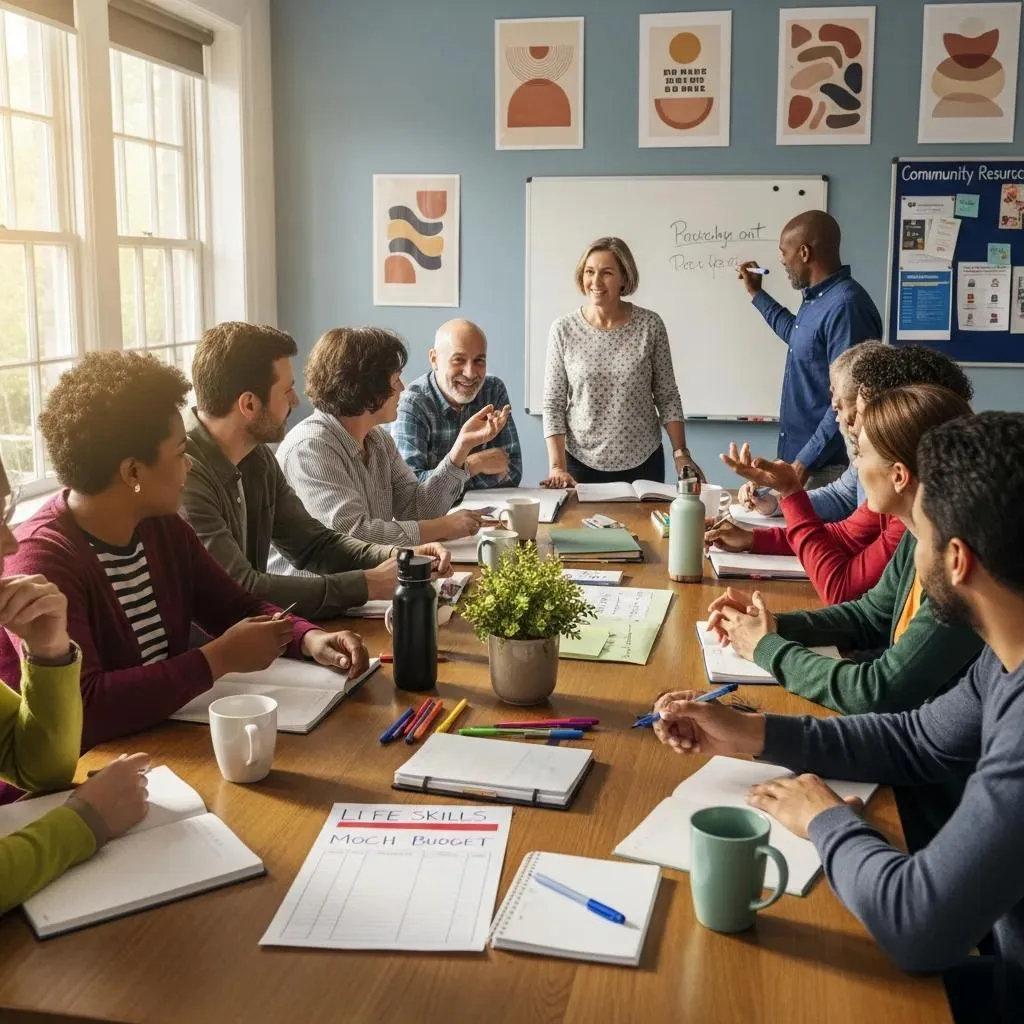
Sobriety skill-development programs are organized classes and trainings—from CBT-based skills groups to vocational workshops—that teach practical ways to manage cravings, emotions, and responsibilities. They combine evidence-based methods (skills rehearsal, role-play, relapse planning) with peer support and routine practice. Together, these elements increase competence and change behavior. Expected benefits include fewer relapses, better job prospects, and stronger social functioning through both new skills and ongoing accountability.
Below is a quick comparison of common program formats to help you see which might fit your stage and timeline.
This table shows how setting and intensity shape timelines and skill gains. For example, outpatient groups are strong for long-term rehearsal and accountability, while inpatient programs give immersive practice during early recovery.
The organization that helps people find treatment options is an important guide in matching clients to these program types and smoothing the move from intake to ongoing education. That support often includes mapping needs to program intensity, explaining expected timelines for skill progression, and planning next steps when a program ends. By coordinating referrals and clarifying what to expect, the center reduces barriers and helps keep momentum into aftercare learning.
What types of post-rehab learning opportunities are available?
Post-rehab learning options include formal classes, peer-led workshops, vocational training, ongoing counseling, and online courses that teach both coping and practical life skills. Formal programs usually require enrollment and a schedule; peer-led groups tend to be more flexible and community-based; online courses and apps offer scalable, on-demand practice. Time commitments range from a few weekly hours to multi-week certificate programs, and access depends on eligibility, cost, and transportation or internet access.
Choose based on recovery stage, cognitive needs, and what’s practical for your life. Formal settings suit those who need structure and assessment; peer-led options work well for social reinforcement; online tools fill gaps when attending in person is hard. Matching format to current needs improves participation and lasting benefit.
How do structured aftercare education programs support relapse prevention?
Structured aftercare education reinforces skills through scheduled sessions, group accountability, and relapse plans that anticipate triggers and name specific responses. Regular sessions support habit formation—short rehearsals repeated over weeks—while group formats allow role-play and feedback that strengthen real-world use. A common timeline starts with weekly skills groups for three months, shifts to biweekly check-ins, then moves to monthly booster sessions to support growing independence while keeping connections.
This stepwise progression turns one-off learning into practiced routines, making adaptive responses more automatic and lowering the odds that stress or social pressure will lead to relapse. The predictability of sessions also helps families and employers see the person’s recovery commitments, which aids reintegration.
What are effective addiction aftercare education strategies?
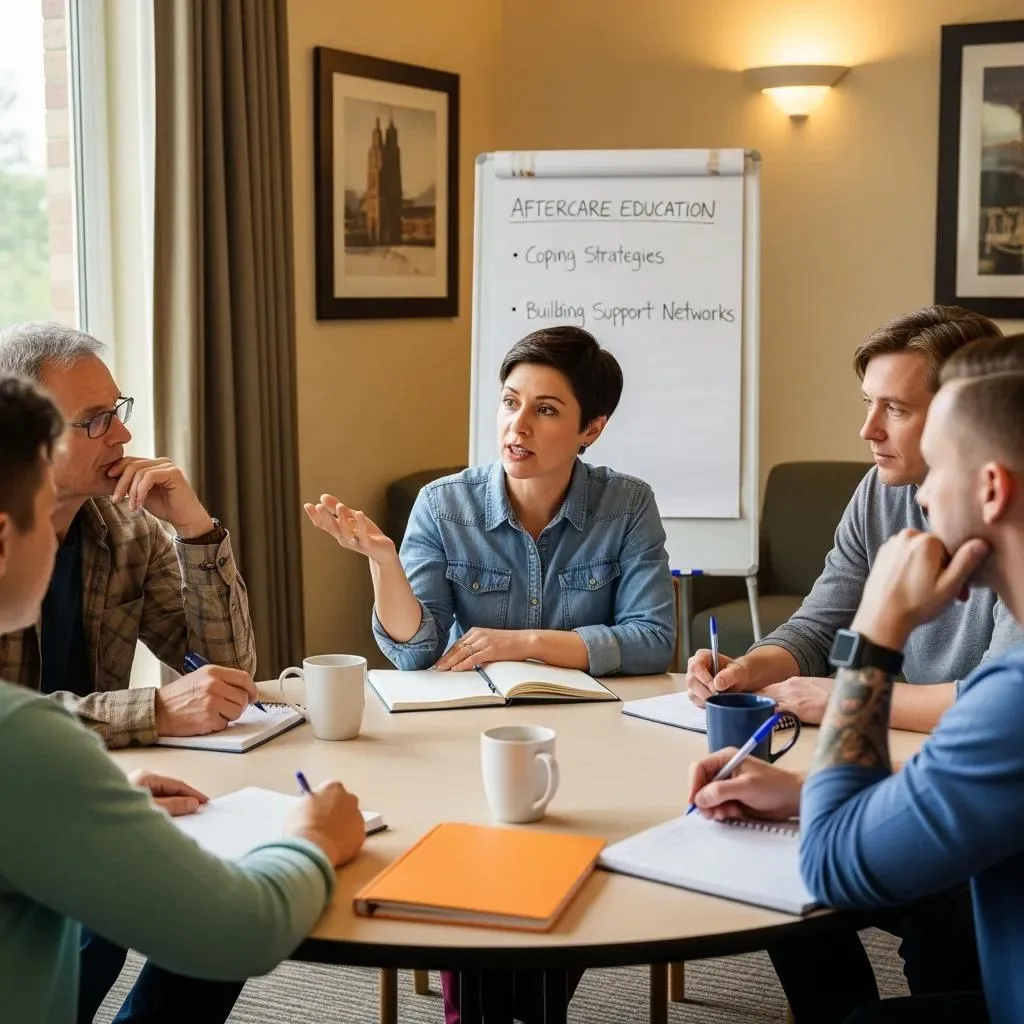
Effective aftercare mixes assessment-driven personalization, modular lessons, peer-led teaching, regular skills rehearsal, and progress tracking to keep people engaged and improving. Personalization matches content to cognitive capacity, readiness, and co-occurring conditions. Modular approaches break learning into small, achievable units that build over time. Peer-led elements add credibility and social proof, increasing relevance and adherence.
Below is a quick table linking common educational strategies to target skills and delivery methods so you can see what each approach actually teaches.
These strategies can be combined to address several needs at once, which improves retention and helps transfer skills into everyday life.
Personalized education usually starts with an intake that checks readiness, triggers, learning style, and co-occurring conditions, then moves into goal-setting and measurable milestones. Practical help from the center may include assistance with insurance, realistic intake timelines, and privacy and safety guidance during referrals. Explaining authorization steps, expected wait times, and confidentiality protections reduces administrative friction and keeps learning continuous between programs.
How is personalized education tailored to individual recovery needs?
Personalized education uses assessments to match content and pace to cognitive capacity, psychiatric status, and life goals so learning is relevant and safe. A typical intake checklist covers readiness for change, current stressors, preferred learning methods, co-occurring symptoms, and baseline functional skills. From there a three-step workflow—assess, plan, monitor—sets measurable goals, assigns modules, and tracks outcomes with scheduled reviews.
Tailoring boosts engagement because learners see immediate relevance and achievable steps. Ongoing monitoring lets staff adjust content if a module is too easy or too demanding. This adaptive approach reduces dropouts and helps skills generalize to real-world situations.
Which resources facilitate ongoing skill building after rehab?
A range of resources supports continued learning: community college classes, workforce training, online learning platforms, smartphone apps for daily practice, and peer support groups with structured curricula. Each option has access considerations—tuition, eligibility, internet access, or scheduling—that affect fit; for example, community colleges often provide vocational certificates tied to jobs, while apps deliver short daily practices for busy schedules.
Below is a quick resource table showing types, example providers, and access notes to guide early exploration.
These options help you weigh time, cost, and expected outcomes. For people in Nevada, local navigation support can be especially useful: the organization that helps with treatment search can also point to community and online programs that match local access, explain enrollment steps, and suggest paths that work with insurance or funding.
How can recovery coping-skills training improve daily life management?
Coping-skills training improves daily life by giving concrete tools to manage stress, create routines, handle cravings, and meet work or family responsibilities. Training builds habits that replace substance-use patterns with steady rituals—morning planning, scheduled movement, and evening wind-downs that help sleep. These changes boost self-efficacy and cut down on chaos, which are common relapse drivers.
Practical exercises and repeated rehearsal help skills become automatic responses to common stressors, lowering cognitive load when risk is high. The next sections list techniques and short micro-practices you can start using right away.
What techniques help manage stress and triggers in recovery?
Useful stress- and trigger-management techniques include progressive muscle relaxation, paced breathing, cognitive reframing, activity scheduling, and brief behavioral activation to lift mood. Progressive muscle relaxation takes 8–10 minutes: tense and release major muscle groups to lower physical arousal. Paced breathing (for example, a 4-4-6 pattern) slows the heart rate and interrupts an escalating craving. Cognitive reframing replaces catastrophic or self-blaming thoughts with neutral, actionable alternatives to reduce the urge to use.
Micro-practices—two to ten minutes each—are easy to fit into the day and build tolerance. When a trigger appears, quick actions like three deep breaths, a 60-second grounding checklist, or a three-step problem-solving plan can shift momentum away from substance use and toward skillful coping.
How does mindfulness and emotional regulation training aid sobriety?
Mindfulness and emotional-regulation training help by increasing distress tolerance, cutting automatic reactivity, and creating space between feeling and action so you can choose alternatives. Short mindfulness scripts—two minutes of breath focus, noticing sensations, labeling the emotion, and returning attention—train attention and lower urge intensity. Emotional-regulation skills teach naming feelings, using acceptance strategies, and picking behaviors that match recovery goals.
Regular practice over weeks leads to measurable gains in impulse control and mood stability, helping people face social or internal triggers without turning to substances. Adding brief mindfulness into daily routines strengthens these benefits and builds a calmer baseline for applying other life skills.
Where can individuals find continuing education opportunities after rehab?
Continuing education after rehab is available through community centers, community colleges and workforce programs, online platforms and apps, peer organizations, and employer-sponsored training—each with different cost, time, and access requirements. To evaluate fit, check schedules, privacy protections, eligibility, and whether the program emphasizes skills rehearsal and accountability. The list below highlights common channels and who typically benefits most from each.
This quick list helps you identify sensible next steps:
- Community colleges: Structured vocational and certificate programs for people focused on employment outcomes.
- Community education programs: Short, local workshops teaching life skills and coping practices—usually easy to access.
- Online platforms and MOOCs: Self-paced modules for those with transportation or scheduling limits.
- Peer-led organizations: Strong social support and lived-experience teaching for rebuilding relationships and community.
- Employer-sponsored training: Practical workplace skills and schedules that fit employed learners.
After you identify good channels, take practical next steps: contact program coordinators, ask about privacy and timing, and confirm available insurance or funding. The Nevada treatment-navigation organization can help locate local continuing-education options, summarize access notes, and recommend programs that match an individual’s recovery timeline and goals.
What community and online programs offer recovery skill development?
Community and online programs include adult-education workshops at local centers, vocational courses at colleges, peer-facilitated recovery education groups, MOOCs on mental health and coping, and apps that deliver short daily practices. Community workshops are typically short and interactive; college programs offer credentialed training; online platforms are flexible but need self-motivation. Family members can also find family-education modules and workshops to improve communication and support skills.
Choose based on goals: credential and job-track needs favor college programs, while daily skill practice and family support may be best met through workshops and apps. Weighing each format’s pros and cons helps keep participation steady and relevant to recovery goals.
How do support groups integrate educational components?
Support groups often blend curriculum—speaker presentations, skills workshops, study groups—with peer accountability to create a learning-focused recovery space. A typical meeting might include a quick check-in, a 20–30 minute skills segment, a role-play or practice exercise, and a planning step for the week. This hybrid format combines instruction, rehearsal, and social reinforcement in each session.
When evaluating groups, look for steady agendas, trained facilitators or experienced peer leaders, and clear chances to practice and get feedback. Groups that intentionally mix teaching and peer support usually produce better skill transfer because members rehearse new behaviors and support each other between meetings.
Why is ongoing skill building critical for sustained recovery success?
Ongoing skill building lowers relapse risk by expanding behavioral choices, supporting habit formation, and linking people to social supports that reinforce sobriety. Continuous learning helps shift identity away from substance-centered roles toward meaningful activities that provide purpose and structure. Evidence-based mechanisms include a wider coping repertoire, repeated rehearsal that automatizes adaptive responses, and stronger social networks that discourage substance use.
Below is a simple checklist you can use to keep learning active and turn new skills into lasting change.
- Set measurable growth goals and milestones every 4–8 weeks.
- Schedule short daily practice sessions and weekly group rehearsals.
- Track progress and adjust learning modules when improvement plateaus.
These steps build a steady rhythm of growth that replaces substance-centered behavior with meaningful routines. Keeping up that pattern of learning and practice is what turns short-term abstinence into stable, purpose-driven recovery.
How does continuous learning reduce relapse risk?
Continuous learning reduces relapse risk in three key ways: habit formation from repeated practice, a broader set of coping options so stressors have alternatives, and social integration that provides accountability and resources. Habit formation comes from scheduled rehearsal that moves skills from conscious effort to automatic response. A wider coping toolkit makes it less likely that an unexpected trigger will lead to the single, habitual response of using; social ties from learning contexts add encouragement and practical help during crises.
Practically, this means structuring recovery days with short learned rituals—morning planning, midday grounding, and evening reflection—that cut cognitive load in hard moments and raise the chance of choosing adaptive actions.
What role does personal growth play in long-term sobriety?
Personal growth creates new identity anchors—education, career steps, volunteering, or family roles—that fill the hole left by substance use and provide internal motivation to stay sober. A simple growth-plan template includes a primary goal (for example, complete a vocational certificate), short-term milestones (weekly study hours), measurable indicators (applications or certifications), and supports (peer study groups, counselor check-ins). These parts create visible progress and sustain motivation.
When growth activities match your values and include clear milestones, they reinforce a self-image that’s incompatible with substance use. Over months and years, small achievements add up and build a life story focused on competence and contribution—one of the strongest protections against relapse.
Frequently asked questions
What are the benefits of continuing education in addiction recovery?
Continuing education offers practical benefits: stronger coping skills, better emotional regulation, and clearer decision-making. Structured learning helps people manage cravings and daily stressors, and it builds community and accountability—both essential for long-term sobriety. It can also open doors to work and healthier relationships by teaching skills that matter in everyday life.
How can family members support a loved one in recovery?
Family can support recovery by creating a calm, understanding environment and by joining family-education programs to learn better communication and coping techniques. Encouraging honest conversations about feelings and triggers helps rebuild trust and reduce isolation. Family members can also help find resources for ongoing education and make sure their loved one has access to steady support.
What role do peer support groups play in recovery?
Peer support groups provide a safe space to share experiences, challenges, and wins. They reduce isolation, model practical coping strategies, and offer accountability through regular meetings. Members trade real-life advice and encouragement, which strengthens learning and helps people stick to their recovery plans.
How can someone choose the right continuing education program?
Pick a program by matching it to your needs, goals, and learning style. Consider focus, length, format (in-person or online), teacher qualifications, and whether peer support is available. Ask counselors or peers for recommendations. The right program fits your recovery stage and offers clear, practical skills you can use day to day.
What are some common challenges faced during ongoing education in recovery?
Common challenges include juggling time, staying motivated, and getting access to programs. Balancing education with work or family can feel overwhelming, and progress sometimes seems slow. Financial or transportation barriers also block participation. To manage these challenges, set realistic goals, lean on peers or mentors, and explore flexible learning options that fit your schedule.
How can technology aid in skill development for recovery?
Technology expands access to courses, apps, and virtual support groups. Mobile apps can remind you to practice coping skills, offer guided mindfulness, and track progress. Online platforms let you learn at your own pace and revisit material when needed. Virtual groups connect you to peers beyond your area, widening your support network—an important resource for sustained recovery.
Conclusion
Adding continuing education and life-skill development to recovery brings clear benefits: better coping, steadier emotions, and smarter decisions. Structured learning builds community and accountability and can improve job prospects and relationships. Explore local and online resources, choose what fits your goals, and take small, consistent steps—those are the building blocks of sustained recovery and meaningful personal growth. Start by identifying one learning option that fits your schedule and recovery plan, and take the next step today.