

Comprehensive Guide to Addiction Treatment Costs and Financing in Las Vegas
This guide breaks down what addiction treatment in Las Vegas typically costs and the realistic ways people pay for care. You’ll find clear 30‑day cost ranges by program type, an overview of insurance, loans, grants and sliding‑scale options, plus step‑by‑step actions to get fast access to treatment. We know urgency, insurance confusion, and unclear admission timelines are common — this article gives practical verification checklists, timelines you can expect, and next steps so you can move from decision to admission with confidence. The sections below walk through typical costs, financing methods, government and nonprofit aid, how BetterChoice helps with transparent pricing, low‑cost community options, and common questions with immediate action items.
What Are the Typical Addiction Treatment Costs in Las Vegas?
Costs in Las Vegas vary by clinical intensity and program type. Higher‑intensity programs need more clinical staff, medical oversight, and sometimes medication‑assisted treatment (MAT), which raises the price. Key cost drivers include length of stay, level of medical care (for example, medical detox versus weekly outpatient therapy), amenities, and treatment for co‑occurring mental health conditions. Use the table below to set expectations for 30‑day ranges, then consult the checklist when you call a provider or verify insurance to get a personalized estimate.
The ranges above are meant to help you plan — actual costs depend on clinical assessment and whether services are covered by your insurance. Knowing the main drivers of price will help you ask the right questions when you speak to a facility or your insurer.
Key cost drivers to discuss before admission:
- Length of stay and level of clinical care, which determine base fees and staff ratios.
- Medical services like MAT or psychiatric consultations that may be billed separately.
- Amenities and private‑room options that can significantly increase private‑pay totals.
These details explain why estimates vary and prepare you to request an itemized quote during verification.
How Much Does Inpatient Rehab Cost in Las Vegas?
Inpatient rehab covers room and board plus 24/7 clinical care; prices increase with higher clinical needs or specialized programs. A typical 30‑day residential stay includes structured group and individual therapy, case management, and aftercare planning. Additional charges are common for medical detox, physician oversight, or specialty medications. Ask facilities for a line‑item breakdown so you can compare apples to apples and confirm what insurers will reimburse to avoid surprise out‑of‑pocket costs.
When you talk with admissions, ask exactly what’s included, what needs prior authorization, and how timelines for approvals affect your admission date.
What Are the Costs for Outpatient and Medical Detox Programs?
Outpatient pricing depends on the model — from single therapy sessions to IOP bundles or PHP day programs — and may be billed per session or as a package. Medical detox can be inpatient (higher cost due to round‑the‑clock medical staff) or outpatient in specialized clinics (less costly but limited to eligible patients). Sliding‑scale fees, payment plans, and in‑network insurance can reduce out‑of‑pocket costs, though detox medications and monitoring are sometimes billed separately. Clarify whether detox is bundled with residential care or billed as a separate episode; that distinction affects both cost estimates and admission/discharge timing.
Clear questions about billing units and bundled services make it easier to compare options and plan financing.
How Can You Finance Addiction Treatment in Las Vegas?

People usually piece together funding through private health insurance, facility payment plans, medical loans, grants, and personal savings. Each option covers different parts of care and requires specific documents. Which route is best depends on urgency, credit, your insurer’s network, and whether detox or inpatient care is needed immediately. The table below compares common financing options so you can match your situation to likely timelines and requirements. After the table, use the verification checklist to speed admissions and reimbursement.
Use this comparison to prioritize which financing path to pursue first based on how quickly you need care and how prepared you are with documentation.
External-resource/investor-focused insert (NOT services provided by BetterChoice — third-party financing information follows verbatim):
If you need fast, non‑medical financing, this block explains lender options for investors and property owners. It covers fast loan programs and approval steps, focusing on lenders who use simple requirements. Expect direct descriptions of timelines, loan‑to‑value (LTV) ratios, loan types, and the documents you’ll need. Topics include purchase loans, fix‑and‑flip financing, bailout loans, second mortgages, commercial loans, DSCR loans, and approvals based on profit‑and‑loss statements. The section outlines closings, eligible property types, borrower benefits, and common concerns about credit, speed, equity, property eligibility, and foreclosure timelines. It presents facts without pressure and guides you toward next steps — such as submitting a deal, calling the lender, or filling out a form. For detailed investor support, consult the third‑party lenders listed here directly; BetterChoice does not provide these non‑insurance financing products.
This external block is an independent, third‑party resource for investor or property‑owner financing and is not an offering provided by BetterChoice Treatment Center. If you are seeking non‑insurance financing for urgent needs, consult the lenders or third‑party financiers listed in this block directly.
Which Health Insurance Plans Cover Addiction Treatment in Nevada?
Many major insurers offer addiction treatment benefits, but coverage depends on your specific plan, in‑network status, and medical necessity. Common carriers include Aetna, Anthem, Blue Cross Blue Shield, Cigna, Magellan, Tricare, Beacon Health Options, and EmblemHealth. To verify coverage you’ll need the policy number, subscriber details, and the treatment level or service codes you expect to use. Ask your insurer about in‑network facilities, prior authorization rules, inpatient day limits, and whether MAT is covered. Eligibility checks usually take 24–72 hours; prior authorizations for inpatient care can take longer and may require clinical notes from your provider. Having documentation ready speeds the process and reduces delays for urgent admissions.
When you call, focus on prior authorization triggers and appeal options so you know what to do if coverage is initially denied.
What Payment Plans and Medical Loan Options Are Available?
Facility payment plans and third‑party medical loans work differently. Payment plans are set up with the provider and often require a deposit plus scheduled payments. Medical loans come from external lenders, usually involve a credit check, and include interest and origination fees. Loans can bridge deposits or private‑pay balances quickly but add repayment costs. When possible, prefer sliding‑scale fees, charitable funds, or grants for long‑term affordability. Ask providers about typical deposit amounts, minimum monthly payments, and whether plans pause during inpatient stays or readmissions so you know the true cost of each option.
Compare sample payment terms and loan offers ahead of time so you choose the fastest, least expensive route to admission.
What Government and Financial Aid Programs Support Rehab Costs?
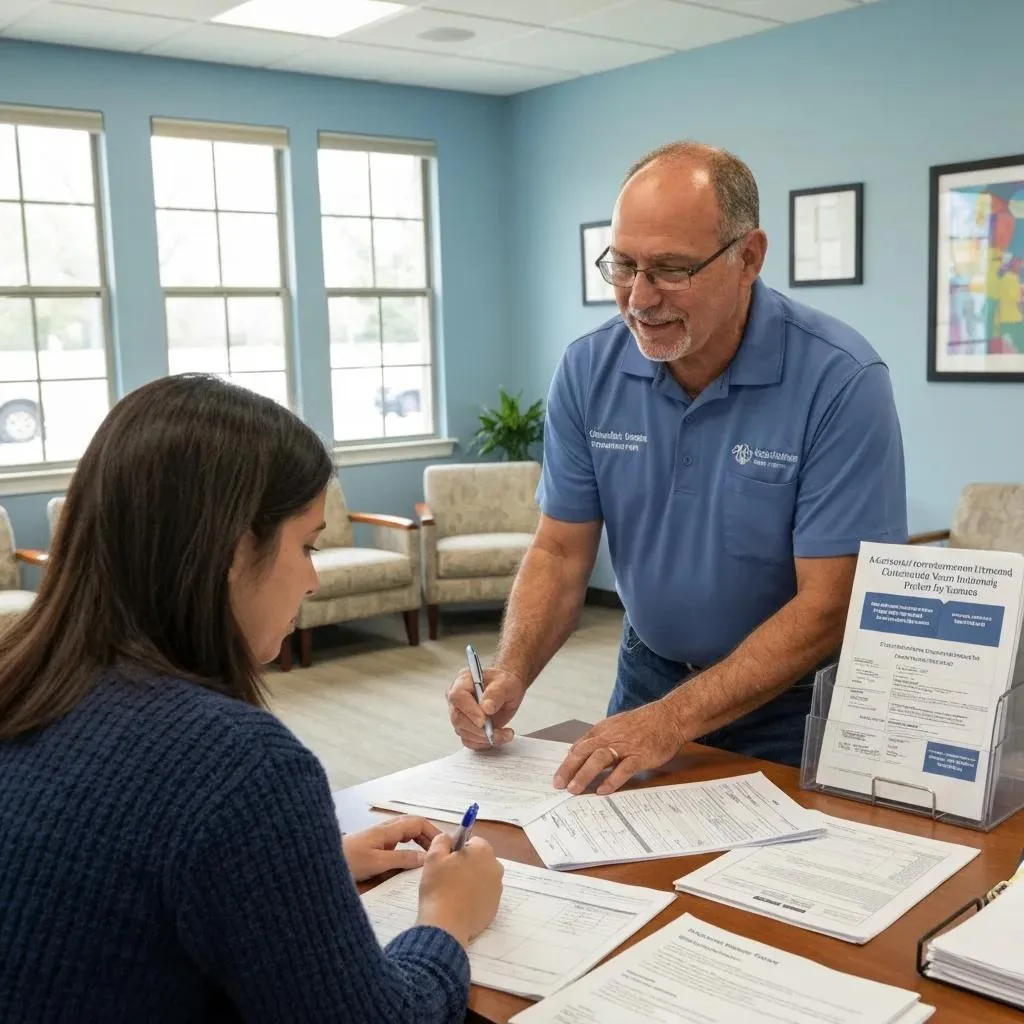
Public programs and nonprofit grants are key resources for many people seeking treatment. Primary sources include Nevada Medicaid, Medicare, VA benefits, and SAMHSA‑funded grants — each can reduce or eliminate out‑of‑pocket costs when you qualify. Every program has specific eligibility rules and document requirements, so gather ID, proof of income, and medical documentation early to speed access. The table below summarizes common public and nonprofit funding routes, typical applicants, required documents, and how to start the application or verification process.
Most public programs require clinical documentation of substance use disorder and may need cooperation from your chosen facility for prior authorizations or claims. Preparing documents in advance reduces delays and improves your chances of coverage.
Research shows Medicaid plays a major role in expanding access to SUD treatment and can help reduce disparities in treatment completion.
Medicaid’s Role in Addiction Treatment Access and Disparities
Medicaid is now a leading payer for substance use disorder treatment and can improve access and reduce disparities. A study examining program and client data found that acceptance of Medicaid payments was associated with smaller differences in treatment completion between Mexican American and non‑Latino White clients.
The analysis merged program information with client records from 122 publicly funded programs in 2010 and 112 programs in 2013, covering 15,412 adult clients (Mexican Americans n = 7,130; non‑Latino Whites n = 8,282). Using multilevel logistic regression and variance decomposition, researchers examined factors linked to differences in treatment completion, including client demographics, drug severity, mental health history, and program characteristics such as license, accreditation, and Medicaid acceptance.
Results showed Mexican Americans had lower odds of treatment completion (OR = 0.677; 95% CI = 0.534, 0.859) versus non‑Latino Whites. Part of this disparity was explained by primary drug used, greater drug severity, higher rates of co‑occurring mental health disorders, and program acceptance of Medicaid payments. The interaction between Mexican American clients and Medicaid acceptance was statistically significant (OR = 1.284; 95% CI = 1.008, 1.637), suggesting Medicaid acceptance can help narrow completion gaps.
The broader takeaway is that Medicaid expansion has newly insured millions and is an important tool for reducing disparities in access and engagement in care.
How Does Medicaid and Medicare Cover Addiction Treatment in Nevada?
Nevada Medicaid typically covers a range of SUD services — from outpatient counseling to inpatient care — when services meet medical necessity. Medicare covers certain SUD services for eligible beneficiaries under specific rules. Coverage, network participation, and prior authorization requirements vary, so confirm what’s included for detox, MAT, therapy, and case management. Medicare beneficiaries should also review Parts A, B, and D for implications around hospital detox, outpatient counseling, and prescription coverage. Have beneficiary IDs, diagnosis details, and clinician notes ready to speed coordination between the facility and payer.
Mapping billed services to your plan’s benefit categories helps avoid unexpected denials and clarifies next steps if you need to appeal or secure supplemental funding.
What Grants and Scholarships Can Help Fund Addiction Recovery?
Grants and scholarships come from federal sources, state initiatives, and local nonprofits, often targeting low‑income people, pregnant individuals, young adults, or those with co‑occurring conditions. Applications usually request a clinical assessment, proof of need, and a treatment plan; processing can take weeks to months, so grants are often used alongside short‑term funding for urgent admissions. Check local behavioral health coalitions, state grant listings, and nonprofit foundations, and ask your provider if they can recommend partner charities. Preparing a concise application packet and a short personal statement about need and urgency improves your chances.
Combining grant pursuit with short‑term bridge funding can be the quickest route to admission for those with financial barriers.
How Does BetterChoice Treatment Center Support Financing and Transparent Pricing?
BetterChoice helps Nevada residents find care quickly and offers insurance verification and guidance so you understand coverage and out‑of‑pocket responsibility. We accept major insurers and provide 24/7 clinical support to coordinate admissions. Our model emphasizes evidence‑based, integrated care delivered in a comfortable, upscale setting — including medical detox, residential programs, and individualized treatment plans. Our admissions team can verify benefits with the insurers we accept, explain which services are in‑network versus private‑pay, and help you explore payment plans or grant referrals when gaps remain. For investor or property financing described earlier, refer to the third‑party resources — those products are not offered by BetterChoice.
What Are BetterChoice’s Luxury Rehab Costs and Value Propositions?
BetterChoice is a licensed, accredited facility that combines clinical rigor with higher‑comfort amenities. Private‑pay pricing varies by program type, length of stay, and clinical needs, so we provide individualized estimates rather than flat rates. Our value centers on integrated treatment for substance use and co‑occurring mental health conditions, medical detox, continuous clinical support, and personalized aftercare planning — services that can make private‑pay options more costly but also more comprehensive. When comparing providers, request an itemized estimate and confirm which services are bundled to get a true comparison.
Asking for a detailed written estimate helps you match costs to coverage and decide whether a payment plan or external financing is necessary.
How Does the Insurance Verification Process Work at BetterChoice?
We begin insurance verification by collecting subscriber name, date of birth, policy number, and insurer contact details to confirm benefits, network status, and any prior authorization needs. Eligibility checks usually take 24–72 hours; prior authorizations for inpatient admissions often take longer and can require clinical assessments or physician notes. Providing recent medical records, current medications, and treatment history speeds authorization. If coverage is denied, our team can assist with appeals and documentation, and we’ll discuss payment‑plan or grant options to bridge any gaps.
A simple verification checklist prevents delays and positions you to request expedited authorizations when clinical urgency exists.
What Are Affordable and Free Addiction Treatment Options in Las Vegas?
Free and low‑cost care is available through public clinics, community mental health centers, nonprofit programs, and sliding‑scale services that prioritize access over amenities. These providers commonly offer outpatient counseling, medication‑assisted treatment, and referrals to publicly funded residential slots; nonprofits may offer scholarships or sponsor beds at partner facilities. To find low‑cost care quickly, call county behavioral health lines, use SAMHSA’s treatment locator, or contact local community clinics. The next section explains where to look and how veterans can coordinate VA benefits for specialized support.
Preparing required documents in advance speeds placement in these programs and helps maintain continuity of care after discharge.
Where Can You Find Free or Low-Cost Rehab Programs?
County behavioral health departments, community clinics, federally qualified health centers, and nonprofit organizations commonly run free or subsidized SUD programs. Eligibility usually requires residency and income verification, a clinical screening, and a readiness to engage in treatment. Many programs keep waiting lists, but demonstrating clinical urgency or providing recent assessments can shorten waits. Ask hospital social workers for referrals or request a SAMHSA placement to access outpatient counseling, MAT, or short‑term detox beds funded by public sources.
Bring ID, proof of income, and a short clinical summary to speed intake and increase the chances of immediate placement.
How Can Veterans Access Specialized Addiction Treatment Financing?
Veterans can use VA healthcare benefits for SUD services when enrolled and eligible; the VA also offers case management and dedicated treatment slots for qualifying veterans. Start by confirming VA enrollment, securing your VA ID, and asking for a referral or authorization for community‑based care if needed. Local Vet Centers and veteran service organizations can help navigate benefits and speed placements. Coordinating VA payments with a non‑VA facility may require prior authorizations or agreements, so provide VA contact information early to simplify billing. Veterans in crisis should use VA crisis lines and emergency resources for immediate help.
Proper coordination with VA benefits often reduces financial barriers and connects veterans to veteran‑specific support services.
What Are Common Concerns About Paying for Addiction Treatment and Next Steps?
People often worry about having no insurance, poor credit, tight timelines, or not knowing what’s covered. Prioritize documentation, explore grants, and ask about facility payment plans to remove barriers quickly. If you’re uninsured or have limited funds, follow a short prioritized plan — check Medicaid/Medicare eligibility, ask about sliding‑scale or internal charity funds, apply for local grants, and consider short‑term bridge funding only if admission is urgent. The checklist below outlines immediate actions applicants, families, or referral partners can take to move from financial uncertainty to admission. The final item references the earlier investor‑focused block for third‑party financing unrelated to BetterChoice services.
- Gather ID, proof of income, and any recent clinical records to prepare for verification.
- Call admissions to request an itemized estimate and ask about sliding‑scale fees or payment plans.
- Verify Medicaid/Medicare/VA eligibility now and submit documentation to the facility for fast processing.
- Apply for local grants or nonprofit scholarships and ask your provider for help with application materials.
- If admission is urgent, consider short‑term bridge funding but carefully weigh interest and fees.
Following this prioritized checklist will clarify which financing path moves you to admission fastest and which documents each option requires.
What If I Have No Insurance or Poor Credit?
If you’re uninsured or have poor credit, start with public funding and charitable resources before taking on high‑interest debt. Confirm Medicaid eligibility, reach out to community clinics, and ask facilities about sliding‑scale rates or internal charity funds. Many providers can hold a bed pending a grant decision or offer interim outpatient care while applications process — documenting urgency with clinical notes often shortens waitlists. Short‑term loans or medical lenders are an option for immediate inpatient admissions but carry costs and should be a last resort after grants and payment plans have been considered. Preparing a concise financial and clinical packet increases the chance of receiving charitable support or temporary placement.
Focusing on public and nonprofit options lowers long‑term financial burden; a combination of grant funds and short‑term bridge financing can balance speed and affordability.
How Can I Get Immediate Help for Time-Sensitive Rehab Needs?
For urgent admissions, take these five quick steps: gather ID and medical records, call admissions and request expedited verification, ask your insurer for an urgent prior authorization, check for emergency detox beds, and ask the provider to assist with appeals or rapid funding. Use clear, templated language when calling to state clinical urgency and requested dates, and assign one person to manage paperwork and follow‑ups. If insurance verification stalls, ask the facility to reserve a bed with a refundable deposit or set up a short payment plan so you can start care while coverage is finalized. Emergency departments and crisis services can provide short‑term stabilization and referrals when immediate help is needed.
These steps shorten the route from decision to admission and make clear which financing and documentation actions you need next, including consulting the external investor financing block if non‑insurance funding is required for deposits or private‑pay balances.
Substance use trends in Nevada underscore the urgent need for accessible, affordable treatment options and mirror national concerns about overdose fatalities.
Addiction and Substance Abuse Trends in Nevada
Substance abuse remains a serious public health issue in Nevada and across the U.S. In 2016, drug overdoses accounted for roughly 64,000 deaths nationwide, exceeding motor vehicle fatalities by about 60 percent (National Institute on Drug Abuse, 2018). Opioid‑related deaths rose nationally from 6.1 per 100,000 in 1999 to 19.8 per 100,000 in 2016. Nevada’s overdose death rate also increased, from 11.5 per 100,000 in 1999 to 21.7 per 100,000 in 2016 (Trust for America’s Health, 2013; CDC, 2017). For context, the three states with the highest overdose death rates in 2016 were West Virginia (52.0 per 100,000), Ohio (39.1 per 100,000), and New Hampshire (39.0 per 100,000).
Frequently Asked Questions
What should I consider when choosing an addiction treatment facility in Las Vegas?
Look for program types that match your needs (inpatient, outpatient, detox), facility accreditation, and the clinical qualifications of the staff. Also evaluate treatment approaches, staff‑to‑patient ratios, and the care environment. Verify which insurers the facility accepts and what financing options are available. If possible, visit the site or request a virtual tour to gauge the atmosphere and level of support before deciding.
How can I expedite the admission process for addiction treatment?
Prepare documentation in advance: ID, proof of income, and recent medical or treatment records. Contact admissions to request an itemized estimate and clarify insurance requirements. Share any clinical urgency so the team can prioritize your case. Having paperwork ready and a clear point of contact speeds verification and placement.
What are the differences between inpatient and outpatient addiction treatment?
Inpatient treatment provides 24/7 care at a residential facility and is best for severe addiction or when co‑occurring mental health issues require close monitoring. Outpatient treatment lets you live at home while attending scheduled therapy sessions and is more flexible and generally less costly. The right level depends on clinical severity, safety needs, and your support system.
Are there specific grants available for addiction treatment in Nevada?
Yes. Federal, state, and local nonprofit grants may cover part or all of treatment costs for eligible people, including pregnant individuals, veterans, or those with low income. Eligibility and application processes vary, so check SAMHSA resources, state health departments, and local nonprofits. A complete application and clear documentation improve your chances of receiving funding.
What role does Medicaid play in covering addiction treatment costs?
Medicaid is a major payer for SUD services in Nevada and can cover outpatient counseling, inpatient treatment, and MAT when medical necessity is met. Eligibility rules differ, so confirm your status and coverage details. Having required documentation ready helps streamline verification and admission.
How can I find community resources for addiction treatment?
Start with county behavioral health units, community mental health centers, and nonprofit organizations that focus on SUD services. Use SAMHSA’s treatment locator and reach out to local helplines or support groups for referrals. These resources can point you to low‑cost or sliding‑scale programs and help with intake navigation.
What should I do if I cannot afford addiction treatment?
Explore public funding such as Medicaid or Medicare first, then ask about sliding‑scale fees, payment plans, and nonprofit scholarships. Contact local community health organizations and hospital social workers for referrals. Document your financial situation and clinical urgency to improve your chances of immediate support or placement.
Conclusion
Knowing the typical costs and available financing options makes it easier to find timely care in Las Vegas. By checking insurance benefits, applying for grants, and asking providers about sliding‑scale fees or payment plans, you can lower financial barriers to treatment. Prepare documentation, reach out to local treatment centers, and use the checklists in this guide to move from uncertainty to admission. If you need help, contact a local provider or BetterChoice’s admissions team to explore options tailored to your situation.