
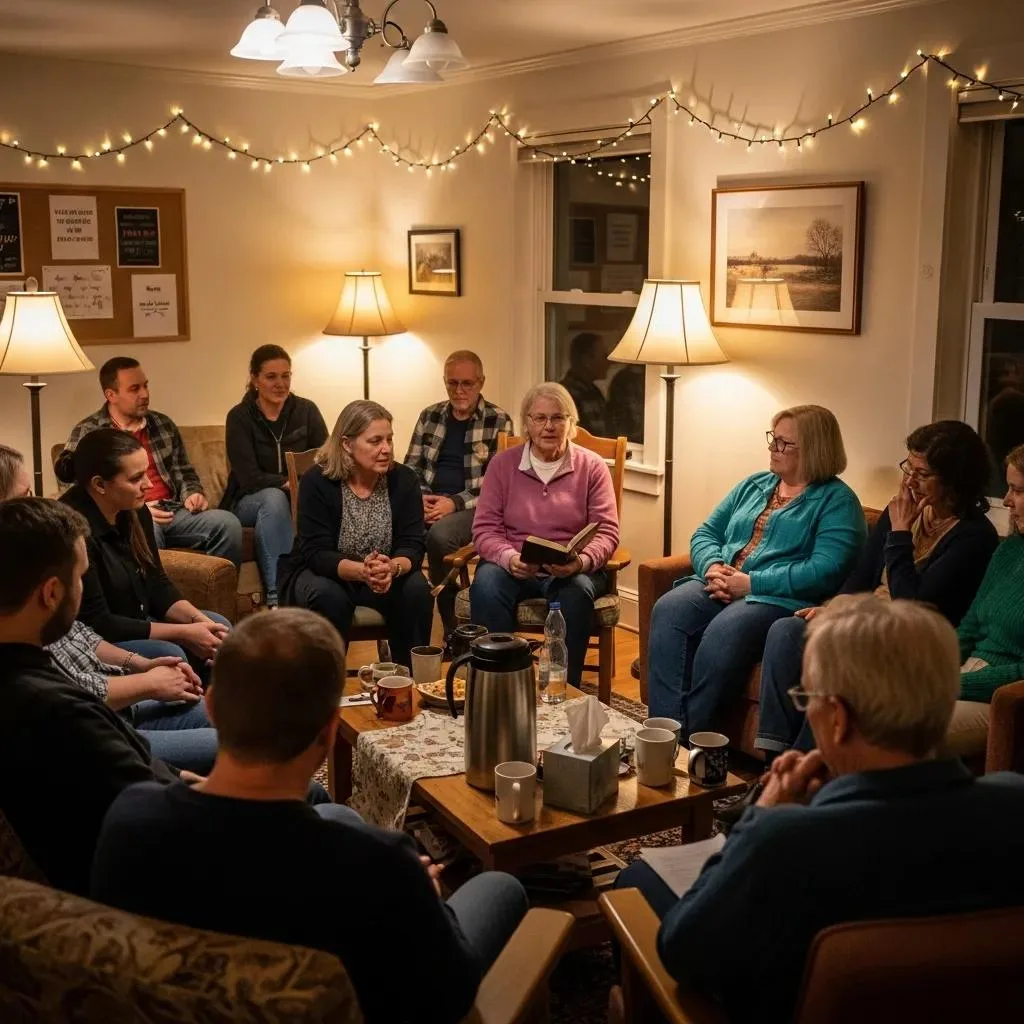
Alcoholics Anonymous Meetings — Downtown Las Vegas: Your Practical Guide to Local AA Support and Recovery
Alcoholics Anonymous (AA) is a peer-run fellowship that supports long-term recovery from alcohol use disorder. This guide helps you find AA meetings in Downtown Las Vegas and explains how clinical care and community support work together. You’ll learn what AA does, how the 12-step approach supports sobriety, where to find nearby meeting times and formats, and how clinical services can prepare someone to join meetings safely. Many people are unsure about their first meeting or how treatment and mutual-help groups connect — this article answers those questions with clear next steps, family resources, and local contact options. We include example downtown meetings, quick-reference tables, and simple phone scripts using current recovery perspectives as of 06/2024. Read on for practical information on AA’s principles, sample schedules near Fremont Street, how clinical stabilization supports safe meeting attendance, and straightforward steps families and individuals can take to connect with AA in Las Vegas.
What Is Alcoholics Anonymous and How Does It Support Recovery in Las Vegas?
Alcoholics Anonymous is an international fellowship where people share experience, strength, and hope to recover from drinking. AA supports recovery through regular meetings, shared literature, and the 12-step program. The core mechanism is peer support: members offer practical advice, accountability, and sponsor relationships that help sustain sobriety through routine and community norms. Anonymity protects privacy and makes it easier for people to speak honestly without fear of exposure — a key reason many prefer AA alongside clinical care in Las Vegas. The sections below break down AA’s main features and show how the 12-step approach helps people build lasting recovery in everyday life.
What Are the Core Principles and Benefits of AA?
AA’s basic principles are fellowship, anonymity, and a step-by-step program that supports behavior change and personal accountability. Peer connection reduces isolation and provides role models for sober living, while sponsorship offers one-on-one guidance for working through challenges. Anonymity creates a safe space to share without judgment, which matters in close-knit downtown groups. Regular meeting attendance gives structure and accountability, helping new habits stick and lowering relapse risk through ongoing social support. Together, these elements make AA a practical, widely available resource for people starting or sustaining recovery.
How Does the 12-Step Program Facilitate Long-Term Sobriety?
The 12-step program lays out a sequence of recovery actions — admitting powerlessness, reviewing harms, making amends, and committing to continued personal growth — that guide emotional and behavioral change. Step work encourages reflection, responsibility, and concrete changes that reduce triggers and replace drinking with recovery-focused practices. Sponsors and step-study groups turn the steps into daily routines and problem-solving tools, which improves consistency and provides relapse prevention through accountability. Research and clinical experience show better outcomes when consistent meeting attendance and active step work are combined with clinical stabilization and therapy. Seeing the steps as practical tools helps people use meetings as an ongoing support, not a one-time fix.
Where and When Are AA Meetings Held in Downtown Las Vegas?
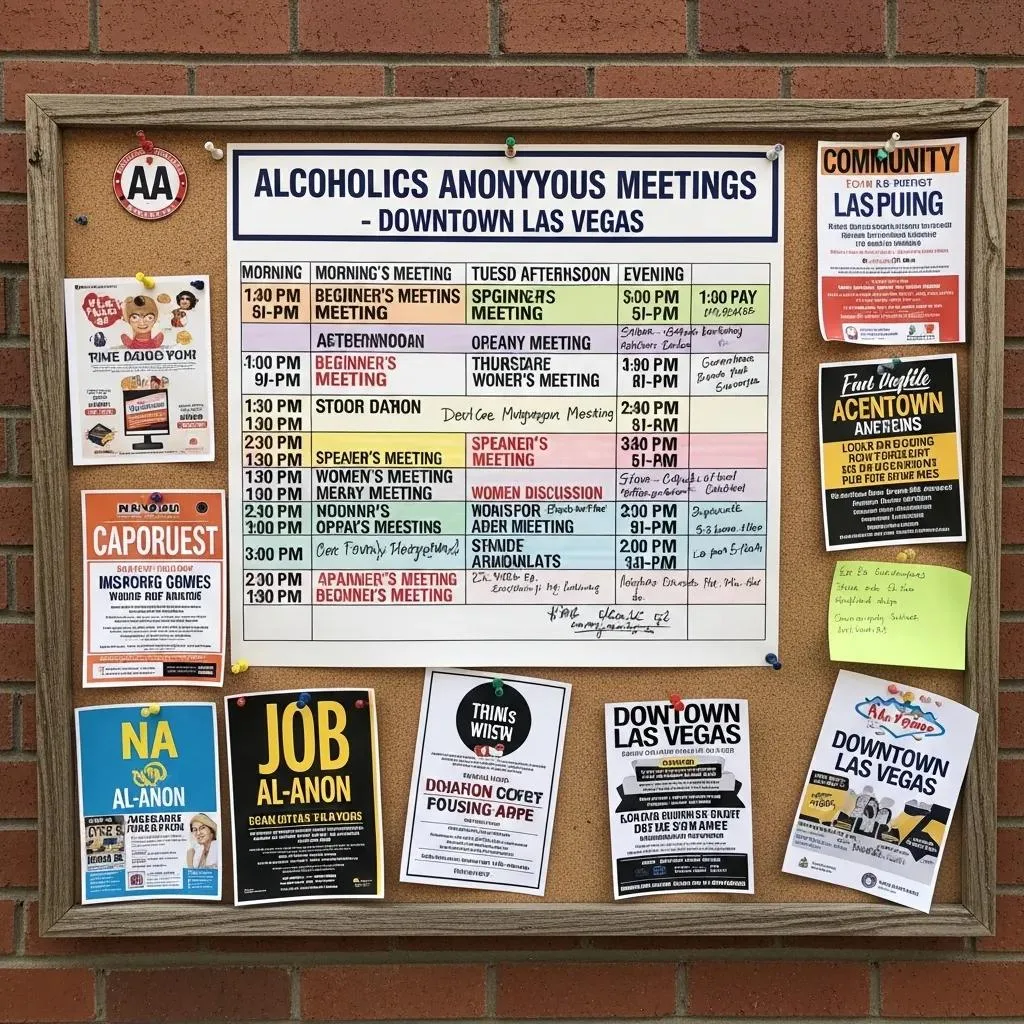
Downtown Las Vegas AA meetings meet at community centers, churches, and recovery spaces near Fremont Street and nearby neighborhoods. Meetings are scheduled at various times — mornings, evenings, and weekends — to fit different routines. Formats range from open meetings (anyone welcome) to closed meetings (for people who identify as having a drinking problem), and include discussion, speaker, and step-study types. Always confirm current schedules with the Las Vegas AA central office or official directories before you go. Below is a compact reference table with representative downtown meeting examples to help you plan where to attend and what to expect near Fremont Street.
Note: The table lists typical downtown meeting examples, approximate days/times, and formats to help you narrow choices before checking live schedules.
These entries are representative samples to give you a sense of downtown offerings. Confirm exact times and locations with the Las Vegas AA central office or official meeting directories before attending.
How Can You Find the Downtown Las Vegas AA Meeting Schedule?
Start with the Las Vegas AA central office or a trusted online meeting directory to find the most up-to-date downtown schedule, including cancellations or format changes. Call the central office or use its meeting lookup tools to check day, time, accessibility, and whether a meeting is open or closed — this saves time and avoids surprises. When you call a meeting host, ask about parking, building entry, wheelchair access, or childcare options so your first visit goes smoothly. Confirming these details ahead of time helps you choose a meeting where you’ll feel welcome and safe.
What Types of AA Meetings Are Available Downtown?
Downtown AA groups offer a mix of formats to meet different needs: open vs. closed meetings, Big Book study groups, step-study sessions, speaker meetings, and special-interest groups like women-only or LGBTQ+ meetings. Open meetings welcome anyone curious about AA; closed meetings are for those who identify as having a drinking problem. Big Book meetings focus on AA’s core text and are useful for structured study. Special-interest meetings can create safer, more relatable spaces that help people engage faster. Knowing these differences will help you pick a meeting that fits your comfort level and recovery goals.
How Does BetterChoice Treatment Center Complement AA Meetings in Las Vegas?
Clinical care complements AA by stabilizing medical and psychological needs so people can participate safely and effectively in peer support. BetterChoice Treatment Center offers medical detox and inpatient rehab in Nevada to manage withdrawal, provide therapy, and plan aftercare that connects clients to AA and other community supports. The center emphasizes personalized plans — combining medical oversight, behavioral therapies, wellness activities, and discharge coordination — to bridge clinical treatment and mutual-help participation. BetterChoice is accredited and follows established safety and quality standards; its discharge teams work to refer clients to downtown AA meetings so recovery continues in peer settings. The sections that follow describe the clinical services that prepare someone for safe AA involvement and how individualized care supports lasting engagement.
What Alcohol Detox and Inpatient Rehab Services Prepare You for AA?
Medical detox manages withdrawal symptoms and provides medical supervision so a person is physically stable enough to attend meetings. Inpatient rehab builds on detox with structured therapy — individual counseling, group work, cognitive behavioral techniques, and life-skills training — that addresses triggers and readies people for community support. Discharge planning links clients to local AA meetings and resources, creating a step-down path into peer recovery that strengthens relapse prevention. These clinical phases reduce acute risk, teach coping skills, and create a clear plan for continuing recovery in the community.
Note: The table below compares core clinical services and how each helps someone engage with AA after treatment.
This comparison illustrates how each clinical stage helps prepare someone to participate in AA by addressing health, skills, and community connections.
How Does BetterChoice Integrate Holistic and Personalized Care for Recovery?
BetterChoice blends evidence-based treatments with holistic supports — such as wellness activities, family involvement, and tailored therapy tracks — to stabilize emotions and support peer recovery after discharge. Personalized plans match treatments to individual needs, set safe discharge timelines, and identify downtown AA meetings for aftercare, which helps continuity. The center emphasizes privacy and safety so clients can transition to community meetings with confidence and appropriate referral support. These tailored links between clinical care and AA help people build a sustainable recovery that combines medical, psychosocial, and community resources.
What Role Do 12-Step Programs Play in Sustaining Recovery After Treatment?
12-step programs provide ongoing, community-based support that reinforces skills learned during treatment and offers practical accountability for relapse prevention. Regular meetings create predictable social reinforcement and access to sponsors who guide step work and personalized plans for tough moments. Compared with clinical follow-up alone, 12-step groups add peer-driven motivation through shared stories and service opportunities that help people reshape identity away from active addiction. The sections below explain how meeting support works and how AA differs from other mutual-help groups so you can choose the best ongoing support after treatment.
How Do 12-Step Meetings Support Ongoing Sobriety?
12-step meetings support sobriety by creating routine accountability through scheduled gatherings, offering emotional support via shared stories, and providing sponsor relationships for individualized guidance. Peer reinforcement reduces isolation and normalizes setbacks, making it easier to ask for help when cravings or stress arise. The social network from meetings often supplies practical resources — like rides, housing referrals, or job leads — that reduce relapse risk tied to unstable living conditions. Together, these supports make meetings a durable part of relapse prevention after clinical care.
What Are the Differences Between AA and Other 12-Step Programs?
AA focuses on alcohol-related recovery and uses its own literature and traditions; other 12-step fellowships adapt the same basic structure to different substances or behaviors, which influences meeting culture and materials. Still, common elements include step work, sponsorship, and mutual-help formats — so skills learned in one fellowship can often transfer if the focus fits your needs. Choosing the right group depends on your primary concern, comfort with members, and preferred meeting style. Picking a group that matches those preferences improves engagement and long-term benefit.
How Can Families Support Loved Ones Through AA and Recovery in Las Vegas?

Families matter. Practical support, education about addiction, and using family-focused resources — without forcing treatment — all increase the chance a loved one will engage with AA and follow aftercare plans. Effective support balances empathy with healthy boundaries: offer rides, help with basic needs, and encourage meeting attendance while avoiding enabling behaviors that remove responsibility. Local options like Al-Anon and family counseling teach communication skills and coping strategies so family members can support recovery without taking it on themselves. The subsections below list resources and practical actions families can use to promote sustained engagement with AA.
What Resources Are Available for Families, Including Al-Anon?
Al-Anon is a fellowship for people affected by someone else’s drinking, offering education, emotional support, and coping tools separate from AA. Local family counseling, educational materials, and community support meetings help relatives set boundaries, manage crises, and support aftercare without taking over recovery tasks. We encourage family members to attend Al-Anon to gain perspective and learn communication approaches that reduce conflict and improve encouragement for treatment and AA participation. These resources help families create a stable environment that supports recovery transitions.
How Can Families Effectively Support Someone Attending AA Meetings?
Useful family support includes offering transportation to meetings, reminding loved ones of meeting times, helping with childcare or scheduling, and encouraging aftercare attendance without coercion. Avoid enabling behaviors such as covering consequences or providing substances; instead, reinforce accountability and align expectations with the treatment plan. Attending Al-Anon or family therapy helps caregivers practice boundary-setting and communication techniques that lower relapse triggers and improve household stability. These steps increase the chance that a person in recovery will keep attending meetings and stay connected to community supports.
What Are the Next Steps to Engage with AA Meetings and Alcohol Recovery in Downtown Las Vegas?
Move from intention to action by confirming meeting schedules, preparing for your first visit, and checking whether clinical care is needed before joining meetings. Begin by calling the Las Vegas AA central office to verify meeting details and accessibility; if medical stabilization is necessary, consider clinical assessment and planned transitions to community meetings. Use the table below to structure calls and questions, and follow the checklist that outlines what to expect at your first meeting to lower anxiety and increase the chance you’ll return. The following sections include phone scripts, documents to have ready, and a simple arrival checklist for first-time visitors.
Note: The table that follows shows contact methods, suggested questions, and the practical value of each interaction to help you prepare for calls and intake steps.
How to Contact Local AA Resources and BetterChoice Treatment Center?
When you call AA resources, use a short script: ask for meeting times, format, and whether the meeting is open or closed; mention any mobility or access needs so hosts can advise. For clinical help, call BetterChoice Treatment Center to discuss medical detox, inpatient rehab, holistic plans, accreditation, and how discharge planning links clients to downtown AA meetings. Have your insurance information and a brief medical history handy so staff can recommend next steps and intake procedures. Clear, specific questions help you get the information needed to choose the right immediate action.
What Should You Expect When Attending Your First AA Meeting Downtown?
On arrival, check in with the meeting host or chair, sit and listen to the chosen format — discussion, speaker, or step study — and decide whether to share. Anonymity and a nonjudgmental atmosphere are central. Typical etiquette is to introduce yourself by first name only if you speak, respect others’ confidentiality, and follow the meeting’s format; you’re never required to speak. Many newcomers observe one or two meetings before sharing and may ask a member afterward about sponsorship and follow-up meetings. If you recently received clinical care, confirm you’re medically cleared to attend and coordinate with any outpatient or aftercare plan before increasing meeting frequency.
Frequently Asked Questions
What Should I Bring to My First AA Meeting?
Bring whatever helps you feel comfortable: a notebook and pen for notes, a water bottle, and any personal items you need. There’s no formal requirement. A short list of questions you want to ask can be useful, but you can also just listen. The important thing is to show up when you’re ready and engage at your own pace.
Can I Attend AA Meetings If I’m Not an Alcoholic?
Yes. Open AA meetings welcome anyone who wants to learn about the program — friends, family, and people curious about recovery. Closed meetings are reserved for those who identify as having a drinking problem, so be mindful of the meeting format when you attend.
How Can I Support a Loved One Who Is Attending AA?
Support them with practical help and encouragement without pressure. Offer rides, help with scheduling, and listen without forcing disclosure. Consider attending Al-Anon to learn how to support them while keeping healthy boundaries. Your steady, patient support can make a real difference.
What If I Feel Anxious About Attending My First Meeting?
Feeling anxious is normal. Visit the meeting location beforehand if that helps, or bring a trusted friend for your first visit. Remember that most attendees were once new and understand the nerves. Focus on listening and take part only when you feel ready.
Are There Online AA Meetings Available?
Yes. Many groups offer virtual meetings, which can be a good option if you prefer not to attend in person or need more flexible scheduling. Online meetings follow the same principles and can be found through AA’s official site or local directories.
How Do I Know If AA Is Right for Me?
Deciding if AA fits you starts with reflecting on how alcohol affects your life and your readiness for change. Try attending a few meetings to see if the fellowship and step work resonate. Talking with a healthcare provider or counselor can also help you choose the best path for your situation.
What Should I Expect After Attending My First Meeting?
After your first meeting you may feel relief, uncertainty, or a mix of emotions. Many newcomers connect with a member or sponsor for guidance and decide how they want to stay involved. Recovery is a personal process — take it step by step and use the support available to you.
Conclusion
Attending Alcoholics Anonymous meetings in Downtown Las Vegas can be a practical, community-based step toward recovery. Peer support, regular meetings, and local resources provide structure, accountability, and connection while you build a sober life. Taking the first step — calling the central office, visiting a meeting, or contacting a treatment provider — opens pathways to lasting recovery. Explore local meeting options and reach out to resources today to find the support that fits your journey.