

Alcoholics Anonymous Meetings Las Vegas: Your Complete Guide to Finding Support and Recovery
Finding Alcoholics Anonymous (AA) meetings in Las Vegas can be a turning point on the road to recovery. This guide walks through what AA is, how it operates locally, and how peer-based 12‑step support can complement medical and clinical care. You’ll learn how to find meetings by neighborhood and format, what to expect at open or closed gatherings, and how AA fits alongside detox, inpatient, and outpatient services. We address common concerns about spirituality, confidentiality, and family involvement, and offer clear, practical steps for integrating AA with professional treatment — including how Nevada providers can help with referrals, insurance verification, and aftercare planning. Sections cover AA’s principles, meeting-search tips with meeting-type examples, research-backed benefits, BetterChoice Treatment Center’s role in referrals and discharge planning, family guidance, and answers to questions many newcomers ask. Keywords like AA meetings Las Vegas, 12 step programs, and AA meetings near me Las Vegas are used naturally to help you connect with local support and next steps.
What Is Alcoholics Anonymous and How Does It Support Recovery in Las Vegas?
Alcoholics Anonymous is a peer-run fellowship built around the Twelve Steps, regular meetings, and mutual support. At meetings people share experience, sponsor one another, and work the Steps to develop accountability and coping skills. In Las Vegas, AA is a community-based resource that complements — but does not replace — clinical care. Evidence suggests that combining peer support with formal treatment improves engagement in aftercare and helps people sustain abstinence. On a practical level, AA is low-cost, widely available, and offers many meeting times to fit different schedules. Knowing how AA is structured makes it easier to understand the principles that guide meetings and member behavior.
What Are the Core Principles of the 12-Step Program?
The Twelve Steps outline a process of admitting powerlessness, taking a personal inventory, making amends, and serving others as part of recovery. These steps function as practical and ethical guides: admitting a problem opens the door to change; inventorying your behavior builds accountability; making amends repairs relationships; and service helps form a sober identity that lowers relapse risk. The Twelve Traditions help protect group autonomy, anonymity, and a singular focus on recovery, keeping meetings centered on sobriety rather than outside agendas. Together, Steps and Traditions create routine and shared expectations that many people find useful alongside professional therapy.
How Does AA Complement Professional Alcohol Addiction Treatment?
AA complements clinical treatment by providing ongoing social support, peer mentoring, and community networks after formal care ends. Medical programs address withdrawal, stabilization, and evidence-based therapies; AA offers continuity through regular meetings, sponsorship, and practical relapse-prevention habits that translate clinical gains into daily life. Research and meta-analyses show that mutual-help participation after treatment is associated with better abstinence outcomes and reduced healthcare use, though studies note self-selection limitations. In everyday practice, recommending AA as part of aftercare gives people an affordable, accessible way to maintain recovery while still receiving clinical oversight when needed.
How Can You Find AA Meetings in Las Vegas?
Finding AA meetings in Las Vegas is straightforward when you focus on accessibility, meeting format, and personal comfort. Start by identifying the type of meeting you prefer (open vs. closed, speaker vs. step study), then search by neighborhood or by time of day to match your work and transportation needs. Check central directories, club schedules, or the Las Vegas central office for the most current calendar and any accessibility notes. For a first visit, arrive a few minutes early, introduce yourself if you’d like, and observe how the group runs; anonymity and confidentiality are standard practices. These steps help you find steady peer support and pick meetings that suit your recovery stage and practical needs.
Intro to the meeting-type table: The table below compares common AA meeting formats so you can pick the option that best matches accessibility, audience, and privacy preferences.
This comparison clarifies how different formats vary by venue, audience, and practical needs so you can match a meeting to your recovery goals and schedule. Next, we cover where meetings are commonly located across Las Vegas neighborhoods.
Where Are the Most Accessible AA Meetings Located in Las Vegas?
AA meetings in Las Vegas are typically held in community centers, church halls, and dedicated clubhouses spread across the valley, which makes finding a nearby meeting possible for most neighborhoods. Transit-friendly and evening meetings tend to cluster near central corridors and community hubs, while suburban areas often host daytime and weekend groups. When choosing a meeting, consider parking, ADA access, safety, and lighting. Many people prefer areas with several nearby meetings so they can vary attendance by topic or speaker. Checking a central schedule or calling a local helpline before you go can confirm accessibility details and any entry instructions for first-timers.
What Types of AA Meetings Are Available in Las Vegas?
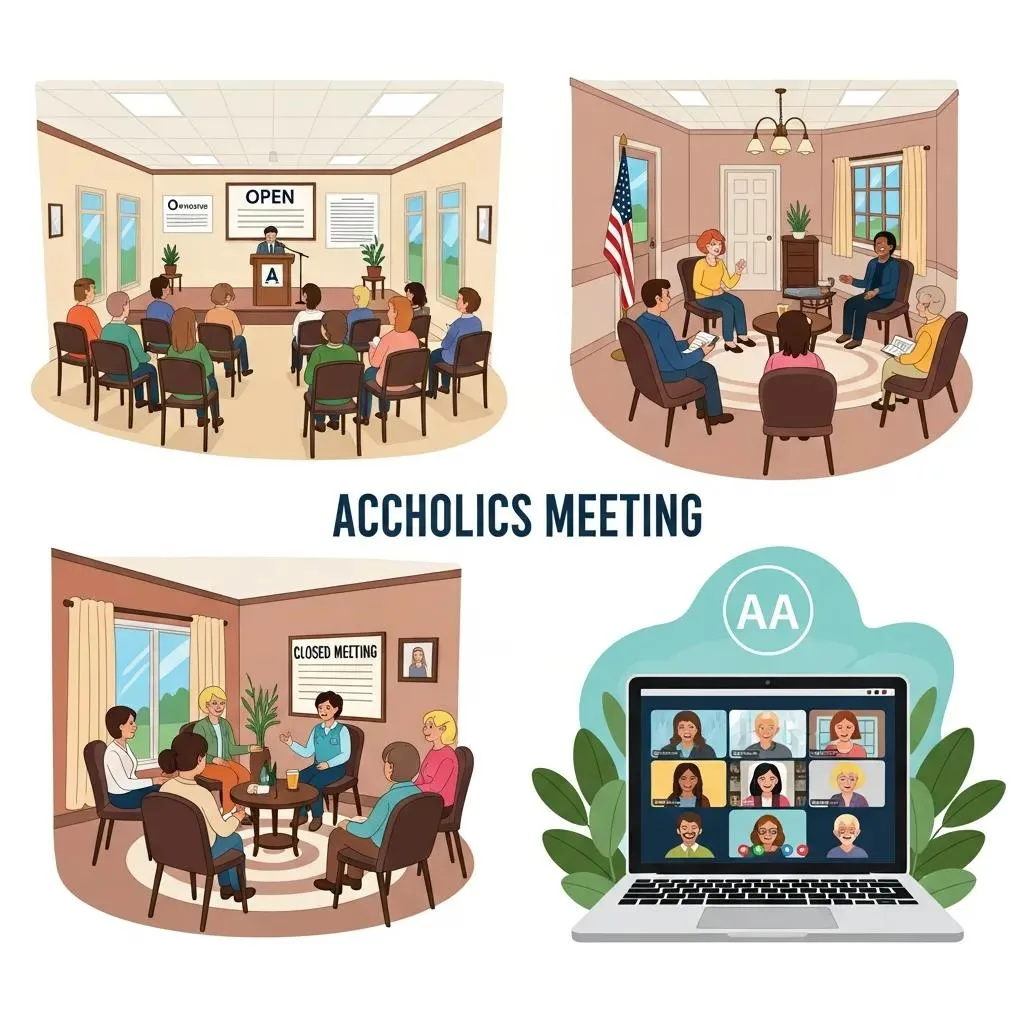
Las Vegas AA offers a range of meeting types to meet different needs — from broad open meetings to focused step-study groups and speaker events featuring long-term recovery stories. Open meetings welcome friends and family; closed meetings are for people who identify as having a drinking problem. Speaker meetings center on personal testimonies and structured sharing; step-study meetings work through the Twelve Steps in sequence. Hybrid and online meetings keep recovery accessible for people with transportation or scheduling constraints, while still respecting anonymity. Choose the meeting that fits your comfort level, recovery stage, and whether you prefer listening, studying, or sharing.
What Are the Benefits of Attending AA Meetings for Alcohol Recovery?

AA meetings offer ongoing peer support, structured accountability, and a wide, low-cost network of people in recovery — all of which help reduce isolation and address relapse triggers. Benefits come from regular contact with peers, sponsorship for one-on-one guidance, and service opportunities that build purpose and identity beyond alcohol use. Practically, AA exposes members to recovery role models, predictable routines, and literature that reinforce skills learned in therapy. AA’s community strengths pair well with clinical services, which provide medical care and targeted therapies; together they form a strong support system for long-term recovery.
Intro to benefits comparison table: The table below shows how AA meeting benefits compare to outpatient counseling and combined approaches to highlight practical strengths and limits.
This comparison highlights AA’s accessibility and peer network as complementary to the clinical rigor of professional services. Often, the strongest outcomes come from combining both. Below we summarize the evidence linking AA participation to better long-term outcomes.
How Does AA Participation Improve Long-Term Sobriety Rates?
Observational studies and meta-analyses consistently find that people who regularly attend mutual-help groups like AA tend to have higher rates of sustained abstinence and lower healthcare use, though causation is hard to prove because of self-selection. Research shows that combining mutual-help with formal treatment increases the likelihood of staying sober at follow-up intervals. Study limitations — such as differing attendance levels and tracking challenges because of anonymity — mean clinicians view the evidence as supportive rather than conclusive. Still, the overall pattern suggests AA is a useful relapse-prevention tool when used alongside appropriate clinical care.
What Support Does AA Provide Beyond Meetings?
AA offers more than weekly meetings: sponsorship relationships, phone support between meetings, sober social events, study groups, literature, and service roles that create meaningful responsibilities in recovery. A sponsor mentors newcomers through Step work and provides accountability; phone check-ins and peer support help during cravings or crises; sober activities reduce isolation and strengthen alcohol‑free friendships. Study groups and AA literature offer practical coping strategies, while service work — from setting up meetings to newcomer outreach — helps members build identity and purpose outside of drinking. These layers of support reinforce relapse-prevention strategies learned in clinical care.
How Does BetterChoice Treatment Center Integrate AA into Its Alcohol Addiction Programs?
BetterChoice Treatment Center offers clinical services — medical detox, inpatient rehab, outpatient programs, and counseling — that prepare patients for community-based recovery and help them connect to AA and other mutual-help resources as part of aftercare. The center focuses on medical stabilization and evidence-based therapy, then builds discharge plans that include local AA meeting schedules and directions to the Las Vegas central office. BetterChoice doesn’t run AA meetings, but staff incorporate education about AA into group sessions and transition planning so patients leave with clear steps for continuing support. Expect organized intake, insurance verification, and coordinated discharge planning that prioritize safety, privacy, and community linkage.
Intro to services table: The table below shows program components and how each supports connection to AA during treatment and discharge planning.
This program map shows how each clinical component prepares someone for AA participation and long-term recovery, with practical timelines and roles. The next section details specific services BetterChoice offers to encourage AA engagement.
What Professional Services Does BetterChoice Offer to Support AA Engagement?
BetterChoice provides medical detox, inpatient rehab, outpatient treatment, and both individual and group counseling designed to link patients with community supports like AA. Medical teams address physical stabilization while therapists teach coping skills and relapse-prevention strategies; these clinical gains are reinforced with psychoeducation about the Twelve Steps and local meeting logistics. Discharge planning includes suggested first-visit tips, meeting-type explanations, and referrals to the Las Vegas central office schedule so patients leave with actionable next steps. Staff also assist with insurance verification and explain privacy and safety practices during intake and discharge to ensure a smooth transition to peer support.
How Does BetterChoice Guide Patients Toward Local AA Resources?
BetterChoice uses a stepwise process to connect patients with AA: initial intake and medical assessment; stabilization while educating about mutual-help options; and coordinated discharge that provides meeting schedules and referrals. Intake usually begins with a brief assessment and insurance check to determine the right level of care, followed by an individualized treatment plan that includes aftercare goals and community linkage. At discharge, staff provide resource lists and instructions on how to find meetings by neighborhood and format. The center emphasizes confidentiality and patient choice while supplying practical tools — maps, schedules, and phone guidance — so patients and families can attend meetings with confidence. This linkage supports continuity of care and encourages ongoing participation in recovery communities.
What Should Families Know About Supporting Loved Ones Attending AA Meetings in Las Vegas?
Families are vital to recovery but should respect AA’s emphasis on autonomy, anonymity, and voluntary involvement. Good family support balances encouragement with healthy boundaries: learn the basics of AA, offer rides or scheduling help when appropriate, and seek family‑focused resources rather than pressuring attendance. Remember that AA is peer-led and non-clinical; issues that require therapy or deeper family work are better handled by professionals or Al‑Anon. Understanding these roles helps families support a loved one constructively while also finding resources for their own education and wellbeing.
- Understand that AA is peer-led and does not replace clinical therapy.
- Offer practical help like rides or schedule reminders without coercion.
- Use parallel supports (Al‑Anon, family counseling) to address family needs.
These practical steps prepare families to support a loved one’s recovery while respecting that individual’s autonomy. The next section offers suggested language and do/don’t tips for family conversations.
How Can Families Understand the Role of AA in Recovery?
Families should see AA as a source of peer support, accountability, and community — not a clinical treatment. Helpful family actions include asking open questions, offering to attend an open meeting if invited, and avoiding judgmental or coercive language. Short, specific, safety-focused offers of help work better than long lectures. Learning about sponsorship and meeting norms also helps families understand confidentiality and why anonymity matters to members. These approaches build trust and support voluntary engagement with AA alongside clinical care.
What Resources Are Available for Families Supporting Alcohol Addiction Recovery?
Families can tap both peer and professional resources, such as Al‑Anon for family-focused mutual help, family therapy from behavioral health professionals, and educational materials explaining treatment options and community supports. Local programs and counselors can offer structured spaces to work on communication, boundaries, and relapse-prevention planning — especially when family dynamics contribute to stress or enable substance use. BetterChoice can help families navigate intake and insurance questions and advise when family counseling should be added to individual treatment. Combining peer-led and professional supports gives families practical tools to help loved ones recover.
What Are Common Questions and Concerns About AA Meetings in Las Vegas?
Common questions center on spirituality, cost and confidentiality, and how to handle safety or cultural fit during a first visit. Short, direct answers reduce uncertainty: AA uses spiritual language but lets each person interpret “higher power” as they wish; meetings are generally free and honor anonymity; and first-time attendees should expect respectful listening with sharing optional. Practical tips — choosing open versus closed meetings based on comfort, bringing a sober friend, and checking venue accessibility — make first visits easier. The following subsections address spirituality and confidentiality in plain terms.
Is AA Spirituality a Barrier for Some Participants?
AA includes spiritual language such as “higher power,” but members are free to define that term personally — including secular interpretations. Many groups welcome nonreligious approaches and focus on practical recovery tools rather than religious doctrine. Alternatives and secular mutual-help options are available for people who prefer them. Clinical providers can support those uncomfortable with spiritual framing by pairing secular relapse-prevention strategies with peer support until a good fit is found.
Are AA Meetings Free and Confidential?
Yes — AA meetings are typically free to attend, and the tradition of anonymity means members protect each other’s identities. Groups may pass a donation plate to cover room costs, but contributions are voluntary and there are no membership fees. Confidentiality is upheld through the Twelve Traditions and local group norms, so attendees can expect discretion and respectful handling of personal stories. Knowing these practices can help newcomers feel safer about attending and sharing when ready.
For next steps or help connecting to clinical and community supports, contact local treatment navigation resources. BetterChoice Treatment Center helps Nevada residents with intake assessments, insurance checks, medically supervised detox, inpatient and outpatient programs, and counseling — and includes AA linkage in discharge planning. On first contact expect a short intake assessment and an insurance check to determine next steps, followed by scheduling for clinical services if indicated and aftercare planning that includes guidance on meeting types and schedules. To speak with a treatment representative about intake or transition planning, use the contact details below to reach staff who can explain the process and privacy practices.
198 Ebb Tide Cir, Las Vegas, NV 89123 — (725) 299-4777
This contact information helps individuals and families begin an intake conversation and understand what to expect from initial coordination and aftercare linkage.
Frequently Asked Questions
What should I expect during my first AA meeting in Las Vegas?
Your first AA meeting in Las Vegas will likely feel welcoming and low-pressure. Meetings usually start with introductions or readings, then members share experiences. You’re never required to speak — listening is completely acceptable. Groups emphasize confidentiality and respect, so sharing is optional. Arriving a few minutes early can help you get comfortable and meet others before the meeting begins.
Can family members attend AA meetings with their loved ones?
Family members are welcome at open AA meetings, which are open to anyone curious about the program. Closed meetings are reserved for people who identify as having a drinking problem. Attending an open meeting can help family members learn about recovery while respecting participants’ privacy and anonymity.
How can I find online AA meetings if I can’t attend in person?
If you can’t attend in person, many AA groups host virtual meetings accessible from anywhere with an internet connection. Local AA directories and the official AA site often list online meetings and joining links. Virtual meetings are a practical way to stay connected while maintaining comfort and privacy.
What resources are available for individuals who prefer secular support?
If you prefer a secular approach, programs like SMART Recovery and Secular Organizations for Sobriety (SOS) offer evidence-based, non-spiritual alternatives. These groups emphasize self-empowerment and practical strategies for managing cravings and triggers and can be used alongside or instead of traditional 12‑step groups depending on your needs.
How can I support a loved one who is attending AA meetings?
Support your loved one by understanding their journey and respecting their choices. Offer rides, encourage attendance, and listen without judgment. Learn about AA basics so you can have informed conversations, and consider resources like Al‑Anon for family-specific support.
What should I do if I feel uncomfortable at an AA meeting?
If a meeting makes you uncomfortable, remember you don’t have to speak or stay. You can quietly leave if you don’t feel safe. Trying different meeting formats or locations often helps, since each group has its own dynamics. If discomfort continues, talk with a trusted friend, a sponsor, or explore other support options that might fit you better.
Conclusion
Alcoholics Anonymous meetings in Las Vegas are a practical, community-based resource that many people use to strengthen recovery. Understanding meeting types, locations, and how AA complements clinical care makes it easier to find the right fit. Families can play a supportive role while respecting personal autonomy, and local treatment providers can help bridge clinical care and community support. To begin, explore nearby AA meetings and reach out to the recovery community — help is available, and you don’t have to do this alone.