

Addiction Terms: A Practical Reference to Recovery and Treatment
The language around addiction can sound clinical and confusing when you or a loved one is looking for help. This guide translates key terms, outlines common treatment pathways, and explains what to expect through recovery. You’ll find clear definitions (including how “addiction” and “substance use disorder” differ), the main levels of care (detox, inpatient, outpatient, PHP, IOP, MAT), recovery-stage vocabulary (abstinence, relapse, remission), and how providers treat co-occurring mental health conditions. Plain language reduces stigma, speeds appropriate care, and helps families make safer, better-informed choices about intake, safety, and insurance. The article is organized into practical sections: definitions, a compact comparison table of treatment options, a recovery timeline, dual-diagnosis care, person-first language guidance, and family-focused terms with action steps. Throughout, we integrate related concepts like cravings, withdrawal care, and relapse prevention so you can use this guide during treatment planning and early recovery.
What Is Addiction and Substance Use Disorder? Definitions and Key Concepts
Addiction is a chronic, treatable medical condition marked by compulsive substance use despite harmful consequences. It changes brain systems that regulate reward, motivation, and self-control, which is why both medical and behavioral treatments are often needed. Understanding the biological (neurotransmitter and neuroplastic) changes alongside genetic and environmental risk factors helps explain why recovery combines medications and psychosocial therapies to restore functioning. Using precise terms lowers stigma and helps clinicians match people to the right level of care and evidence-based treatments. Below are core clinical concepts you’ll commonly hear during intake and treatment.
This short list defines common clinical terms and orients you to intake and assessment language:
- Tolerance: When repeated use reduces a substance’s effect, so larger doses are needed to get the same result.
- Dependence: A physiological adaptation that produces withdrawal symptoms if use stops.
- Craving: A strong urge to use that can raise the risk of relapse.
- Withdrawal: A group of physical and emotional symptoms that occur when substance use is cut back or stopped.
These foundational definitions prepare you for the medical framing of addiction and the clinical diagnosis of substance use disorder used to guide treatment planning.
How Is Addiction Defined as a Medical Condition?
Clinically, addiction is described as a chronic, relapsing brain disorder that affects reward, motivation, memory, and self-control. Changes in neural circuits help explain persistent compulsive use and difficulty stopping. Biological factors include altered neurotransmitter signaling and neuroplastic changes in the brain’s reward pathways, and genetic vulnerability and environmental stressors increase overall risk. Framing addiction as a medical condition supports medical detox, pharmacotherapy, and evidence-based therapies instead of moralizing or punishing responses. Seeing addiction through a medical lens leads to comprehensive care: withdrawal management, counseling, and ongoing relapse-prevention work.
This clinical view sets up the diagnostic frameworks clinicians use to measure severity and match people to specific treatment pathways.
What Does Substance Use Disorder Mean?
Substance Use Disorder (SUD) is the formal clinical diagnosis for problematic substance use. It’s identified by a pattern of use that causes significant impairment or distress and is rated by severity—mild, moderate, or severe—based on symptoms like loss of control, continued use despite harm, and withdrawal. Severity helps determine the intensity of care needed, from outpatient counseling to residential programs and medication-assisted treatment (MAT). Intake assessments typically review frequency of use, consequences, withdrawal signs, psychiatric history, and social functioning to build a tailored treatment plan. A clear SUD diagnosis reduces uncertainty and points to the right level of monitoring and support during recovery.
Using accurate SUD terminology also highlights why integrated treatment is essential when mental health symptoms overlap with substance-related problems.
What Are the Common Treatment Pathways in Addiction Recovery?
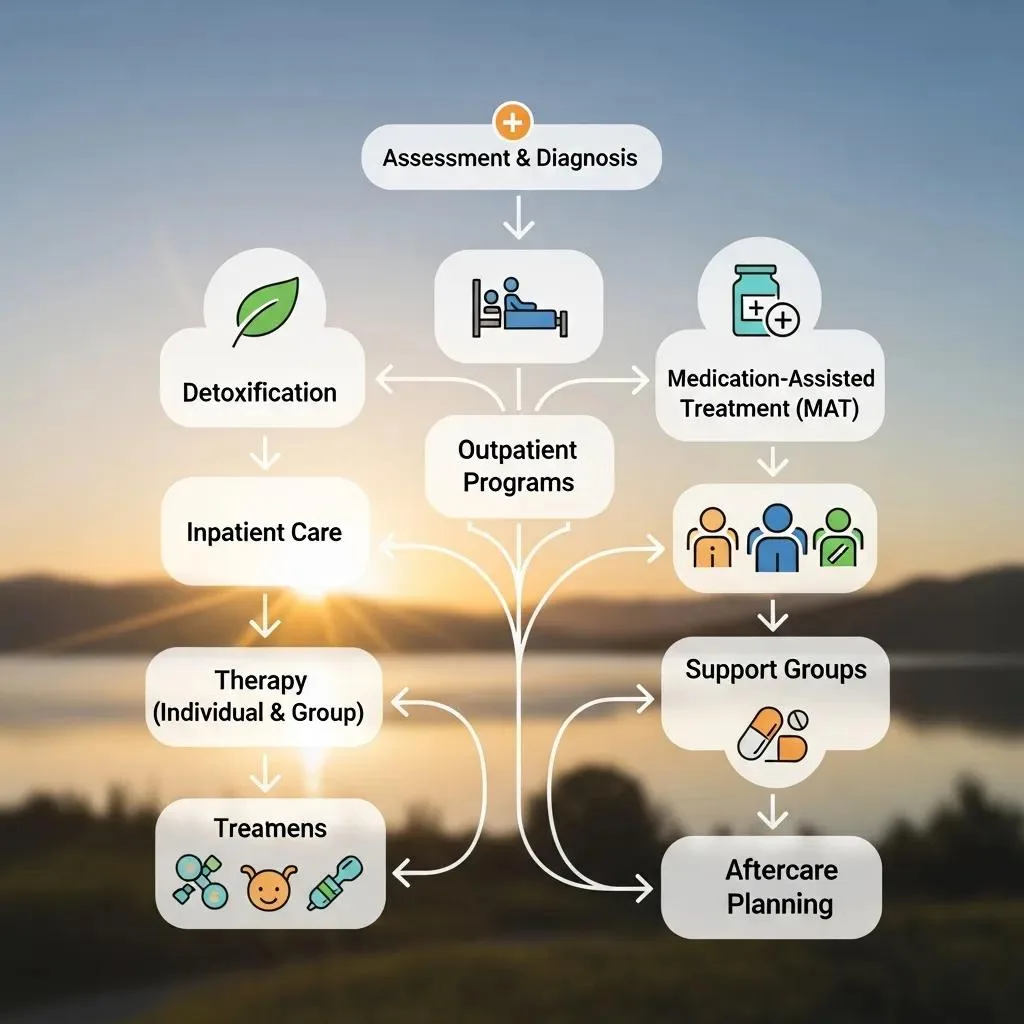
The main levels of care include detoxification, residential/inpatient treatment, partial hospitalization (PHP), intensive outpatient programs (IOP), standard outpatient care, and medication-assisted treatment (MAT). Each pathway varies by intensity, setting, and usual timeline, and clinicians choose the level based on medical and psychosocial risk. These services form a continuum: safety and withdrawal management come first (if needed), then stabilization, therapy, skills building, and aftercare planning to reduce relapse risk. Typical intake steps include clinical assessment, medical screening, insurance coordination, and a personalized care plan that spells out goals and expected duration. Below is a comparison table summarizing usual duration, intensity, and who typically benefits from each level.
This table shows how care is scaled to clinical needs and helps guide conversations with providers about next steps.
How BetterChoice approaches these pathways: At BetterChoice Treatment Center we provide integrated intake that screens for medical detox needs and coordinates smooth transitions across levels of care. We prioritize safety, confidentiality, and personalized planning. Our team conducts multidisciplinary assessments and helps navigate insurance questions to match each person with the right intensity of care based on clinical criteria and recovery goals.
Below are common intake steps you can expect across providers to help you prepare.
- Complete a clinical assessment: medical exam, psychiatric review, substance-use history, and risk factors.
- Verify insurance coverage and any required authorizations, or discuss payment options.
- Create an immediate safety and withdrawal plan if medical detox is needed.
- Coordinate a transition plan that identifies the next level of care, aftercare supports, and family involvement.
These intake steps reduce uncertainty and speed entry into the most appropriate services. They also lead into the next sections that describe detox and the differences between program types.
What Is Detoxification and How Does Medical Detox Work?
Detoxification (detox) is the supervised process of managing acute withdrawal when someone stops or reduces substance use. The primary goal is safety—preventing serious medical complications while stabilizing the person for ongoing treatment. Medical detox follows evidence-based protocols that may include symptom-focused medications, vital-sign checks, hydration, and supportive care to lower physiological risk in early withdrawal. Duration depends on the substance and the person, often lasting several days up to about a week, with close monitoring for complications like seizures or severe autonomic instability. Families should expect structured medical supervision, clear discharge criteria, and active coordination with behavioral treatment that follows detox.
BetterChoice approach to detox: BetterChoice Treatment Center offers medically supervised detox with a multidisciplinary team and a clear transition plan into rehabilitative services, emphasizing privacy and evidence-based withdrawal care.
Detox is a clinical stabilization step that helps determine whether inpatient or outpatient rehabilitation best fits ongoing needs.
How Do Inpatient and Outpatient Rehab Programs Differ?
Inpatient (residential) rehab provides 24/7 supervision and an immersive therapy schedule—daily groups, individual counseling, and onsite medical support. Outpatient programs deliver care in scheduled sessions so people can continue living at home and meet work or family responsibilities. Major differences include supervision level, therapy intensity, typical length (residential is usually measured in weeks; outpatient can span months), and suitability: residential is for higher-risk patients who need stabilization, while outpatient is for people with a safer home setting and lower acute risk. Residential admissions often follow medical instability, high relapse risk, or lack of safe housing; outpatient programs require reliable transportation and community supports. Aftercare commonly includes ongoing counseling, relapse-prevention groups, and community resources.
- Setting: Residential includes onsite housing; outpatient patients commute from home.
- Intensity: Residential offers daily structured therapy; outpatient uses scheduled sessions.
- Duration: Residential often 2–12 weeks; outpatient can continue for several months with flexible scheduling.
- Admission: Residential suits higher medical/behavioral risk; outpatient fits stable, lower-risk cases.
Knowing these differences helps individuals and families choose the level of care that balances clinical needs with daily life responsibilities and sets the stage for recovery-stage planning.
How Does Recovery Progress? Key Terms Like Abstinence, Relapse, and Sober Explained
Recovery typically moves through stages—stabilization, early recovery, sustained recovery, and long-term maintenance—and specific terms describe risk levels, supports, and expected timelines at each stage. Early recovery often carries the highest relapse risk, especially during the first 90 days, so relapse-prevention planning, coping skills practice, and medical support are priorities then. The table below maps stages to usual timelines, risk periods, and recommended supports so readers can anticipate common needs during recovery.
This stage map clarifies when relapse prevention and intensive supports are most important and which interventions lower risk at each point.
What Does Abstinence Mean in Addiction Recovery?
Abstinence means stopping use of the substance in question. For many, it’s an explicit treatment goal; for others, harm-reduction strategies that reduce use and risk may be more realistic at first. The clinical benefit of abstinence is removing exposure to substances that cause dependence and immediate medical risk. Person-centered care recognizes individual goals, using motivational strategies to align treatment with readiness. Abstinence-based programs often combine behavioral therapies, contingency management, and, when appropriate, MAT to support sustained abstinence. Alternatives—harm reduction, substitution therapy, or stepped-care models—are valid when they better match safety and readiness.
This balanced explanation helps families and patients choose an approach that fits goals and clinical safety.
How Is Relapse Defined and Prevented?
Relapse is a return to harmful substance use after a period of improvement. Clinicians separate a single lapse (an isolated use) from a full relapse (return to regular harmful use). Spotting early warning signs makes prevention possible. Triggers often include exposure to high-risk environments, untreated mental health symptoms, stress, and physiological cravings. Effective prevention strategies include coping-skill training, medication support for cravings, structured daily routines, and quick access to higher-level care if needed. Use this brief relapse-prevention checklist to recognize risks and act early.
- Identify personal triggers and high-risk situations and create a plan to avoid or manage them.
- Keep regular therapy or support-group attendance and apply coping strategies learned in treatment.
- Use medication-assisted treatment when clinically recommended to lessen cravings and physiologic vulnerability.
- Reach out promptly to providers or higher-level care if signs of a lapse appear.
This checklist gives immediate steps for early intervention and connects to integrated care for co-occurring issues that often drive relapse risk.
What Is Dual Diagnosis and How Are Co-occurring Disorders Treated?
Dual diagnosis means someone has both a substance use disorder and one or more mental health conditions. Identifying both is essential because untreated psychiatric symptoms often fuel ongoing substance use and complicate recovery. Integrated treatment—where addiction and mental health care are coordinated, ideally by the same team—produces better outcomes than treating each problem separately. Assessments usually screen for depression, anxiety, PTSD, bipolar disorder, and other conditions, then create a care plan that blends evidence-based psychotherapy, medications, and case management. Below are concise explanations and how integrated care works in practice.
What Does Dual Diagnosis Mean in Addiction Treatment?
Dual diagnosis indicates that a person meets diagnostic criteria for both a substance use disorder and at least one mental health condition. Common co-occurring disorders include major depression, generalized anxiety, PTSD, and severe mood disorders. Identifying both matters because untreated psychiatric symptoms can raise relapse risk and lower treatment engagement, while coordinated care improves symptom control and recovery stability. During intake, clinicians run systematic assessments to distinguish psychiatric symptoms from substance-induced effects and to check for medication interactions. Accurate diagnosis guides whether simultaneous medication, psychotherapy, or psychiatric consultation is needed.
Recognizing dual diagnosis explains why integrated models are the standard for more complex cases and prepares readers for the components of combined care.
How Does Integrated Treatment Address Mental Health and Substance Use?
Integrated treatment aligns pharmacotherapy (including MAT when appropriate), evidence-based psychotherapies (CBT, trauma-informed therapy), and case management so psychiatric and addiction goals are coordinated. This prevents conflicting plans and improves outcomes. Care teams share information, set joint objectives, and adjust medications and therapy based on both symptoms and substance use patterns. Integrated models focus on continuity and smooth transitions between higher- and lower-intensity services to avoid gaps that can increase relapse risk. For people with dual diagnosis, integrated programs offer synchronized medication management, combined therapy sessions, and unified relapse-prevention plans.
Programs that coordinate psychiatric and addiction specialists reduce fragmentation and make it easier for patients to receive cohesive, evidence-based treatment for both conditions.
BetterChoice approach to dual diagnosis: BetterChoice Treatment Center delivers integrated care for substance use and co-occurring mental health disorders through a multidisciplinary team, ensuring coordinated planning, confidentiality, and safety throughout treatment.
Why Is Person-First Language Important in Addiction Terminology?
Person-first language puts the person before the diagnosis—saying “person with a substance use disorder” instead of “addict.” That shift reduces stigma, encourages treatment engagement, and preserves dignity by separating identity from condition. The words we use shape expectations: respectful language makes people more likely to seek help and stick with treatment, while stigmatizing labels discourage help-seeking and can bias providers. The table below gives examples of terms to use and avoid, with quick reasons why.
What Is Person-First Language and How Does It Reduce Stigma?
Person-first language names the individual before their diagnosis, which reduces stereotyping and preserves dignity—for example, “person with opioid use disorder” highlights the medical context rather than moral judgment. Clinical guidance supports respectful language because it links to better engagement, retention, and willingness to try evidence-based care. When clinicians and families use person-first phrasing, conversations feel safer and focus on treatment planning rather than shame. Small wording changes like these can influence whether someone seeks and stays in care.
Using person-first language helps caregivers and providers offer support that’s grounded in respect and lowers barriers to recovery.
Which Terms Should Be Avoided to Promote Respectful Communication?
Avoid pejorative or identity-defining labels. Instead of saying urine results are “clean” or “dirty,” use “negative” or “positive” screening results. Replace labels like “addict” with a clinical diagnosis or recovery-focused phrase. Neutral, descriptive language communicates clinical information without moral judgment. The table above lists common swaps and why they matter—families and professionals should model these choices in both conversation and documentation. Consistent person-first wording across clinical notes, family talks, and public materials reduces stigma and supports treatment engagement.
These language shifts improve respect and clarity in clinical communication and lead into practical family support strategies in the next section.
How Can Families Support Recovery? Key Terms for Loved Ones to Know

Families are vital to recovery when they balance support with boundaries that avoid enabling. Learning terms like enabling, codependency, and structured family interventions helps relatives act in ways that promote safety and long-term recovery. Education, clear boundary-setting, family therapy, and involvement in aftercare planning are core elements of effective family support. The table below defines family-relevant terms and pairs each with immediate, practical steps families can take to move from enabling behaviors to constructive support.
What Are Enabling and Codependency in Addiction Context?
Enabling includes actions that unintentionally protect someone from consequences—for example, giving money or shelter that sustains use. Codependency describes a pattern where a family member’s identity or emotional stability becomes wrapped up in managing the person with SUD. Recognizing these patterns is the first step toward change. Families should replace enabling with structured support and predictable boundaries that protect health and safety. Practical steps include setting clear limits, linking support to active treatment engagement, and using professional family therapy to relearn healthier interaction patterns. Those changes reduce conditions that maintain use and create room for sustainable recovery behaviors.
These family changes connect naturally to outside support resources like 12-step or family-centered groups, described next.
How Do Support Systems Like 12-Step Programs Help Families?
12-step family supports and related groups provide peer education, emotional support, and practical tools (for example, Al-Anon) that help relatives understand addiction dynamics and practice healthy boundaries. They complement professional treatment by offering long-term peer accountability and shared coping strategies. Typical group elements include regular meetings, recovery literature, and sponsor relationships that guide ongoing learning and emotional processing. Alternatives—SMART Recovery family tools, family therapy, and community supports—offer cognitive and behavioral approaches that may suit some families better. Pairing professional treatment with peer supports expands the safety net for both the person in recovery and their loved ones.
If you’re looking for next steps, consider attending family support meetings, requesting family therapy through your loved one’s provider, and checking insurance coverage for family services.
How BetterChoice supports families: BetterChoice Treatment Center offers guidance to families on setting boundaries, accessing family therapy, and understanding insurance options, and we prioritize confidentiality and structured family engagement as part of coordinated care.
- Immediate actions for families: Create safety plans, document behaviors that threaten safety, and connect to crisis resources when needed.
- Engage with providers: Ask to be involved in treatment planning and request family-skill sessions.
- Seek peer support: Join family support groups to reduce isolation and learn practical strategies.
These steps move families from reactive responses to structured support that strengthens recovery and lowers relapse risk.
Frequently Asked Questions
What are the signs that someone may need addiction treatment?
Warning signs include changes in behavior—more secrecy, pulling away from family or friends, neglecting responsibilities, or dropping performance at work or school. You may also notice physical changes like appetite or sleep shifts, and emotional signs such as mood swings, irritability, or anxiety. If you see these signs, approach the person with compassion and encourage a professional evaluation.
How can I support a loved one in recovery?
Support looks like steady, nonjudgmental presence and clear boundaries. Listen openly, educate yourself about addiction and recovery, and join family therapy or support groups to learn practical skills. Avoid enabling behaviors and make sure your help encourages independence and long-term recovery.
What role does aftercare play in addiction recovery?
Aftercare is crucial. It includes follow-up therapy, support groups, and ongoing engagement with recovery resources after primary treatment ends. Aftercare helps maintain gains, reinforces coping strategies, and connects people to community supports—reducing the chance of relapse and supporting long-term success.
What is the importance of a personalized treatment plan?
A personalized plan matches treatment to the person’s specific needs, history, and goals. Factors like substance type, disorder severity, co-occurring mental health issues, and personal preferences all shape what works best. Tailored care increases the chances of success and lowers the risk of relapse.
How can families recognize enabling behaviors?
Look for actions that shield the person from consequences: giving money that could buy substances, making excuses for their behavior, or taking on their responsibilities. These moves usually come from a desire to help, but they can perpetuate the problem. Families should set clear limits and hold the person accountable while offering constructive support.
What are the benefits of integrated treatment for dual diagnosis?
Integrated treatment addresses substance use and mental health issues at the same time, which reduces conflicting plans and improves outcomes. Coordinated care promotes better communication among providers, more effective treatment choices, and greater stability—raising the chance of sustained recovery.
How can I find the right treatment program for myself or a loved one?
Start by assessing needs, preferences, and the severity of the problem. Research inpatient, outpatient, and specialized programs for co-occurring disorders. Consult healthcare professionals for referrals and consider program approach, success measures, support services, and insurance coverage. Pick a program that offers personalized care and a clear plan for follow-up and aftercare.
Conclusion
Knowing addiction terminology makes it easier to navigate treatment and support recovery. Clear definitions and a basic understanding of treatment pathways help people and families make informed choices, reduce stigma, and access the right care sooner. If you or a loved one are ready for next steps, reach out to professionals or local support groups for guidance tailored to your situation. BetterChoice is here to help you find the right path forward.